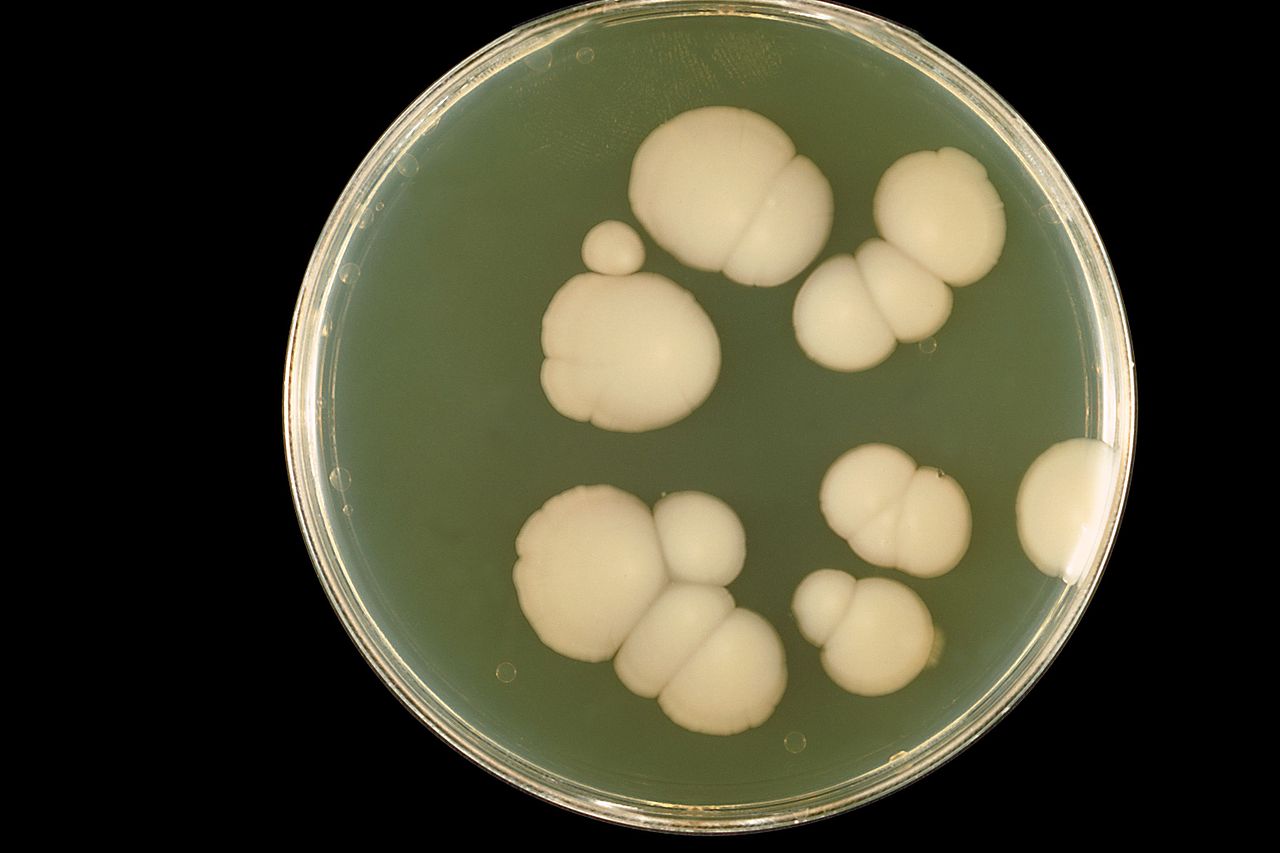
Candida auris was first identified in Japan in 2009. Since then it has spread through hospitals around the world. The fungus can live on a person’s skin without causing a single symptom, but if it reaches the bloodstream it can kill. In the United States it is blamed for the deaths of about 3,000 patients a year in hospitals and long-term care facilities.
What makes it so difficult to manage is its staying power. Once C. auris settles on a patient, clinicians have “no effective way to remove it from the skin,” said Dean Merrill, a dermatologist at the University of California, San Francisco. That leaves the fungus in position to invade if the patient’s immune defenses weaken.
Merrill is the first author of a study, published in August in Science, that begins to explain that persistence. Working in mice, the UCSF team found that the fungus takes refuge in hair follicles and, once there, manipulates the skin’s immune response so that the usual antifungal defenses are switched down.
Two Fungi, Two Responses
The researchers compared C. auris with a close and far more familiar relative, Candida albicans, a common skin fungus that a healthy immune system usually dispatches quickly. On mouse skin the difference was plain. C. albicans disappeared within days. C. auris survived, retreating into the follicles.
The two species also provoked different immune reactions. C. albicans triggered a signaling molecule called IL-17, which prompts the skin to renew its surface, strengthens its antifungal defenses and clears the infection. C. auris instead set off a release of interferon gamma, a signal more often associated with the body’s response to viruses.
A Cell Wall Rewired
That mismatch turned out to be the fungus’s own doing. C. auris remodels its outer cell wall so that more of a tough structural molecule called chitin is exposed on the surface. Immune cells stationed around the hair follicles detect the chitin and respond by releasing interferon gamma.
The interferon gamma then does two things that favor the invader. It suppresses the skin’s antifungal machinery, including the IL-17 response that would otherwise clear a Candida infection. It also slows the normal replacement of cells lining the follicle, so that older, damaged cells accumulate. The result is a sheltered niche in which the fungus can thrive.
Suzanne Noble, a professor of microbiology at UCSF and one of the study’s two senior authors, noted that chitin is widespread in nature, so the skin is hardly encountering something unfamiliar. What surprised her was that C. auris actively uses its chitin to turn the skin into a favorable home.
Possible Ways In
The mechanism suggests two points of attack, both proposed by Merrill. One would use drugs that tip the immune response away from interferon gamma and back toward IL-17, restoring the defense that works against other Candida species. The other would block chitin, depriving the fungus of the signal it uses to amplify interferon gamma in the first place.
Neither approach has been tested, and the experiments so far were done in mice. Whether the same sequence of events plays out in human skin, and whether it can be interrupted safely in frail patients, remains to be shown.
Ari Molofsky, an immunologist at UCSF and the study’s other senior author, pointed out that most people who carry C. auris on their skin have no problems. It becomes dangerous only when it reaches deeper tissues in patients who are already medically vulnerable. Understanding how it survives on the surface, he suggested, may help explain how it later causes serious infections.
More broadly, the researchers say the work offers a new way to think about how microbes can coexist quietly with their human hosts for long periods before turning dangerous. The study was funded by the National Institutes of Health, the Dermatology Foundation, the Veterans Health Administration and several UCSF programs.
Endnotes
- Merrill, D., et al. (2026). “The fungal pathogen Candida auris exposes chitin to trigger IFNg and persist in hair follicles.” Science. https://doi.org/10.1126/science.adu6688
- University of California, San Francisco (August 6, 2026). “Catch me if you can! This deadly superbug hides in hair follicles.” EurekAlert! https://www.eurekalert.org/news-releases/1138452
Featured image: Candida albicans, the common skin fungus used for comparison in the study.



Leave a Reply