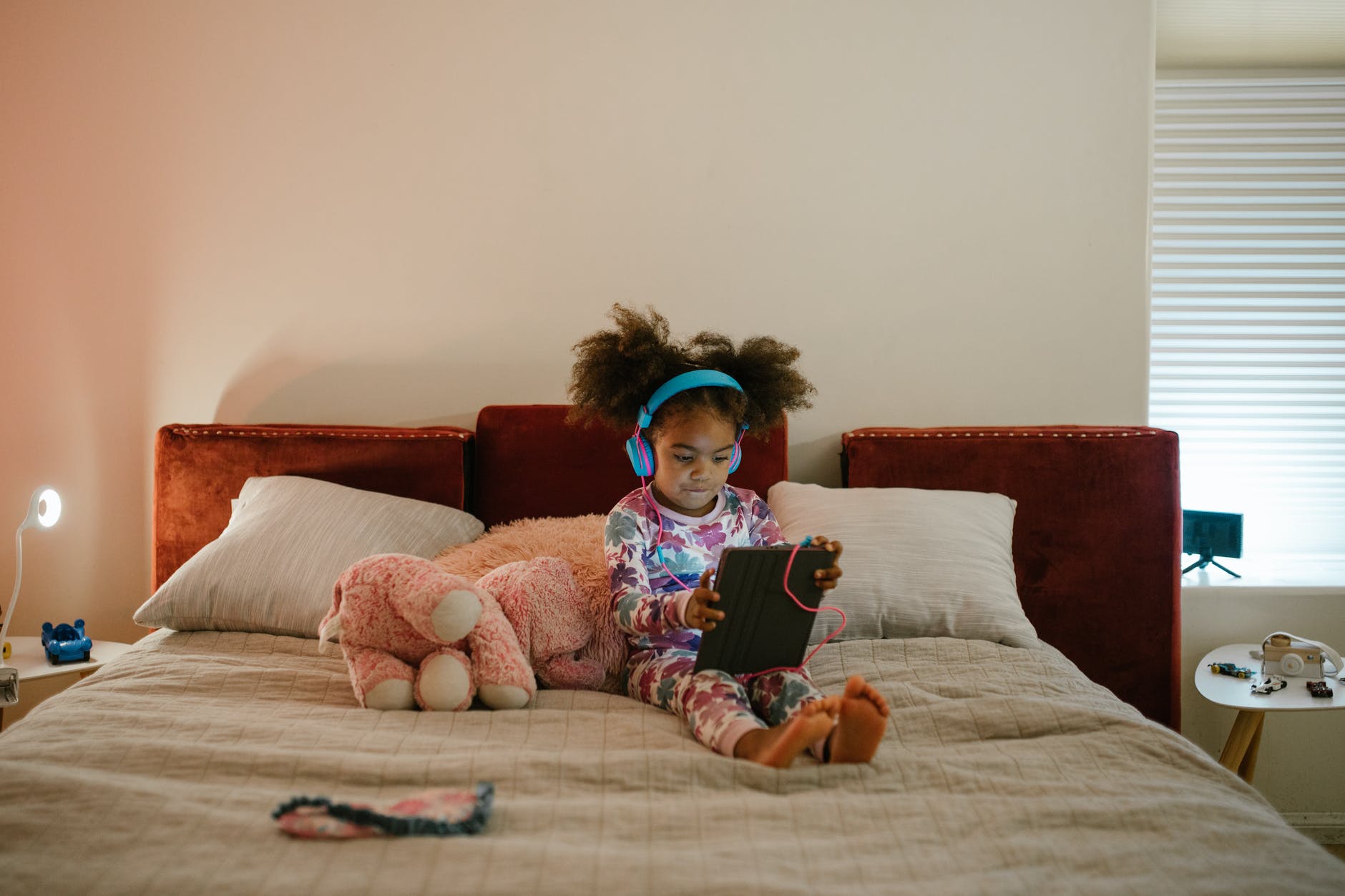
Following 3,786 children at ages 5, 10 and 15, researchers found little consistent link between screen use and emotional, behavioral or social problems once family functioning was considered.
Few parenting worries are as widespread as screen time. Tablets, phones, televisions and games occupy a growing share of children’s days, and guidelines from health authorities often focus on limiting the number of hours children spend in front of them. A new study suggests that the hours alone may not tell the whole story.
In a cohort study published in JAMA Network Open, researchers including corresponding author Bohee Lee of the National Heart and Lung Institute at Imperial College London examined how screen use related to children’s emotional, behavioral and social development at ages 5, 10 and 15. After accounting for how well families functioned, they found few consistent links.
Following children over a decade
The study followed 3,786 children, looking both at snapshots in time, comparing screen use and development at the same age, and at longer-term patterns, asking whether screen use early in life predicted difficulties later.
Family functioning turned out to be important. Factors such as how family members communicate, solve problems and support one another can influence both how much children use screens and how they develop. Without accounting for them, screen use might appear to cause problems that actually stem from the home environment.
This kind of adjustment is a central challenge in screen-time research. Children whose families are under stress, whose parents work long hours or who have fewer opportunities for other activities may spend more time on screens. Those same circumstances can also affect emotional and behavioral development, making it hard to disentangle the effects of screens from the effects of everything else in a child’s life.
After adjusting for family functioning, the researchers found no significant associations between screen use and developmental difficulties at age 5 or at age 10.
Games at 15, and an effect that faded
At age 15, higher scores for difficulties were associated with only one category: very high use of electronic games. Other forms of screen use were not linked to greater difficulties.
The finding about games is consistent with concerns about problematic gaming. The World Health Organization added gaming disorder to its International Classification of Diseases in 2019, defining it as a pattern of gaming that takes precedence over other interests and continues despite negative consequences. Very high levels of gaming may sometimes reflect, rather than cause, underlying difficulties, however.
Early childhood screen use showed a more complicated pattern. High screen use when children were young was associated with greater difficulties at age 10. But that association did not last; by age 15, it was no longer evident.
Overall, the authors report, increased screen use was not consistently linked to poorer development. They argue that guidelines focused only on the duration of screen time are limited, and that what children do on screens, and the family context in which they use them, may matter more.
Part of a long debate
The findings add to a contentious body of research. Some studies have linked heavy screen use to problems with attention, sleep, mood and language development, and public concern about social media and adolescent mental health has grown sharply in recent years. Other researchers have argued that many of the observed associations are small and may reflect other factors, such as family stress, socioeconomic disadvantage or underlying difficulties that lead children to spend more time on screens.
Health organizations have generally recommended limits for young children. The World Health Organization advises no sedentary screen time for children under 2 and no more than an hour a day for children aged 2 to 4. The American Academy of Pediatrics has shifted its guidance in recent years toward emphasizing the quality of content, co-viewing with parents and the creation of family media plans, rather than focusing on time limits alone.
The new study supports that shift. If the type of screen activity and the family environment shape outcomes more than total hours, advice focused only on cutting minutes may miss what matters most.
Limits of the study
The release provides no effect sizes or other detailed statistics, and does not specify the country or cohort from which the children were drawn. Screen use in observational studies is typically reported by parents or children, which can be imprecise. Such studies also cannot establish cause and effect.
Developmental difficulties in such studies are usually measured with standardized questionnaires completed by parents, teachers or children themselves, which capture emotional symptoms, conduct problems, hyperactivity and difficulties with peers. These tools are widely used and validated, but they offer a broad picture rather than a clinical diagnosis.
The categories of screen use studied may also not capture the rapid changes in children’s digital lives. Much of the screen time recorded for today’s 15-year-olds would have been measured years ago, before the current generation of social media platforms and short-form video became dominant.
Still, the results offer a measure of reassurance for parents, along with a reminder that family relationships and the content children engage with deserve at least as much attention as the clock.
Notes
- Study on screen use and psychosocial development in children. JAMA Network Open, 2026. DOI: 10.1001/jamanetworkopen.2026.26804.
- JAMA Network Open. “Screen use and emotional, behavioral, and social development in children.” EurekAlert!, 3 August 2026. https://www.eurekalert.org/news-releases/1138334.
Photo by RODNAE Productions on Pexels.com



Leave a Reply