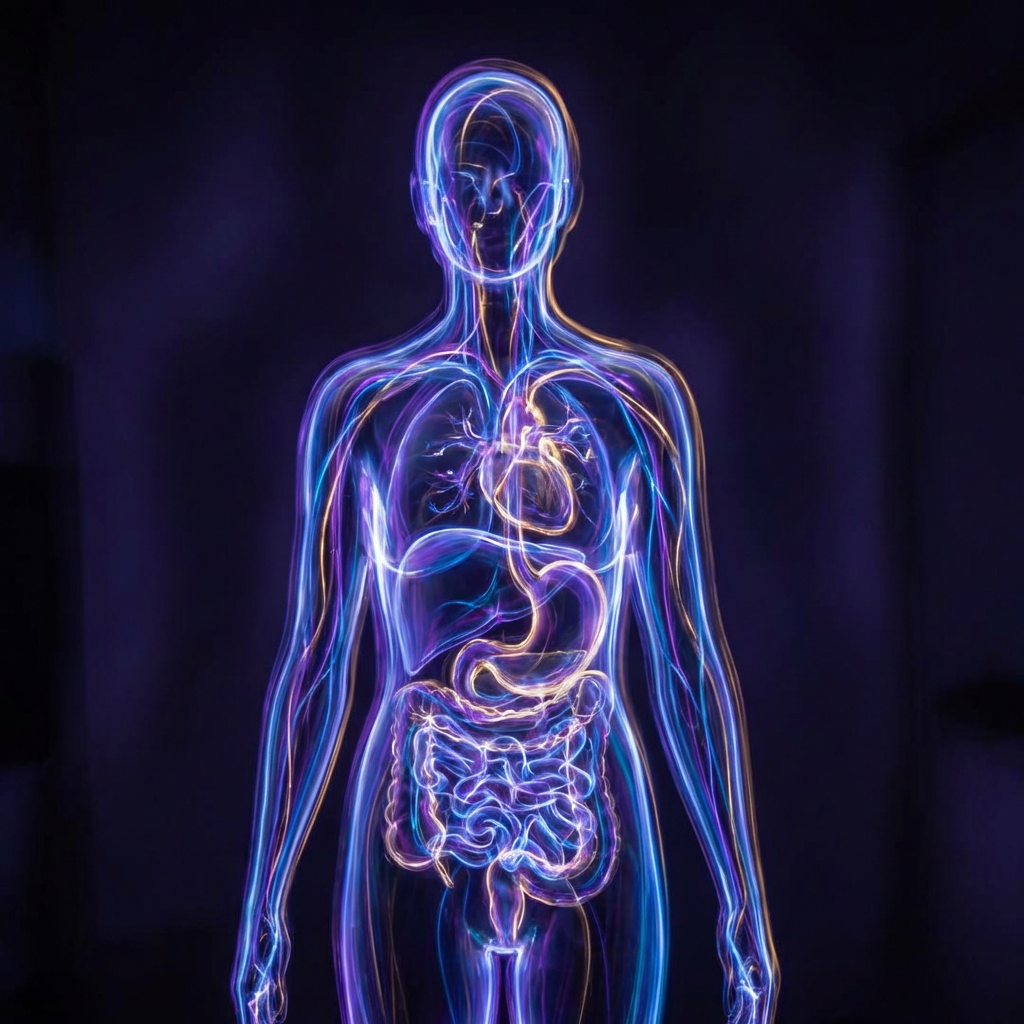
Travelers who land feeling foggy, bloated, or oddly hungry at the wrong hours may be dealing with more than ordinary jet lag. A research team at Wroclaw Medical University argues that long-haul flights across multiple time zones can desynchronize not just the body’s master clock but the daily rhythms of the trillions of bacteria living in the gut — a condition they call “gut jet lag.”
In a narrative review published in Nutrients, the researchers describe how crossing several time zones can compromise the integrity of the intestinal lining and reduce the gut’s production of beneficial short-chain fatty acids. Co-author Karol Biliński noted that short hops within a single continent are unlikely to cause much disruption, but multi-zone long-haul travel is a different story, describing gut jet lag as a newly recognized state of desynchronization between the body’s internal clock and the rhythms that govern gut bacteria.
Co-author Kacper Wiśniewski pointed to the so-called gut-brain axis, a tightly regulated circadian communication system linking the intestines, immune system, and brain. When travel throws those signals out of sync, he explained, the result can be digestive complaints, worse sleep, and lower energy. Co-author Laura Rafner added that abrupt shifts in meal timing disturb digestive enzymes, bile production, and gut motility, nudging the microbiome toward less beneficial bacteria and slowing intestinal transit — effects that can compound fatigue and poor sleep into a cycle that delays recovery.
The review, aimed primarily at athletes traveling to competitions, offers several practical fixes: begin shifting light exposure and sleep schedules several days before departure, adopt the destination’s meal schedule ahead of arrival and avoid eating during the body’s biological night, stay well hydrated, and consider individualized pre-travel probiotic or prebiotic supplementation. Melatonin may help, the authors note, though its effectiveness depends heavily on timing. Professor Dagmara Beata Gaweł-Dąbrowska, who led the research team, said the underlying mechanisms extend well beyond athletes — shift workers and airline staff face similar microbiome disruption from irregular eating patterns, and for everyone, good sleep hygiene, regular meals, and daylight exposure matter.
Journal: Nutrients
Article Title: Travel-Induced Circadian and Microbiota Disturbances: Implications for Athlete Health and Performance: A Narrative Review
DOI: 10.3390/nu18101523
Publication Date: May 11, 2026
Source: EurekAlert



Leave a Reply