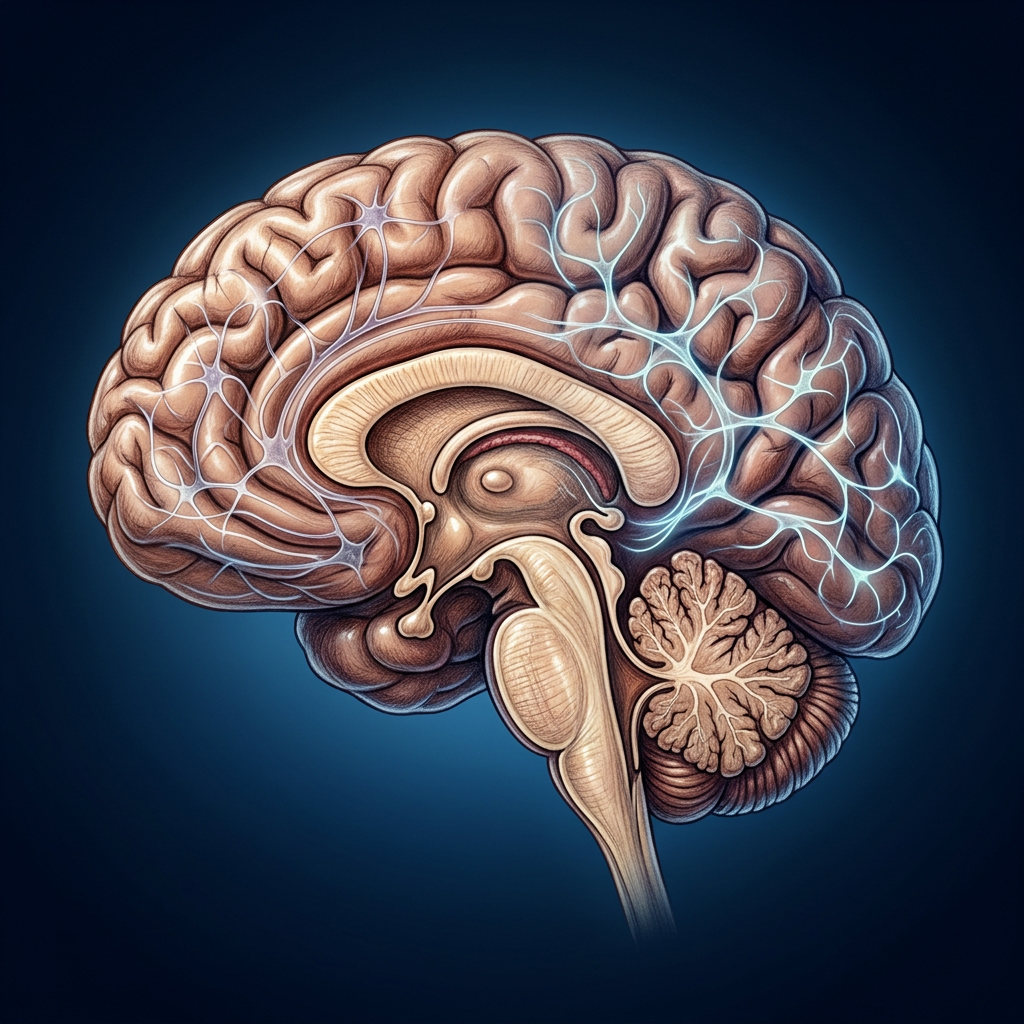
A new study by neuroscientists at The Picower Institute for Learning and Memory at MIT shows how the brain encodes information throughout the decision-making process to keep options clearly in mind and to ensure that chosen and unchosen options are remembered.
The key, the researchers show in the journal iScience, is that the brain convenes ensembles of neurons to produce coordinated patterns of electrical activity that distinctly represent and sort options, both during consideration and after choice.
“It keeps different neural ensembles, different thoughts, distinct from one another,” said senior author Earl K. Miller, Picower Professor in MIT’s Department of Brain and Cognitive Sciences. “Throughout the decision process, the brain flexibly reorganizes information representation to meet the changing task demands,” added lead author Huidi Li, a graduate student in Miller’s lab.
Watching Neurons Sort Options in Real Time
To conduct the study, Li, Miller and their team trained two animals to play a game in which they had to look in the direction of one of two indicated targets on a screen based on which target was assigned the higher reward value. The two options were presented and their values assigned in sequence. Researchers measured the electrical activity of hundreds of neurons in the lateral prefrontal cortex while the animals played.
Using decoding algorithms to analyze the electrical patterns, the researchers found that neurons acted in functional ensembles whose collective activity clearly indicated decision-related information, including distinct target directions and their assigned values.
The researchers’ key finding was that before values were assigned and a decision was made, the neural ensemble patterns consistently represented options based on their order of presentation. After the decision, new ensembles provided new representations, in which “chosen” options had parallel representations regardless of presentation order.
“The observed alignment of chosen target representations could allow downstream areas to read out the location of the chosen target with a single decoder, regardless of its initial presentation order,” the authors wrote.
The researchers also found that individual neurons could often be recruited into different ensembles round by round — a neuron selective for one option in one round could be selective for another option the next.
“Our results illustrate the dynamic subspace reorganization supporting option maintenance and selection in economic decisions,” the authors concluded.
The paper’s other authors are Nikolaos Chrysanthidis, Scott Brincat and Jonas Rose.
Journal: iScience
DOI: 10.1016/j.isci.2026.117492
Funding: Office of Naval Research, Army Research Office, Freedom Together Foundation, National Institutes of Health




Leave a Reply