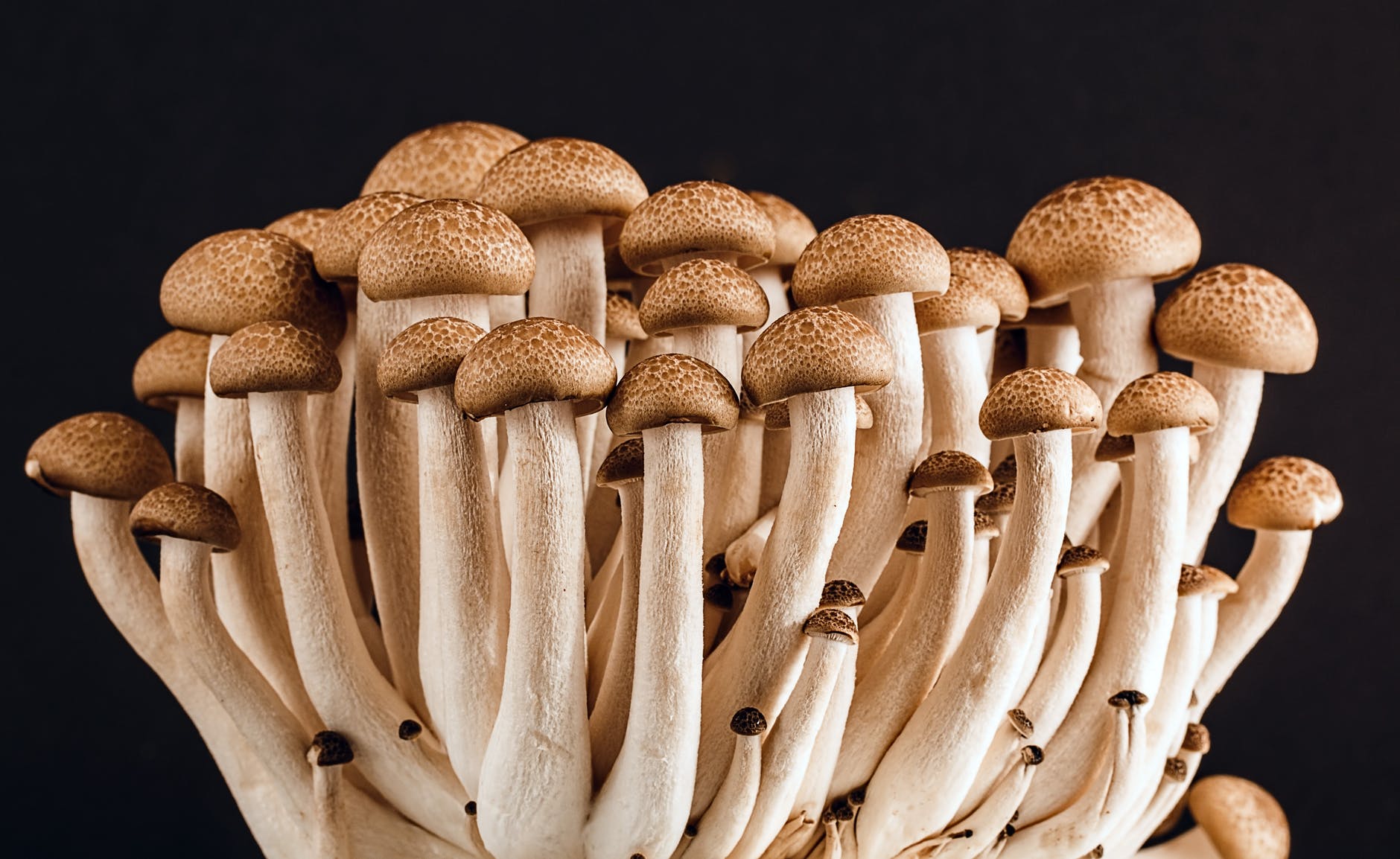
A gigabase genome of Gastrodia elata found inversions across a quarter of its syntenic regions, and two strigolactone-receptor haplotypes that trade tuber shape against polysaccharide content.
Gastrodia elata has no leaves and no chlorophyll. It is a mycoheterotroph: it lives by extracting carbon from a fungus, in its case Armillaria, which is the same genus that kills trees. The orchid is also one of the more valuable plants in Chinese medicine, grown as tian ma for its tubers, which makes its growth and its symbiosis a commercial question as well as a biological one.
A study in Horticulture Research assembles the species’ genome and then looks across 150 wild individuals to ask what varies between them. The answer centres on a hormone pathway that, in ordinary plants, is partly about recruiting fungi in the first place.
The work was carried out by researchers at the China Academy of Chinese Medical Sciences, Jiangsu University and the Ningxia Academy of Agriculture and Forestry Sciences.
A genome full of flipped segments
The team assembled a chromosome-level reference for G. elata forma glauca: 1.05 gigabases anchored to 18 pseudochromosomes.
The structural finding is the one worth pausing on. About 26 per cent of syntenic regions contained inversions, and transposable elements were enriched near the inversion breakpoints.
A quarter of the comparable genome being inverted is a great deal of rearrangement, and the transposon enrichment at the breakpoints points at the likely cause. Transposable elements provide repeated sequences that recombination can misalign, and an inversion is one of the things that happens when it does. Inversions matter beyond bookkeeping because they suppress recombination across the inverted segment, which lets the variants inside it be inherited together as a block — the structural precondition for the haplotypes the rest of the paper is about.
Resequencing 150 individuals produced 14.3 million single-nucleotide polymorphisms and separated the samples into three groups: Clade E, Clade G, and an admixed Clade I. Fifteen symbiosis-related genes differed between Clades E and G, four of them in the strigolactone pathway.
The hormone that calls fungi
Strigolactones are plant hormones with two jobs that matter here. Inside the plant they suppress shoot branching and shape architecture; secreted into the soil, they signal to mycorrhizal fungi — and, inconveniently for farmers, to parasitic witchweeds. A pathway that governs both growth form and fungal relations is exactly where an organism that lives off a fungus might be expected to differ between populations.
The mechanism the study proposes runs through two proteins: GeD14, the strigolactone receptor, and GeD53, a repressor it acts on. The two interact, and the Clade G version of the GeD14–GeD53 complex showed substantially greater binding stability in simulations than the Clade E version.
The team then asked which difference was responsible, and the answer was not the obvious one. A leucine-to-isoleucine substitution at position 88 of the receptor had little effect on strigolactone perception; variation in the M domain of GeD53 was the main structural driver.
That is a useful piece of negative evidence. Leucine and isoleucine are chemically similar, and a substitution between them is the kind of change easy to assume is inconsequential or easy to assume is the cause, depending on where it sits. Testing it and finding the effect lies elsewhere — in the partner protein rather than the receptor — is more informative than either assumption.
A co-expression network analysis identified five candidate downstream effectors — LOL5, RNP1, MTHD, PCN and QNG1 — linked to the allocation of resources between growth and defence.
What the plants look like
The phenotype is where the finding becomes agronomic. Haplotype G plants produced shorter, wider tubers with more polysaccharides than Haplotype E plants, at similar fresh weight.
Similar fresh weight is the key qualifier, and it reframes the result. This is not a haplotype that grows more; it is a haplotype that packages the same mass differently — squatter tubers, denser in the polysaccharides that are the medicinally active constituents and the basis on which tian ma is graded and priced. For a grower, that is a quality trait rather than a yield trait, and the two are usually traded against each other.
The growth–defence framing the authors apply is standard plant biology: resources spent on defence are not spent on growth, and the balance point is under genetic control. In a mycoheterotroph the framing is more complicated than usual, since the partner supplying the carbon is a genus of aggressive tree pathogens. An orchid that is too hospitable loses the relationship; one that is too defensive starves.
The limits
The mechanistic core of the paper rests on molecular dynamics simulations, and that should be stated plainly. Greater binding stability in a simulation is a prediction about two proteins, generated by a computational model of how they interact. It is not a measurement of binding, and the release reports no experiment — no binding assay, no transgenic plant, no knockdown — testing whether the predicted difference does anything in a living orchid.
The downstream effectors are correlative in the same way. A co-expression network identifies genes whose expression moves with the genes of interest, which is a way of nominating candidates rather than demonstrating a pathway.
Clade sizes are also unreported. Fifteen differing symbiosis genes between two clades is a number whose meaning depends on how many individuals are in each and how much the genome differs between them overall, and the release does not give the breakdown.
The release names no individual authors and contains no direct quotations from any researcher; statements attributed to the authors in it are paraphrase.
The paper was published on 4 June 2026. Funding came from the National Key Research and Development Program of China (2024YFC3506500), the National Science Fund for Distinguished Young Scholars (82325049), a Science and Technology Innovation Project of CACMS (CI2023D001) and a central-government project on sustainable use of valuable Chinese medicine resources (2060302). The authors declare no competing interests.
Notes
- “Chromosome-level genome assembly and population genomics unveil strigolactone-regulated growth adaptation in the mycoheterotrophic orchid Gastrodia elata.” Horticulture Research, 2026. DOI: 10.1093/hr/uhag099. The release does not name the paper’s authors.
- Nanjing Agricultural University The Academy of Science. “Hidden genome variation steers growth in Gastrodia elata.” EurekAlert!, 4 August 2026. https://www.eurekalert.org/news-releases/1138767.
Photo by Pixabay on Pexels.com


Leave a Reply