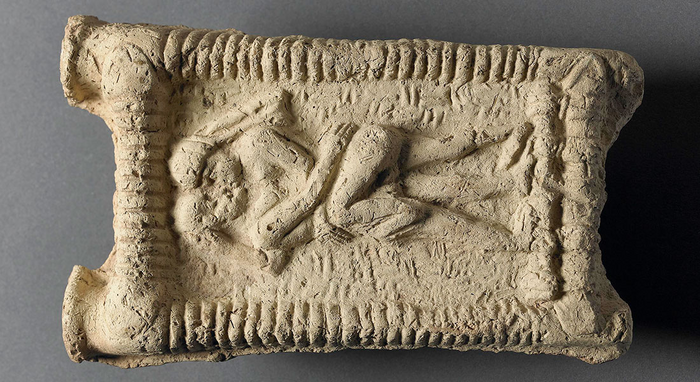
A kiss might seem like one of the simplest human gestures, but a University of Kansas law professor has spent years tracing how the law has treated it across centuries and cultures — as property, as contract, as assault, and as evidence of romantic and legal status.
Andrew Torrance, the Earl B. Shurtz Research Professor of Law at the University of Kansas, examined centuries of legal history and case law in a new article, “Osculation Regulation — The Law of the Kiss,” published in Evolution and Human Behavior.
Using a meta-analytic approach, Torrance surveyed legal treatment of kissing from ancient civilizations through modern courts, finding that the law has regulated the kiss in strikingly varied ways: as a binding seal on contracts and oaths, as a marker of legitimate marriage or betrothal, as grounds for breach-of-promise lawsuits, and, when unwanted, as a form of assault or battery.
“Kissing occupies an unusual place in law,” Torrance said. “It has been treated as sacred, as contractual, as criminal — sometimes all within the same legal tradition, just at different points in history.”
The research traces how legal attitudes toward kissing have shifted alongside broader changes in how societies understand consent, intimacy, and bodily autonomy. Torrance argues that examining this history offers insight into how legal systems adapt — or fail to adapt — to evolving social norms around physical affection and personal boundaries.
The article situates the legal history of the kiss within a broader evolutionary and cross-cultural context, drawing connections between the biological and social functions of kissing and the legal frameworks that have grown up around it.
Journal: Evolution and Human Behavior
DOI: 10.1016/j.evolhumbehav.2026.106917
Article Title: Osculation Regulation – The Law of the Kiss
Method of Research: Meta-analysis
Publication Date: 1-Sep-2026
Institution: University of Kansas
Source: EurekAlert




Leave a Reply