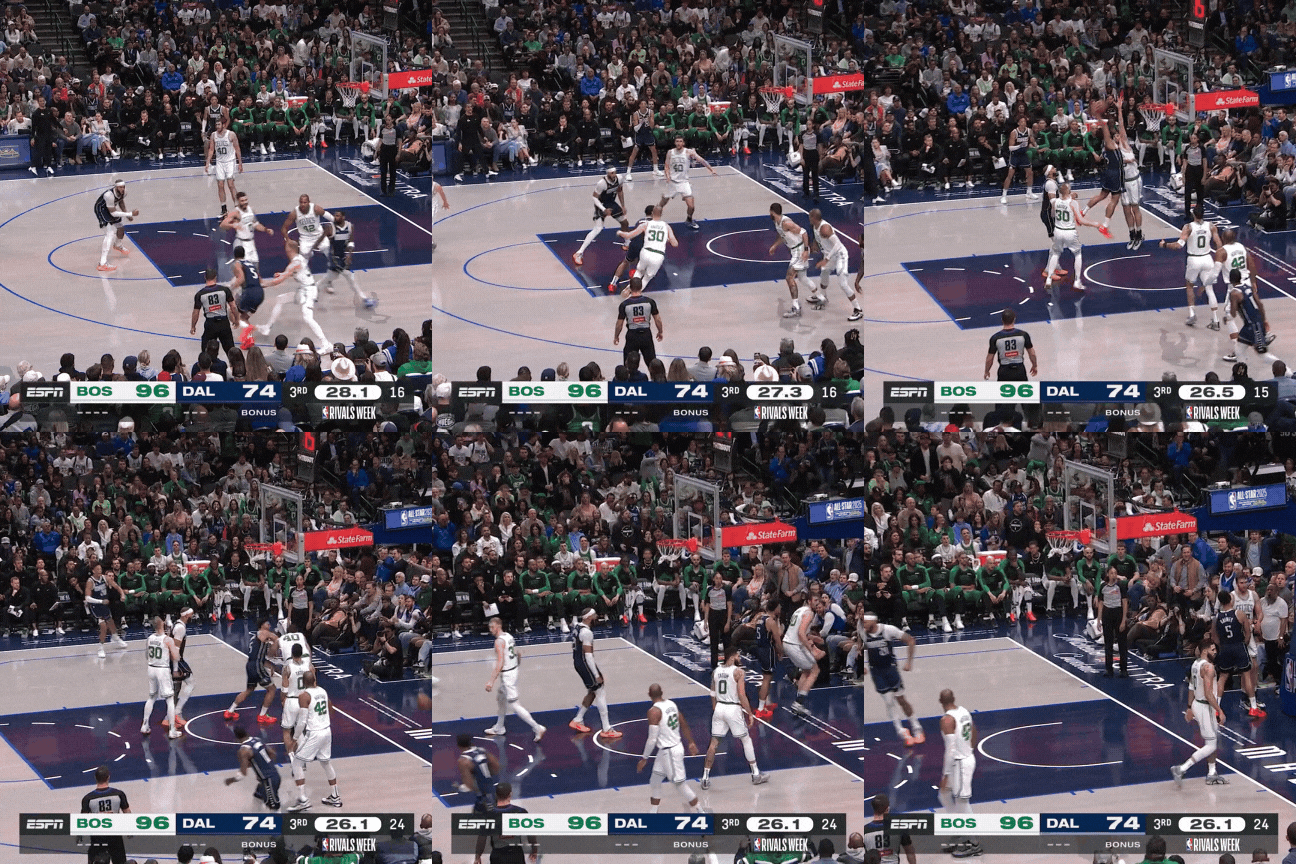
Slam dunks are one of the few things in the NBA that are still truly electrifying—or at least, they have the potential to be. Whether it’s a thunderous poster dunk or a gravity-defying windmill, the sheer explosiveness of a dunk is what makes it so mesmerizing. For that brief, half-second moment when a player defies gravity, it feels as if invisible thrusters are carrying him skyward, turning raw athleticism into something almost otherworldly.
The Physics Behind a Dunk
From a physics standpoint, what makes a dunk impressive isn’t just the height a player reaches but the energy required to get there. At its core, a dunk is about energy conversion—the potential energy stored in that last step before takeoff is instantly transformed into kinetic energy, launching the player into the air. The more kinetic energy a player generates, the more forceful and powerful their dunk appears.
This is where our Slam Dunk Kinetic Energy Calculator comes in. Using basic physics principles, we can determine the precise kinetic energy a dunker generates at takeoff based on their weight, jump height, and hang time.
How We Calculate Dunk Kinetic Energy
The formula for kinetic energy (KE) is:
KE=12mv2KE = \frac{1}{2} m v^2
Where:
- m = mass of the player (kg)
- v = takeoff velocity (m/s), which we derive from the player’s hang time.
To find v, we use the equation:
v=g⋅t2v = \frac{g \cdot t}{2}
where g is the acceleration due to gravity (9.81 m/s²) and t is the player’s hang time (total time airborne).
Why the NBA Dunk Score Doesn’t Always Reflect Energy Used
The NBA Dunk Score is determined using advanced optical tracking systems that analyze over 25 attributes of a dunk. The score is broken down into four main categories: Jump, Power, Style, and Defensive Contest. Jump measures verticality and explosiveness, Power captures the force and speed of the dunk, Style evaluates creativity and flair, and Defensive Contest accounts for defensive pressure. The model uses real-time 3D pose detection, tracking 29 body points at 60 frames per second, ensuring objective analysis. Unlike traditional dunk ratings, the NBA Dunk Score removes bias from context, focusing purely on technical execution and difficulty.

While the NBA Dunk Score is a great way to evaluate the style, difficulty, and execution of a dunk, it often fails to reflect the raw kinetic energy behind it. A high-flying, acrobatic dunk may score highly in terms of flashiness, but a simple, powerful slam by a heavier player can actually generate much more kinetic energy.
For example, a player like John Collins (235 lbs, 33-inch vert, 0.500s hang time) will generate significantly more kinetic energy than a lighter player with a higher vertical, simply because mass is a crucial factor in energy calculations.
What Our Calculator Reveals
By analyzing kinetic energy, we can quantify just how much force is behind each dunk, independent of style points or contest difficulty. This provides a new way to appreciate power dunkers who may not always get the credit they deserve compared to flashy dunkers.
Ready to see how much energy your favorite player generates when they throw it down? Try our NBA Dunk Kinetic Energy Calculator and break down the science behind the game’s most electrifying plays!
Comparing the Top 5 Dunks of the 2024/2025 NBA Season (Mid-Season Analysis)
As we reach the mid-season NBA All-Star Game, it’s time to break down the most electrifying dunks of the year so far. Using our Slam Dunk Kinetic Energy Calculator, we’ve measured the raw power behind each of these top plays and compared them based on kinetic energy, explosiveness, and athleticism.
Top 5 Dunks: Kinetic Energy Breakdown
| Player | Weight (lbs) | Vert (inches) | Hang Time (s) | KE (Joules) |
| John Collins | 235 | 33.0 | 0.500 | 320.1 |
| Jaylen Brown | 223 | 33.7 | 0.500 | 303.8 |
| Jalen Green | 178 | 40.2 | 0.550 | 293.6 |
| Keyonte George | 185 | 36.4 | 0.484 | 235.3 |
| Quentin Grimes | 205 | 33.1 | 0.433 | 208.8 |

Dunk Analysis & Breakdown
1. John Collins – 320.1 J (Most Powerful Dunk)
Collins takes the top spot with a dunk that combined weight, verticality, and a long hang time to generate the most kinetic energy (320.1 J). His powerful frame allowed him to create the strongest force upon takeoff, making his dunk one of the most physically dominant plays of the season.

2. Jaylen Brown – 303.8 J (Elite Strength & Control)
Brown follows closely behind with 303.8 J, showcasing his ability to attack the rim with a blend of strength and agility. While he didn’t quite reach Collins’ energy output, his dunk was executed with precision and balance, making it one of the most aesthetically pleasing power slams.

3. Jalen Green – 293.6 J (Highest Vertical Dunk)
Green’s dunk stands out for its sheer leaping ability (40.2-inch vertical) and longest hang time (0.550s). Although he generated slightly less kinetic energy than Collins and Brown, his dunk had an incredible aerial component, giving the illusion of floating before hammering it down.

4. Keyonte George – 235.3 J (A Surprise Entry)
Despite being lighter than some of his peers, George put down a dunk with an impressive 36.4-inch vertical. His kinetic energy was slightly lower, but his ability to elevate quickly and throw it down with force makes this one of the more underrated dunks of the season.

5. Quentin Grimes – 208.8 J (Bang But No Buck)
Grimes’ dunk is a definite banger, just not in the kinetic energy sense. His weight-to-velocity ratio resulted in the lowest kinetic energy output on this list, but the execution, fluidity, and ferociousness of his dunk still made it a fan-favorite moment.

Final Takeaways
- Power Dunkers: Collins and Brown dominated in raw kinetic energy.
- Explosiveness: Jalen Green had the best vertical, making his dunk visually stunning.
- Underrated Performance: Keyonte George proved that energy isn’t everything—his dunk was all about quick elevation and creativity.
- Illusion of Power: Grimes showcased a savage dunk, even without high kinetic energy output.
With half a season left, we’re excited to see if any new dunks can top these rankings. Will we see a higher vertical leap or an even more powerful slam in the second half of the year? Stay tuned as we continue tracking the best dunks using real physics! 🔥🏀
Sign up for the Daily Dose Newsletter and get every morning’s best science news from around the web delivered straight to your inbox? It’s easy like Sunday morning.



Leave a Reply