One way to understand the potential for life on far-off planets — those in other solar systems that orbit different stars — is to study a planet’s atmosphere. Telescopic images often capture traces of gases that may indicate life and habitable planets. But findings from a new study led by researchers at the University of Colorado Boulder challenge this idea: scientists created one type of gas often seen as an indicator of life in a chemistry lab with no organisms present.
The paper, published today in Astrophysical Journal Letters, found one type of molecule scientists typically view as a sign of life, known as a biosignature, may not be as strong an indicator of life as previously thought. The researchers created dimethyl sulfide, a type of organic sulfur compound often made by marine microbes, in a reaction chamber using light and gases found in many planets’ atmospheres.
The researchers said creating dimethyl sulfide in the lab was exciting, but their findings flip previous research on its head. The work is led by CU Boulder’s Cooperative Institute for Research in Environmental Sciences (CIRES) Visiting Fellow Nate Reed and CIRES Fellow and associate professor of chemistry Ellie Browne.
“The sulfur molecules that we’re making are thought to be indicators of life because they’re produced by life on Earth,” Browne said. “But we made them in the lab without life — so it might not be a sign of life, but could be a sign of something hospitable for life.” Organic sulfur compounds might not be robust biomarkers but could instead serve as markers of metabolic potential, according to the study authors.
NASA’s James Webb Space Telescope launched in 2009. One of its missions is to capture images of exoplanets, planets outside of Earth’s solar system, to understand different atmospheres. Part of the satellite’s mission is to ask: Do these planets support life?
The new study looks at what happens in a planet’s atmosphere when gases react with light and form an “organic haze and associated gases,” aerosol particles formed via atmospheric chemistry. The authors focused on organic molecules that contain sulfur, including dimethyl sulfide, which are secondary metabolic products of living organisms on Earth.
“One of the big findings of the paper that we saw was dimethyl sulfide,” said Reed. “That one was exciting, because it’s been measured in exoplanetary atmospheres, and it’s thought previously to be a sign of life living on the planet.”
Sign up for the Daily Dose Newsletter and get every morning’s best science news from around the web delivered straight to your inbox? It’s easy like Sunday morning.
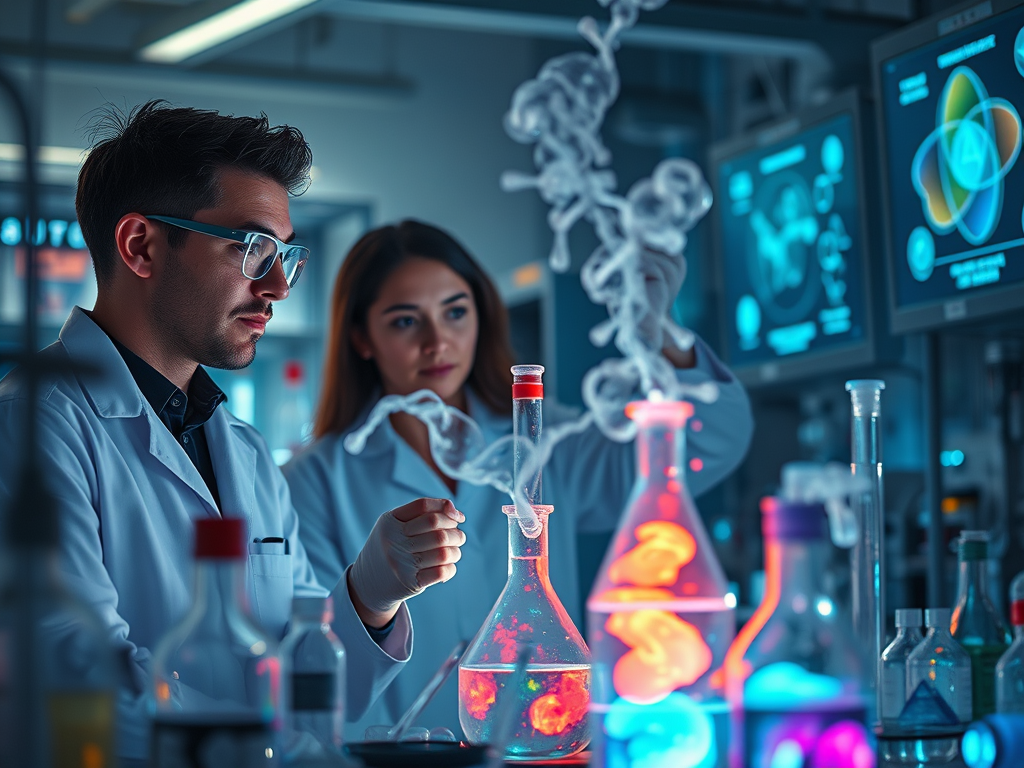
To recreate planetary atmospheres in a lab, Reed and Browne alongside co-authors, including CIRES associate director Maggie Tolbert, mimic atmospheres where light reacts with gases. In the new study, they used UV light to turn methane and hydrogen sulfide molecules into reactive species, which produce organosulfur gases — the biosignatures seen from the James Webb Space Telescope.
Reed noted that while the findings are exciting, they are limited to a singular type of atmosphere. “There’s a wide variety of atmospheres, and we only looked at small differences in one — you can’t study every atmosphere that exists in a lab,” he said.
Looking forward, the researchers hope their study will inspire more fundamental laboratory studies looking at basic chemical reactions, especially with sulfur. Sulfur is challenging to work with — it’s sticky, smelly, and toxic. But not studying sulfur reactions prevents scientists from fully understanding what these findings mean about biosignatures.
“When we’re searching for these biosignatures, the tendency is to want to sensationalize ‘we detected signs of life,’” Browne said. “The atmosphere is really good at making a whole bunch of different molecules, and we’ve found that just because it can be made in a lab, doesn’t mean it’s not a source.”



Leave a Reply