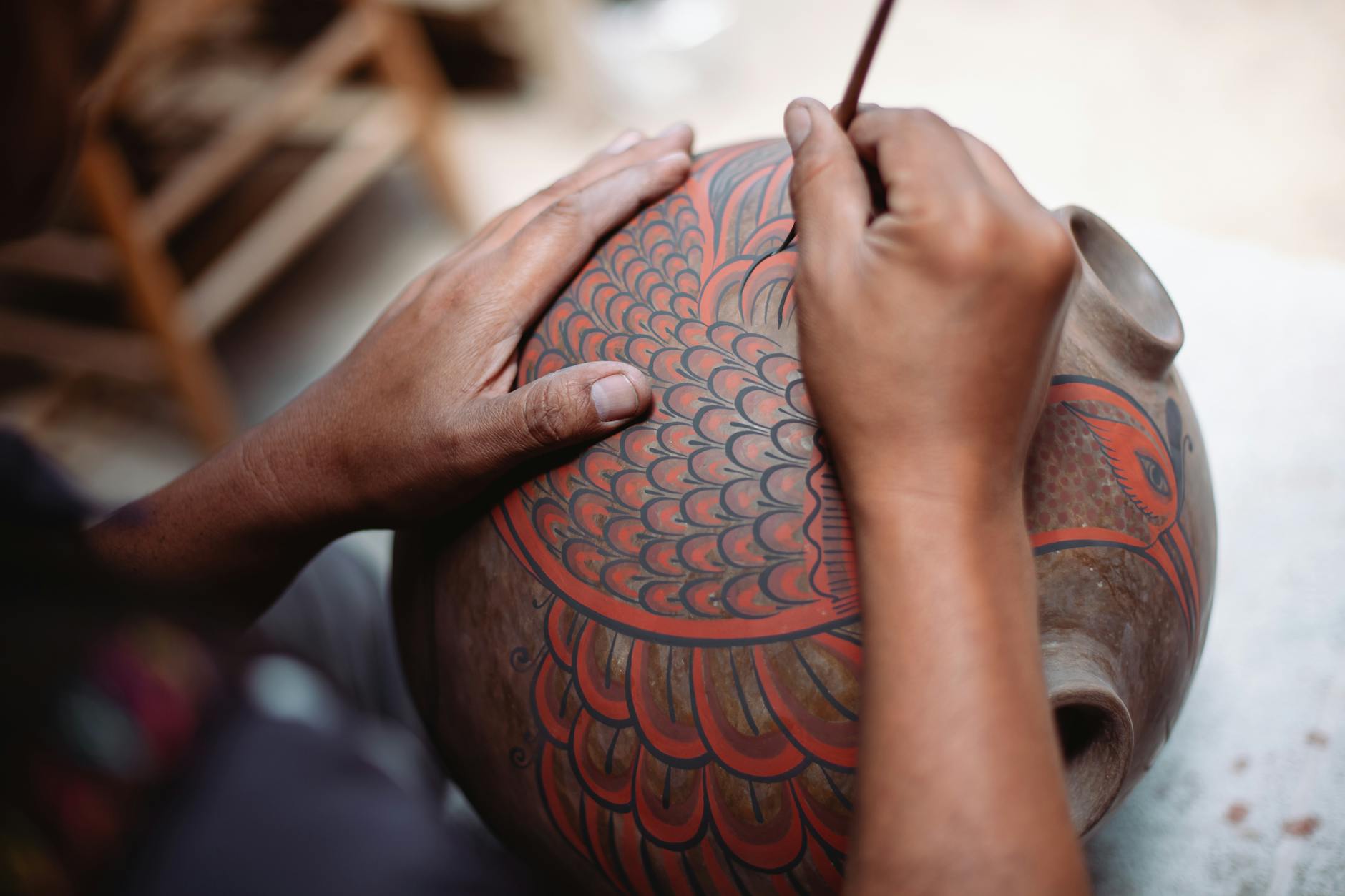
Could arts and crafts help protect the public’s mental health? A new study in Frontiers in Public Health provides evidence that indulging our creative side could provide everyone with a significant wellbeing boost. Because arts and crafts are relatively affordable and accessible, promoting the public’s access to artistic activities could provide a major boost to public mental health.
“Crafting and other artistic activities showed a meaningful effect in predicting people’s sense that their life is worthwhile,” explained Dr Helen Keyes of Anglia Ruskin University, lead author. “Indeed, the impact of crafting was bigger than the impact of being in employment. Not only does crafting give us a sense of achievement, it is also a meaningful route to self-expression. This is not always the case with employment.”
A stitch in time
The scientists were inspired by the urgent need to improve public mental health in the wake of the Covid-19 pandemic. Any measures that could improve levels of wellbeing, and lower levels of loneliness, in the general population would have significant benefits. Some studies have already shown that specific craft activities can be therapeutic for people with mental health conditions. If taking part in arts and crafts in general has a positive impact on wellbeing for people without a diagnosed illness, promoting the accessibility of arts and crafts could contribute significantly to public mental health.

The scientists analyzed a sample of 7,182 participants from the annual Taking Part survey conducted by the UK’s Department for Culture, Media, and Sport, which evaluates public engagement with cultural, digital and sporting activities. This broad sample allowed the scientists to investigate the impact of creative arts generally rather than specific crafts, and helped them evaluate how effective arts-based interventions might be beyond a controlled clinical setting.
The scientists controlled for sociodemographic variables that we already know affect the experience of wellbeing: gender, age group, health, employment status, and level of deprivation. For instance, poorer health, unemployment, and higher levels of deprivation have all been linked to lower wellbeing.
Painting a picture
All participants were asked to rate their sensations of happiness, anxiety, and life satisfaction, and to give their impression of whether life is worthwhile. They were also asked how often they felt lonely. When asked about their engagement with crafts, 37.4% of respondents confirmed that they had taken part in at least one craft activity over the last twelve months.
The people who took part in arts and crafts reported higher levels of happiness and life satisfaction, as well as a stronger sense that life is worthwhile. The boost to respondents’ sense that life is worthwhile was as significant as being in employment. However, engagement with arts and crafts didn’t predict levels of loneliness. This could be because some crafts can be solitary: further research will be needed to investigate the social aspects of arts and crafts.
“Engaging in these activities is linked with a greater sense that life is worthwhile, increased life satisfaction and happiness,” said Keyes. “The wellbeing effects were present even after we accounted for things like employment status and level of deprivation. It seems that crafting can contribute positively to your wellbeing above and beyond these other aspects of your life.”
Although these effects are small, their magnitude is similar to that of sociodemographic variables, which are much harder to change. Leveraging the positive effects of artistic activities therefore offers a significant opportunity to improve the public’s wellbeing.
“Governments and national health services might consider funding and promoting crafting, or even socially prescribing these activities for at-risk populations, as part of a promotion and prevention approach to wellbeing and mental health,” said Keyes.
“There is certainly something immensely satisfying about seeing the results of your work appear before your eyes,” added Keyes, who enjoys DIY — especially painting and decorating. “It feels great to focus on one task and engage your mind creatively.”
However, the scientists cautioned that this is a correlational study. More research will be required to confirm causation.
“We can’t know for certain whether crafting is directly causing this increase in wellbeing,” explained Keyes. “The next step would be to carry out an experimental study where we measure people’s wellbeing before and after significant periods of crafting.”
IMAGE CREDIT: Los Muertos Crew


Leave a Reply