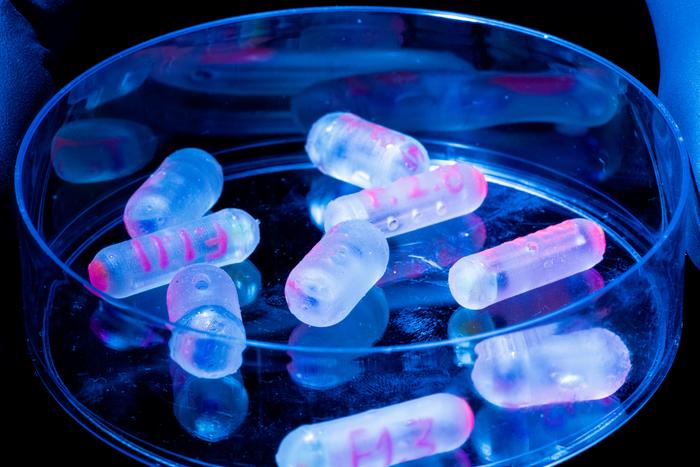
Significant progress has been made at Tufts University School of Engineering in the development of a small device, about the size of a vitamin pill, that can be swallowed and passed through the gastrointestinal tract to sample the full inventory of microorganisms in an individual’s gastro-intestinal tract.
This device has the potential to advance research on the relationship between resident bacteria and a wide range of health conditions. It could also serve as a diagnostic tool for adjusting the microbiome or administering drugs to treat those conditions.
The device has completed preclinical characterization – as presented in the journal Device – paving the way for upcoming human clinical trials. It is characterized by a 3D printed soft elastic exterior with sidewall inlets that open in response to the changing acidity as the pill reaches the small intestine.

The pill uses elastic microvalves with swellable polyacrylate beads that close the inlets once intestinal content has been collected. The technology was developed at Tufts Nano Lab by a team led by Professor Sameer Sonkusale, along with post-doctoral researcher Ruben Del-Rio-Ruiz who is lead author on the preclinical study. A second team of researchers led by Professor Giovanni Widmer at the Cummings School of Veterinary Medicine at Tufts University assisted by PhD candidate Debora Silva, performed the tests in animals and analyzed the samples collected by the pill.
Improvements over previous versions of the pill include using a soft elastic exterior rather than a rigid shell, to make it easier to ingest, and significantly improved control over localized sampling of the microbiome in the small intestine.
Sign up for the Daily Dose Newsletter and get every morning’s best science news from around the web delivered straight to your inbox? It’s easy like Sunday morning.
Current techniques to study the intestinal microbiome primarily rely on fecal matter , This technology represents a significant advance in understanding the function of the thousands of microbial species populating the entire length of the gastrointestinal tract and their effects on health.
IMAGE CREDIT: Sameer Sonkusale, Tufts University Nano Lab
If you enjoy the content we create and would like to support us, please consider becoming a patron on Patreon! By joining our community, you’ll gain access to exclusive perks such as early access to our latest content, behind-the-scenes updates, and the ability to submit questions and suggest topics for us to cover. Your support will enable us to continue creating high-quality content and reach a wider audience.
Join us on Patreon today and let’s work together to create more amazing content! https://www.patreon.com/ScientificInquirer


Leave a Reply