Researchers surveyed the views of 1,172 parents across the US about the relative educational value of free play, guided play, and games. The results showed that parents tend to rate free play as most educational. However, their opinion differs from that of experts, who emphasize the effectiveness of guided play with a learning ‘goal’. This means that work needs to be done in educating US parents about the difference between free and guided play with their children.
Child psychologists have long known that play is essential for children’s cognitive development because it boosts their social, physical, and emotional skills. But beginning in the 21st century, specialists repeatedly sounded the alarm that ‘play is under siege’ for US children. Kids were playing less, and – it was feared – with a lesser quality.
But are today’s parents sufficiently aware of the importance of letting their children play? Yes, found a team of researchers who tested this through a survey of the opinions of 1,172 US parents. Their results showed that today’s parents understand how important play is for children’s well-being. However, they also showed that work needs to be done to educate parents about the value of playful learning (or ‘guided play’) for learning goals in reading and math. The results are published in Frontiers in Developmental Psychology.
“Here we show that US parents understand that play can be more powerful for learning than direct instruction,” says first author Charlotte Wright, a senior research associate at Temple University College of Liberal Arts, Philadelphia.
“Until recently, people generally considered play to be the opposite of work and learning. What we see in our study is that this separation no longer exists in the eyes of parents: a positive development.”

Parents were interviewed aged between 18 and 75, with children aged between two and 12. Parents were White (68.9%), Hispanic (14.4%), Black (10.3%), Asian (3.4%), mixed race (2.6%), or American Indian or Native Alaskan (0.4%). Household income ranged from less than $25,000 to more than $100,000. Their level of education ranged from lacking a high school diploma (4.4%) to having a postgraduate degree (11.9%)
The results showed that parents tended to rate free play as best for learning, followed by guided play, games, and direct instruction, respectively. This held true, both when these types of education were explicitly named, or when they were only implied in given scenarios.
The higher the parent’s level of education, and the higher their household income, the more they tended to rate free play as the most effective method for learning. Likewise, parents of girls were more likely to rate free play as most educational than parents of boys. In contrast, Black or Hispanic parents were more likely to rate direct instruction higher than forms of play.
An example of guided play
The current research consensus is that guided play is more effective than free play for children to learn skills such as mathematics, language and literacy, and the spatial awareness necessary for STEM skills.
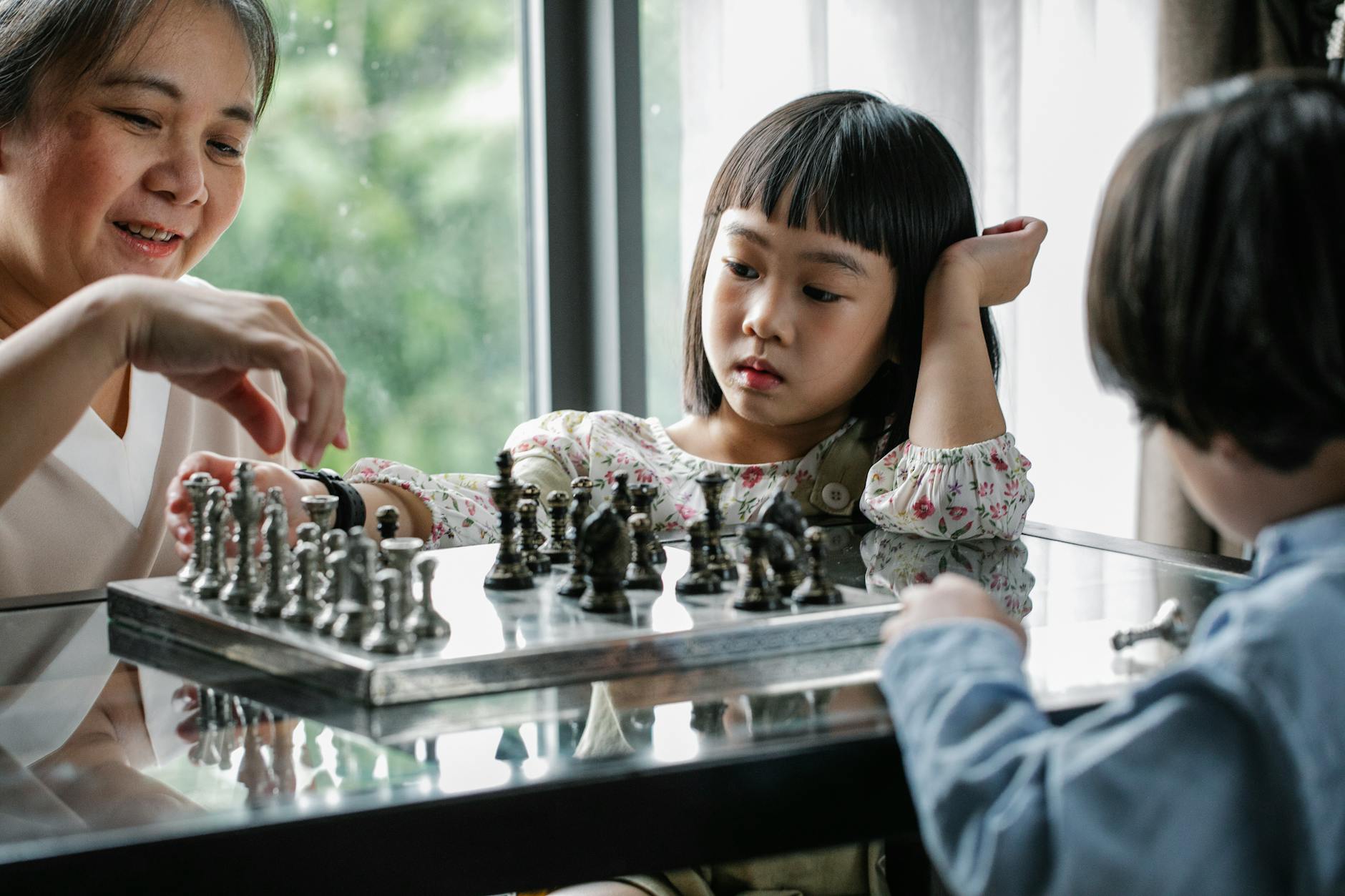
Guided play, possible in the home and in the classroom, differs from free play in being initiated by the adult, while letting the child drive her learning towards a specific goal. For example, learning in Montessori classrooms and children’s museums is always initiated by an adult who reflects on learning goals. But children themselves drive the exploration within such guided learning environments – giving them choice and voice.
The authors gave an example scenario of guided play: “Raouf’s father, Ola, says to Raouf, ‘I wonder if we can build a tall tower with these blocks.’ Ola follows Raouf’s lead as Raouf tries to build the tower, asking questions to support him, when necessary (eg, ‘Hmmm, our tower keeps falling when we put the blue block on the bottom! What is another block we could try?’).”
Adults thus become the support team, but not the directors, of guided play.
Parents’ perceptions differ from those of experts
Wright et al. concluded that “many US parents hold perceptions that do not align completely with evidence-based research, such as attributing more learning value to free play […] compared to guided play.”
The results also showed that when parents were better informed about current theory on child cognitive development (as measured by questions from the Knowledge of Infant Development Inventory (KIDI) questionnaire), they tended to value guided play more.
The concept of different kinds of play, such as guided vs free play, was only recently introduced in research and may not yet be evident to the public. Guided play also requires that parents engage with their children during a play experience, which might lead them to undervalue guided play in favor of free play.
Importance of educating parents
“While free play is crucial for children’s well-being, recent research emphasizes that guided play is a more effective approach to support children’s learning in reading, STEM, and learning-to-learn skills like attention, memory, and flexible thinking,” said Wright.
Senior author Dr Kathy Hirsh-Pasek, a professor at the same institute, said: “We need to help refine parents’ knowledge about the importance of play so that they can create guided play opportunities in everyday experiences like doing laundry, taking a walk in the park, or playing with a puzzle. As parents come to see these as ‘learning’ moments in everyday play, their children will thrive, while they will have more fun being parents.”
This article was originally published in Frontiers In.
IMAGE CREDIT: Alex Green.
Sign up for the Daily Dose Newsletter and get the morning’s best science news from around the web delivered straight to your inbox? It’s easy like Sunday morning.




Leave a Reply