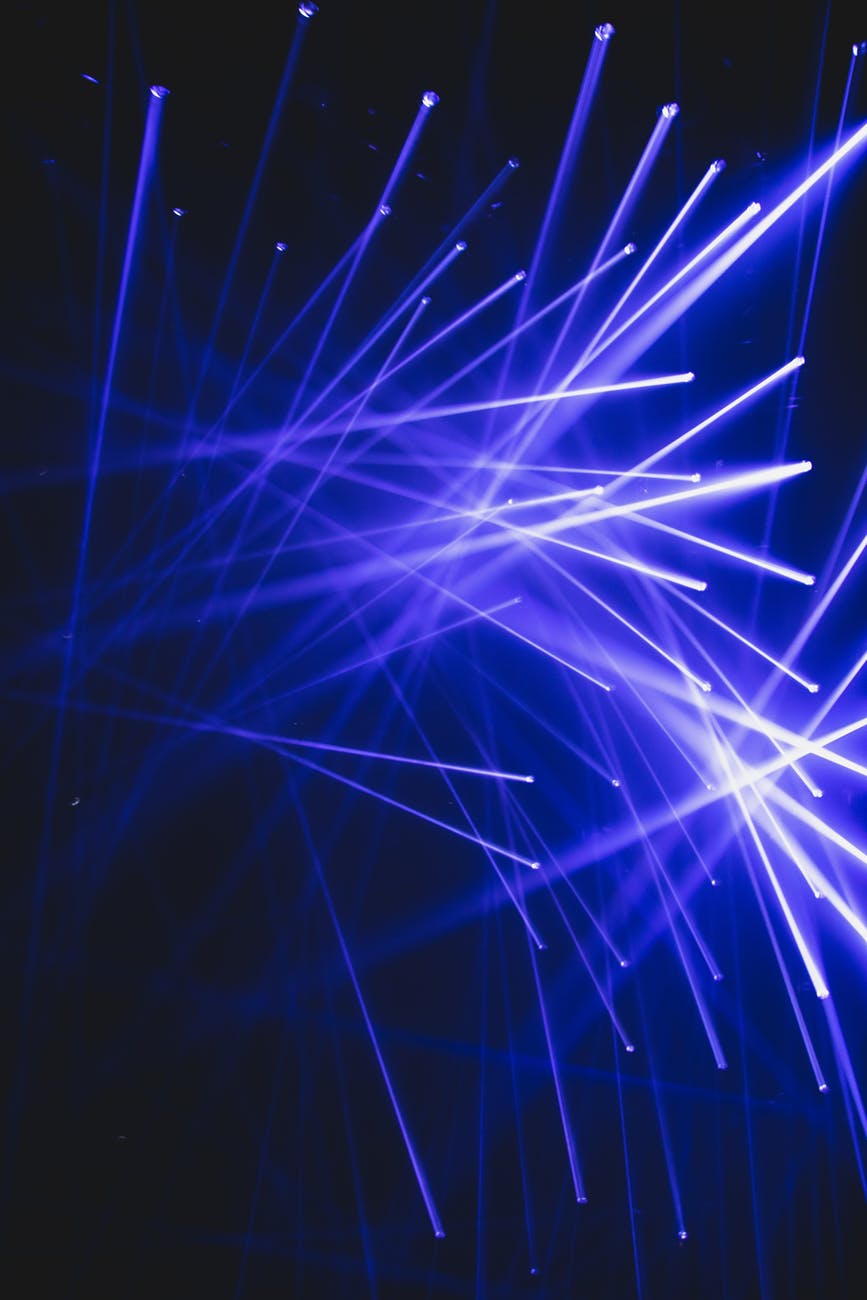
Vision is a complex process. The visual perception of the environment is created by a combination of different wavelengths of light, which are decoded as colours and brightness in the brain. Photoreceptors in the retina first convert the light into electrical impulses: with sufficient light, the cones enable sharp, detailed, and coloured vision. Rods only contribute to vision in low light conditions allowing for different shades of grey to be distinguished but leaving vision much less precise. The electrical nerve impulses are finally transmitted to ganglion cells in the retina and then via the optic nerve to the visual cortex in the brain. This region of the brain processes the neural activity into a coloured image.
Ambient light however does not only allow us to see, it also influences our sleep-wake rhythm. Specialised ganglion cells are significantly involved in this process, which – like the cones and rods – are sensitive to light and react particularly strongly to short-wavelength light at a wavelength of around 490 nanometres. If light consists solely of short wavelengths of 440 to 490 nanometres, we perceive it as blue. If short-wavelength light activates the ganglion cells, they signal to the internal clock that it is daytime. The decisive factor here is how intense the light is per wavelength; the perceived colour is not relevant.
“However, the light-sensitive ganglion cells also receive information from the cones. This raises the question of whether the cones, and thereby the light colour, also influence the internal clock. After all, the most striking changes in brightness and light colour occur at sunrise and sunset, marking the beginning and end of a day,” says Dr. Christine Blume. At the Centre for Chronobiology of the University of Basel, she investigates the effects of light on humans and is the first author of a study investigating the effects of different light colours on the internal clock and sleep. The team of researchers from the University of Basel and the TUM has now published its findings in the scientific journal “Nature Human Behaviour”.

“A study in mice in 2019 suggested that yellowish light has a stronger influence on the internal clock than blueish light,” says Christine Blume. In humans, the main effect of light on the internal clock and sleep is probably mediated via the light-sensitive ganglion cells. “However, there is reason to believe that the colour of light, which is encoded by the cones, could also be relevant for the internal clock.”
To get to the bottom of this, the researchers exposed 16 healthy volunteers to a blueish or yellowish light stimulus for one hour in the late evening, as well as a white light stimulus as a control condition. The light stimuli were designed in such a way that they differentially activated the colour-sensitive cones in the retina in a very controlled manner. However, the stimulation of the light-sensitive ganglion cells was the same in all three conditions. Differences in the effect of the light were therefore directly attributable to the respective stimulation of the cones and ultimately the colour of the light.
“This method of light stimulation allows us to separate the light properties that may play a role in how light effects humans in a clean experimental way,” says Manuel Spitschan, Professor of Chronobiology and Health at the Technical University of Munich, who was also involved in the study.
In order to understand the effects of the different light stimuli on the body, in the sleep laboratory the researchers determined whether the internal clock of the participants had changed depending on the colour of the light. Additionally, they assessed how long it took the volunteers to fall asleep and how deep their sleep was at the beginning of the night. The researchers also enquired about their tiredness and tested their ability to react, which decreases with increasing sleepiness.
Night mode on screens - useful or not?

We often hear that the short-wavelength component of light from smartphone and tablet screens affects biological rhythms and sleep. The recommendation is therefore to put your mobile phone away early in the evening or at least use the night shift mode, which reduces the short-wavelength light proportions and looks slightly yellowish. Christine Blume confirms this. However, the yellowish colour adjustment is a by-product that could be avoided. "Technologically, it is possible to reduce the short-wavelength proportions even without colour adjustment of the display, however this has not yet been implemented in commercial mobile phone displays," says the sleep researcher.
The conclusion: “We found no evidence that the variation of light colour along a blue-yellow dimension plays a relevant role for the human internal clock or sleep,” says Christine Blume. This contradicts the results of the mouse study mentioned above. “Rather, our results support the findings of many other studies that the light-sensitive ganglion cells are most important for the human internal clock,” says the scientist.
Manuel Spitschan sees the study as an important step towards putting basic research into practice: “Our findings show that it is probably most important to take into account the effect of light on the light-sensitive ganglion cells when planning and designing lighting. The cones and therefore the colour play a very subordinate role.”
It remains to be seen whether the colour of the light also has no effect on sleep if the parameters change and, for example, the duration of the light exposure is extended or takes place at a different time. Follow-up studies should answer questions like these.
IMAGE CREDIT: Ryutaro Tsukata.
Sign up for the Daily Dose Newsletter and get the morning’s best science news from around the web delivered straight to your inbox? It’s easy like Sunday morning.


Leave a Reply