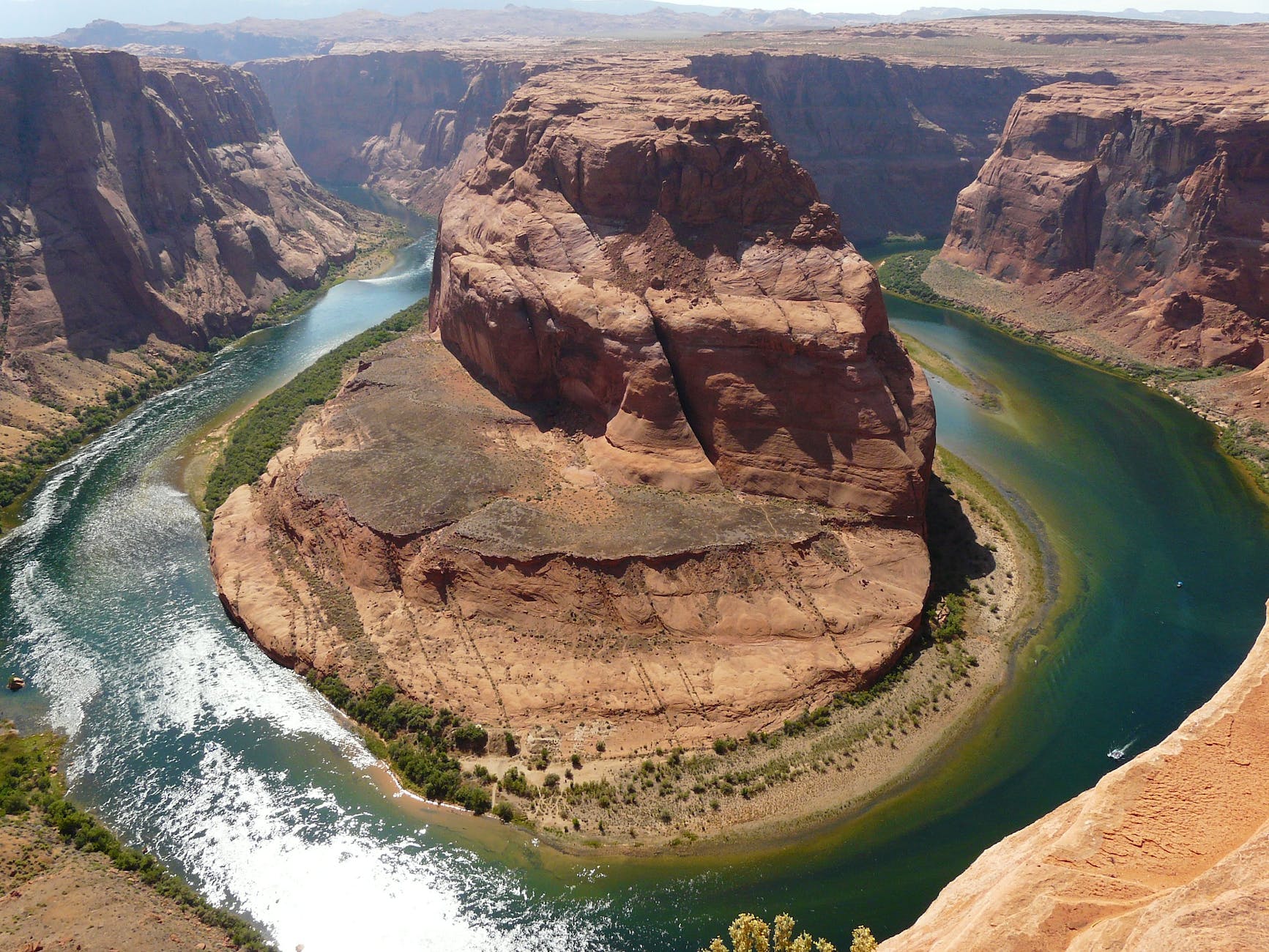
Rivers are warming and losing oxygen faster than oceans, according to a Penn State-led study published today (Sept. 14) in the journal Nature Climate Change. The study shows that of nearly 800 rivers, warming occurred in 87% and oxygen loss occurred in 70%.
The study also projects that within the next 70 years, river systems, especially in the American South, are likely to experience periods with such low levels of oxygen that the rivers could “induce acute death” for certain species of fish and threaten aquatic diversity at large.
“This is a wake-up call,” said Li Li, Penn State’s Isett Professor of Civil and Environmental Engineering and corresponding author on the paper. “We know that a warming climate has led to warming and oxygen loss in oceans, but did not expect this to happen in flowing, shallow rivers. This is the first study to take a comprehensive look at temperature change and deoxygenation rates in rivers — and what we found has significant implications for water quality and the health of aquatic ecosystems worldwide.”

The international research team used artificial intelligence and deep learning approaches to reconstruct historically sparce water quality data from nearly 800 rivers across the U.S. and central Europe. They found that rivers are warming up and deoxygenating faster than oceans, which could have serious implications for aquatic life — and the lives of humans. The National Oceanic and Atmospheric Administration estimates that most Americans reside within a mile of a river or stream.
“Riverine water temperature and dissolved oxygen levels are essential measures of water quality and ecosystem health,” said Wei Zhi, an assistant research professor in the Department of Civil and Environmental Engineering at Penn State and lead author of the study. “Yet they are poorly understood because they are hard to quantify due to the lack of consistent data across different rivers and the myriad of variables involved that can change oxygen levels in each watershed.”
Sign up for the Daily Dose Newsletter and get every morning’s best science news from around the web delivered straight to your inbox? It’s easy like Sunday morning.
The research team developed novel deep learning approaches to reconstruct consistent data to enable systematic comparison across different rivers, he explained.
“If you think about it, life in water relies on temperature and dissolved oxygen, the lifeline for all aquatic organisms,” said Li, who is also affiliated with Penn State’s Institute of Energy and the Environment. “We know that coastal areas, like the Gulf of Mexico, often have dead zones in the summer. What this study shows us is this could happen in rivers as well, because some rivers will no longer sustain life like before.”
She added that declining oxygen in rivers, or deoxygenation, also drives the emission of greenhouse gases and leads to the release of toxic metals.
To conduct their analysis, the researchers trained a computer model on a vast range of data — from annual precipitation rates to soil type to sunlight — for 580 rivers in the United States and 216 rivers in Central Europe. The model found that 87% of the rivers have been getting warmer in the past four decades and 70% have been losing oxygen.
The study revealed that urban rivers demonstrated the most rapid warming, whereas agricultural rivers experienced the slowest warming but fastest deoxygenation. They also used the model to forecast future rates and found that across all the rivers they studied, future deoxygenation rates were between 1.6 and 2.5 times higher than historical rates.
“The loss of oxygen in rivers is unexpected because we usually assume rivers do not lose oxygen as much as in big water bodies like lakes and oceans, but we found that rivers are rapidly losing oxygen,” Li said. “That was really alarming, because if the oxygen levels get low enough, it becomes dangerous for aquatic life.”
The model predicted that, within the next 70 years, certain species of fish could die out completely due to longer periods of low oxygen levels, which Li said would threaten aquatic diversity broadly.
“Rivers are essential for the survival of many species, including our own, but they have historically been overlooked as a mechanism for understanding our changing climate,” said Li. “This is our first real look at how rivers throughout the world are faring — and it’s disturbing.”
The other authors on the paper are Jiangtao Liu of Penn State and Christoph Klingler of the University of Natural Resources and Life Sciences in Vienna, Austria.
IMAGE CREDIT: Pixabay.
If you enjoy the content we create and would like to support us, please consider becoming a patron on Patreon! By joining our community, you’ll gain access to exclusive perks such as early access to our latest content, behind-the-scenes updates, and the ability to submit questions and suggest topics for us to cover. Your support will enable us to continue creating high-quality content and reach a wider audience.
Join us on Patreon today and let’s work together to create more amazing content! https://www.patreon.com/ScientificInquirer




Leave a Reply