HAVE YOUR SAY.
Join us in The Bullpen, where the members of the Scientific Inquirer community get to shape the site’s editorial decision making. We’ll be discussing people and companies to profile on the site. On Wednesday, December 14 at 5:30pm EST, join us on Discord and let’s build the best Scientific Inquirer possible.
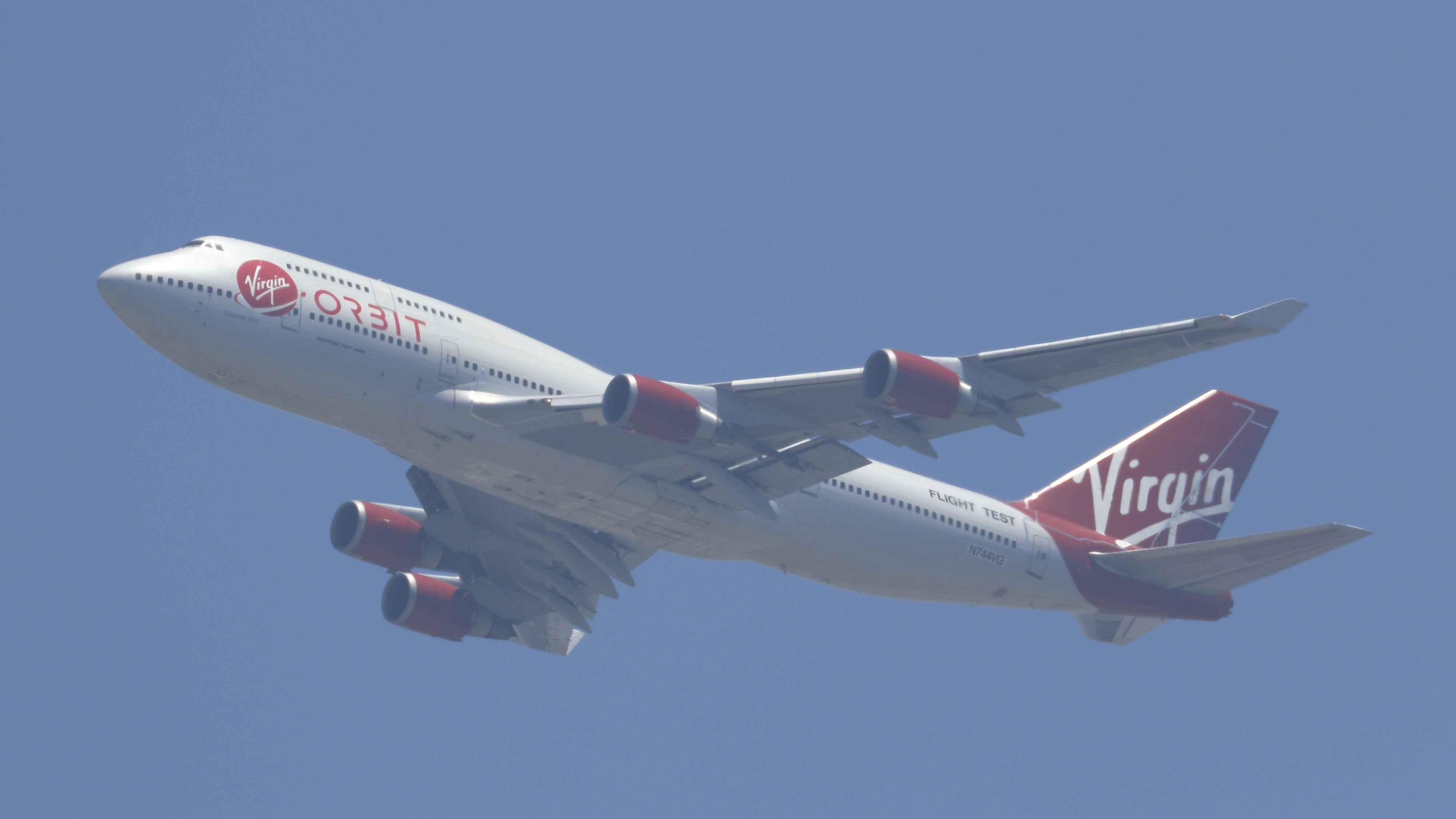
After a rocky road and tentative advances, Sir Richard Branson’s Virgin Orbit is taking a long-term breather. Per the Associated Press,
Virgin Orbit said Thursday it is pausing all operations amid reports that the company is furloughing almost all its staff as part of a bid to seek a funding lifeline.

The U.S.-based satellite launch company confirmed it’s putting all work on hold, but didn’t say how long for.

“Virgin Orbit is initiating a company-wide operational pause, effective March 16, 2023, and anticipates providing an update on go-forward operations in the coming weeks,” the company said in a statement.
This underlines the accomplishments of SpaceX and Blue Origin. http://bit.ly/3FrNkMZ
The recent discovery of an active volcano on Venus has provided much needed proof that should close the long debate as to whether they existed on the planet. Per Nature,
Scientists have found some of the strongest evidence yet that there is volcanic activity on Venus. Because the planet is a close neighbour to Earth and originally had water on its surface, one big question has been why its landscape is hellish while Earth’s is habitable. Learning more about its volcanic activity could help explain its evolution — and Earth’s.

Scientists have known that Venus is covered in volcanoes, but whether or not any of them is still active has been long debated. Now, researchers have discovered that at least one of them probably is, by examining radar images of the planet’s surface collected by NASA’s Magellan spacecraft between 1990 and 1992. They determined that a volcanic vent located in Venus’s Atla Regio area, which contains two of the planet’s largest volcanoes, changed shape between two images taken eight months apart, suggesting an eruption or flow of magma beneath the vent. The scientists reported their findings on 15 March in Science1 and presented them at the Lunar and Planetary Science Conference in the Woodlands, Texas, on the same day.

This is a “striking find”, says Darby Dyar, an astronomer at Mount Holyoke University in South Hadley, Massachusetts. It brings the space-research community one step closer to figuring out how Venus works, adds Dyar, who is also deputy principal investigator of the VERITAS mission to Venus, which is being overseen by NASA’s Jet Propulsion Laboratory (JPL) in Pasadena, California, and aims to map the planet’s surface sometime after 2030. “The whole subject of whether there is active volcanism on the surface of Venus suffers from a lack of data,” she adds.
Obviously, there’s a lot more work to be done regarding the planet’s geography. https://bit.ly/40dYdtA
There’s massive, 5,000-mile wide blob of sea weed heading towards North America and it poses major problems. Per CNN,
A gargantuan mass of seaweed that formed in the Atlantic Ocean is headed for the shores of Florida and other coastlines throughout the Gulf of Mexico, threatening to dump smelly and potentially dangerous heaps across beaches and put a big damper on tourist season.

The seaweed, a variety called sargassum, has long formed large blooms in the Atlantic, and scientists have been tracking massive accumulations since 2011. But this year’s sargassum mass could be the largest on record — spanning more than 5,000 miles from the coast of Africa to the Gulf of Mexico.

The blob is currently pushing west and will pass through the Caribbean and up into the Gulf of Mexico during the summer, with the seaweed expected to become prevalent on beaches in Florida around July, according to Dr. Brian Lapointe, a researcher at Florida Atlantic University’s Harbor Branch Oceanographic Institute.
The sargassum bloom began to form early and doubled in size between December and January. https://bit.ly/3JoIbpV
An article in The Wire India, highlights South Asian efforts to preserve animals in the wild. Some of the problems conservationists run into included the role culture plays in how animals are viewed. According to the article,
Culture has always shaped human societies’ relationships with wild animals. The way a species is perceived by the communities it lives alongside can have a huge impact, sometimes determining whether it is protected or persecuted.

A wild animal that is considered helpful or auspicious might be sheltered from harm, while spiritual and traditional beliefs might mean it is taboo to kill a particular animal, such as tigers. But where a species is believed to be unlucky or dangerous, it may be persecuted to the point that its existence is threatened. Separately, beliefs around the properties of certain animals can drive hunting or illegal wildlife trade, as their body parts are sought after for traditional medicine or charms.

In India and Pakistan, many species are granted legal protection from hunting and persecution via domestic legislation, while agreements such as CITES regulate trade across international borders. But laws alone are seldom enough to ensure the survival of species that are exposed to a multitude of threats, some of which may be deeply rooted in culture and tradition.

Across South Asia, a range of conservation programmes are aiming to help animals that are not always considered attractive or appealing, by encouraging changes in people’s attitudes towards them. Here we take a look at four such projects.
The article focuses on pangolins, cobras, vultures, and whale sharks. https://bit.ly/3JoIbpV
Thanks for reading. Let’s be careful out there.
IMAGE CREDIT: Ed Dunens.




Leave a Reply