HAVE YOUR SAY.
Join us in The Bullpen, where the members of the Scientific Inquirer community get to shape the site’s editorial decision making. We’ll be discussing people and companies to profile on the site. On Wednesday, November 9 at 5:30pm EST, join us on Discord and let’s build the best Scientific Inquirer possible.
In much of the United States, there is a twice-yearly shift in timekeeping between standard time and daylight saving time, or DST, which delays both sunrise and sunset to make mornings darker and evenings brighter. Recently, scientists, policy experts, lawmakers and citizens have debated abandoning the twice-a-year switch and adopting either year-round standard time or DST.
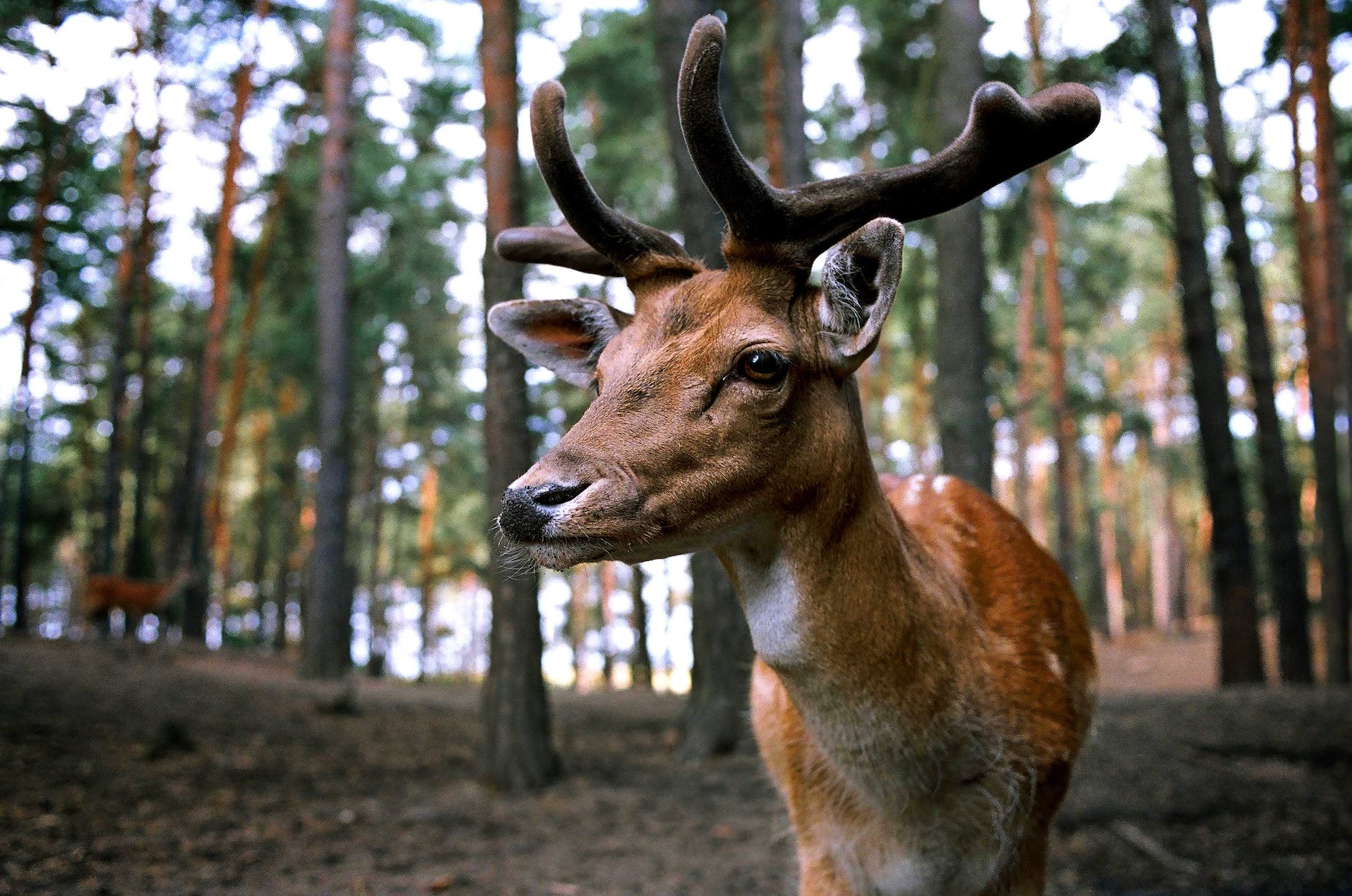
A team of researchers at the University of Washington — led by postdoctoral researcher Calum Cunningham and Laura Prugh, an associate professor of quantitative wildlife sciences — have found that one of those options would sharply reduce a hazard common to much of the country: deer-vehicle collisions. In a paper published Nov. 2 in Current Biology, they report that adopting permanent DST in the United States would reduce deer-vehicle collisions and likely prevent an estimated 36,550 deer deaths, 33 human deaths, 2,054 human injuries and $1.19 billion in costs each year. Deer-vehicle collisions would decrease under permanent DST because skies would be brighter later into the evening.
There are an estimated 2.1 million deer-vehicle collisions in the United States each year, killing about 440 people, causing 59,000 injuries and costing upwards of $10 billion.

“Wildlife-vehicle collisions are a huge and growing problem,” said Cunningham. “There are social costs — people killed and injured — and it’s also a conservation problem as it’s one of the largest sources of human-caused mortality of wildlife.”
Cunningham, Prugh and their colleagues analyzed wildlife-vehicle collision data from 23 states. The vast majority of these were collisions involving two widespread species of deer, white-tailed deer that predominate in the eastern U.S. and mule deer, which are more common in the western U.S.
The dataset, which includes more than 1 million deer-vehicle collisions from 1994 to 2021, revealed that the risk of deer-vehicle collision depends on the overlap of both human and deer activity. Deer and related species are crepuscular, meaning they are most active around dawn and dusk. The team found that most collisions occurred in the hours between sunset and sunrise the next morning. Collisions were 14 times more frequent two hours after sunset than two hours before sunset.
The researchers found that deer-vehicle collisions peak in the fall, with nearly 10% occurring during the two-week period around the switch from DST to standard time. The shift itself causes an abrupt increase in the amount of driving after sunset, which corresponded with a 16% increase in deer-vehicle collisions in the week following the time shift.
For ungulates like deer, fall is also the “rut,” their mating season, during which their activity level increases by as much as 50%.
“We believe that this fall spike really happens due to the overlap of these two factors: the breeding season and the change from daylight saving time back to standard time,” said Prugh. “We don’t see a corresponding shift in deer-vehicle collisions in the spring during the other time change, and we believe that’s in part because spring is not a breeding season for deer.”
The patterns that Cunningham, Prugh and their colleagues found on deer-vehicle collisions allowed them to model collisions under permanent standard time and permanent DST. They estimate an increase of 73,660 deer-vehicle collisions under permanent standard time, with 66 additional human deaths and 4,140 additional injuries, and an added $2.39 billion in collision costs. Permanent DST showed the opposite trend, with a decrease of about 2.3% in deer-vehicle collisions over a full year. Both scenarios would do away with increased accidents caused specifically by the biannual time-shift and the subsequent “social jetlag” caused by out-of-sync circadian rhythms.
Vehicle collisions are a major source of human-wildlife conflict. Since human societies in modern times tend to live their lives more by clocks than the sun’s position in the sky, understanding the factors that lead to these collisions could help save lives and prevent injury, Cunningham said.
“Humans today have this ‘evening bias’ in our activity: we get up later and stay active later than what the sun is telling us to do,” said Cunningham. “As long as people are living their lives ‘by the clock,’ which animals do not, people need to be aware of risks and make adjustments where we can. If people are thinking about what they can do for wildlife and for their own lives, reducing driving during dark hours is likely to help significantly. In areas with deer, the risk of harming wildlife and yourself while driving is 14 times higher when it is dark.”
IMAGE CREDIT: NASA.
Leave a Reply