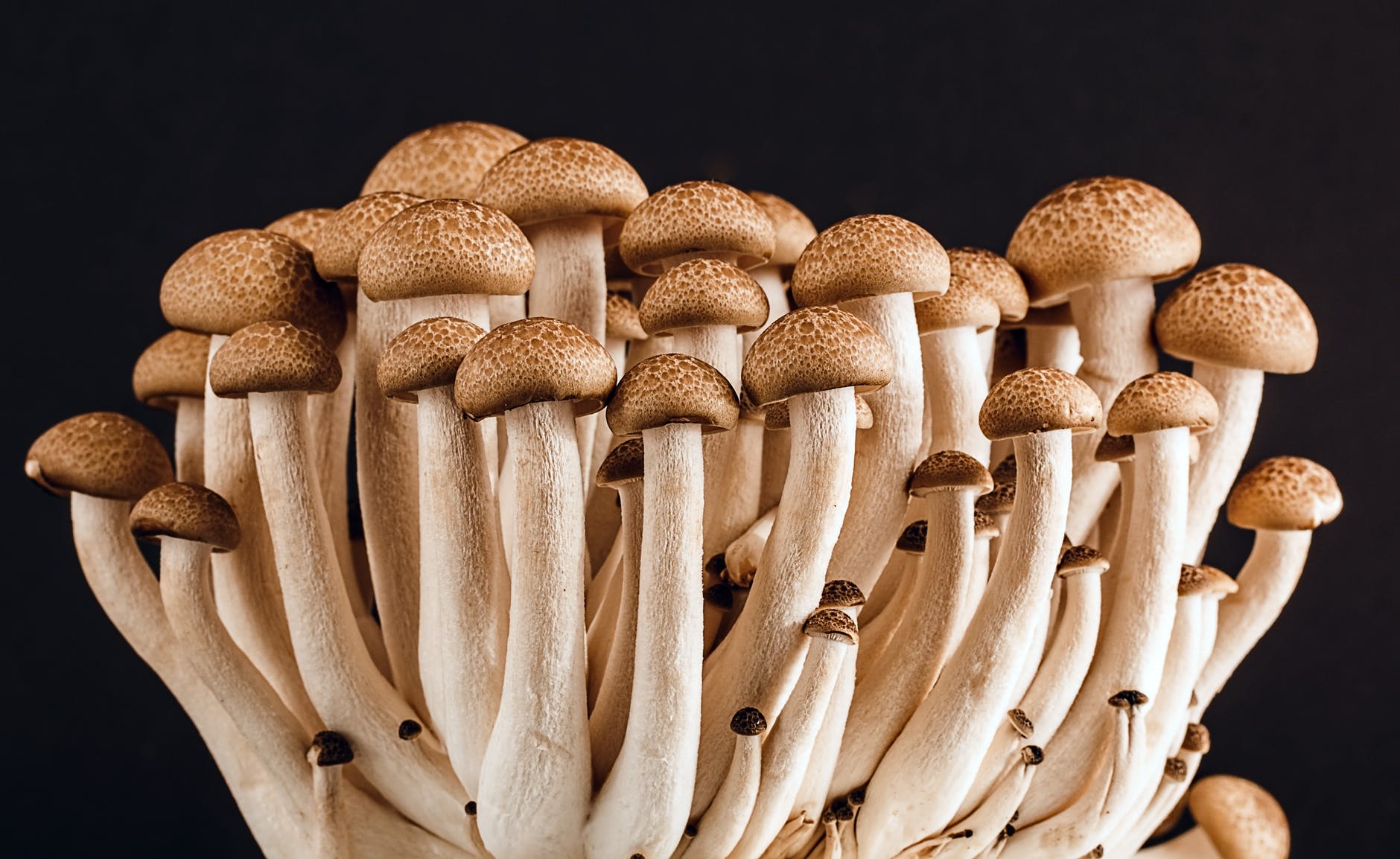
University of Michigan researchers counted fungi deep in Michigan’s Antrim Shale and found them as abundant as in ocean water, with 689 species and a hidden food web.
Most of us picture fungi as mushrooms on a forest floor or mold on forgotten bread. Few would think to look for them hundreds of feet underground, sealed in rock and water that has not seen daylight since the end of the last Ice Age. But that is exactly where a team from the University of Michigan found them, and in surprising numbers.
Writing in The ISME Journal, the researchers report that fungi are thriving at depths of up to 1,640 feet in the Antrim Shale, a buried rock formation that underlies much of the Great Lakes region. The team identified 689 fungal species, 13 of them previously undescribed, living alongside tardigrades and tiny segmented worms in what appears to be an underground food web.
“Our study challenges the idea that it’s inhospitable for more complex life like fungi in the deep subsurface, and under favorable conditions, eukaryotes can actually be quite abundant,” said lead author Quinn Moon, a doctoral candidate at U-M.
Life in the dark
Scientists have known for decades that the deep subsurface is not sterile. Bacteria and archaea, single-celled microbes, live in rock fractures and pore water kilometres below the surface, and studies have suggested that this hidden biosphere may hold a substantial share of Earth’s microbial life. A ten-year international effort called the Deep Carbon Observatory estimated in 2018 that deep life contains billions of tonnes of carbon, hundreds of times more than all living humans combined.
Eukaryotes, the branch of life that includes fungi, plants and animals, were thought to be largely shut out. Their cells are larger and more complex, and they generally need more energy and oxygen. When traces of them did turn up in deep samples, they were usually dismissed.
“For a long time, there wasn’t evidence that eukaryotes can be abundant in the deep subsurface,” Moon said. “People have found traces of them using environmental DNA, but they’ve been chalked up to being transient or dormant.”
Water from the end of the Ice Age
The Antrim Shale is an organic-rich rock formation laid down in an ancient sea and long tapped for natural gas, much of which is produced by microbes feeding on the organic matter in the rock. The team sampled water from gas wells at depths between 650 and 1,640 feet, bringing together hydrologists, biologists and geologists for the work.
Stable isotope analysis of the water told a striking story. Much of it appears to have come from melting ice sheets at the end of the last Ice Age, and much of it, as Moon put it, “was last in contact with the surface 11,000 years ago.”
The researchers think that meltwater carried fungi and bacteria down into fractured rock, where they settled and began consuming the organic material in the shale. To test whether the shale itself was the food source, the team measured carbon dioxide and methane, and the release reports that the results supported the idea, though it does not give the data.
As crowded as the ocean
Using genetic tools and microscopy, the team estimated about 250 fungal cells per drop of water, a density comparable to ocean water. That works out to more than 12 trillion cells in a volume the size of an Olympic swimming pool. The release describes this as the first successful quantification of fungal abundance at a deep subsurface site.
The fungi were not alone. Tardigrades, the microscopic “water bears” famous for surviving extreme conditions, and small segmented worms turned up in the samples as well. The researchers suggest that these organisms likely form an underground food web, complete with predation and parasitism, running in permanent darkness.
The team also isolated and grew more than 200 fungal strains from the samples. They now form the first public collection of deep subsurface fungi, held at the U-M Herbarium, and are being screened for the ability to break down coal, shale, oil and plastic.
Underestimating a kingdom
Fungi are already thought to be one of the least catalogued kingdoms of life. Scientists have formally described around 150,000 species, but estimates of the true total run into the millions. The new work suggests that some of that missing diversity may be hiding underground.
“We propose in the paper that we may be meaningfully underestimating the biomass and diversity of fungi on the planet because we’ve never incorporated the subsurface into estimates of global fungal biodiversity,” Moon said.
Moon expects similar communities to exist at comparable sites worldwide, including oil and gas reservoirs, though that remains a projection rather than a tested result.
A wrinkle for carbon storage
The findings could matter for climate science as well. Carbon locked in deep rock is generally treated as safely stored over long periods. If fungi and other organisms are actively converting that carbon into gases such as carbon dioxide and methane, the underground carbon reservoir may be more biologically active than models assume. That has implications for plans to store captured carbon dioxide underground.
“Regardless of whether these fungi originated in or were introduced to these deep spaces, many fungi possess adaptations that allow them to grow and influence the carbon dynamics deep in the earth,” said senior author Tim James, curator of fungi at the U-M Herbarium and a professor of ecology and evolutionary biology. “Fungi need to be incorporated into models of carbon cycling and sequestration in the subsurface.”
Several questions remain open. The release does not report how many wells or samples were analyzed, and whether the fungi are native to the deep subsurface or were carried down with the meltwater is unresolved. Gas wells also provide a pathway between the surface and deep rock, which is why researchers take care to rule out contamination in work of this kind.
The study was funded by the Canadian Institute for Advanced Research, with support from the U.S. National Science Foundation, U-M’s Institute for Global Change Biology and the Rackham Graduate School. For Moon, the discovery “opens a window into a world that is dark, ancient and almost entirely hidden—but is far from lifeless.”
Notes
- Moon, Q., et al. “Deep subsurface organic-rich shale supports abundant, diverse, and novel fungi.” The ISME Journal, 29 July 2026. DOI: 10.1093/ismejo/wrag184.
- University of Michigan. “Rock-eating fungi flourish deep below our feet.” EurekAlert!, 29 July 2026. https://www.eurekalert.org/news-releases/1137736.
Featured image: Photo by Pixabay on Pexels.com


Leave a Reply