Denisovans, the enigmatic cousins of Neanderthals and modern humans, are known almost entirely through a scattering of fossil fragments and their genetic legacy in living populations across Asia and Oceania. Now, a new discovery in Southwest China has added a rare and important piece to that puzzle: the first confirmed Denisovan radius, one of the two long bones in the forearm.
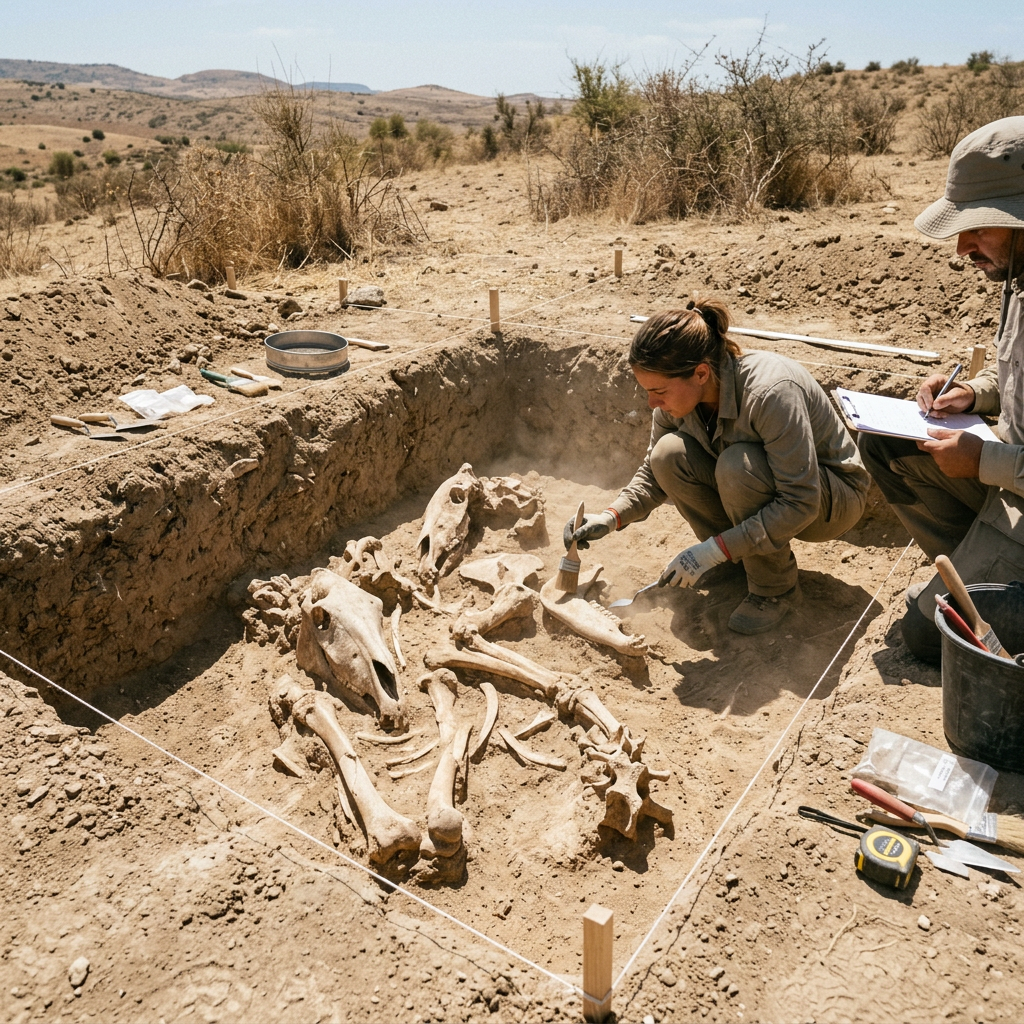
The find comes from Bianfu Cave, a Paleolithic site in Yunnan Province that had yielded more than 60,000 bone fragments — far too many to screen individually with standard methods. Researchers led by Professor FU Qiaomei of the Institute of Vertebrate Paleontology and Paleoanthropology (IVPP) at the Chinese Academy of Sciences developed a new “morphological pre-screening plus ZooMS identification” strategy to narrow down the search, selecting 22 candidate hominin fragments from the enormous assemblage before running detailed protein analysis.
That approach paid off. Two parietal (skull) fragments and one proximal radial fragment were confirmed as hominin, joining two previously excavated teeth from the same layers. Together, the five specimens gave researchers enough proteomic material to work with — between six and 16 endogenous proteins per specimen, covering thousands of amino acid residues.
Reading the Protein Record
Lacking preserved DNA, the team turned to paleoproteomics, screening for single amino acid polymorphisms that distinguish Denisovans from other hominins. All five Bianfu Cave specimens carried the Denisovan-specific variant COL1A2 R996K. Additional variants in the tooth enamel reinforced the identification, and Bayesian phylogenetic trees built from the protein sequences placed each sample squarely within a monophyletic clade alongside Denisova 3, the specimen that originally defined the group.
The radius fragment, designated BFD771, is what makes this find especially notable. According to the research team, “the first identified Denisovan radius fragment is of exceptional importance. Its mosaic features indicate unique biomechanical demands and behavioral adaptations in Denisovans, differing from those inferred for Neanderthals and modern humans.”
The bone’s proximal dimensions and radial tuberosity orientation resemble those of Neanderthals, but its overall shape and cross-sectional geometry align more closely with modern humans — a mosaic of traits that hints at a distinct physical adaptation among Denisovans that researchers are only beginning to understand.
Filling a Geographic Gap
Until now, confirmed Denisovan remains have been limited to a handful of sites, most famously Denisova Cave in Siberia and Baishiya Karst Cave on the Tibetan Plateau. Southwest China had long represented a frustrating blank spot on the map, despite genetic evidence suggesting Denisovans were once widely distributed across Asia.
The Bianfu Cave specimens date to two stratigraphic layers spanning roughly 167,000 to 134,000 years ago, during Marine Isotope Stage 6 — a glacial period when the researchers believe the relatively warmer, resource-rich Yunnan-Guizhou Plateau may have served as a refuge that supported a long-term Denisovan population.
“The discovery of the first Denisovan radius provides crucial insights into Denisovan postcranial phenotype,” the researchers noted, adding that Bianfu Cave now holds the richest Denisovan fossil record found anywhere outside of Denisova Cave itself.
The study, “Ancient proteins identify various Denisovan remains from Southwest China,” was published September 9 in Nature (DOI: 10.1038/s41586-026-10976-9) by a team led by the Institute of Vertebrate Paleontology and Paleoanthropology, Chinese Academy of Sciences, in collaboration with multiple institutions.


Leave a Reply