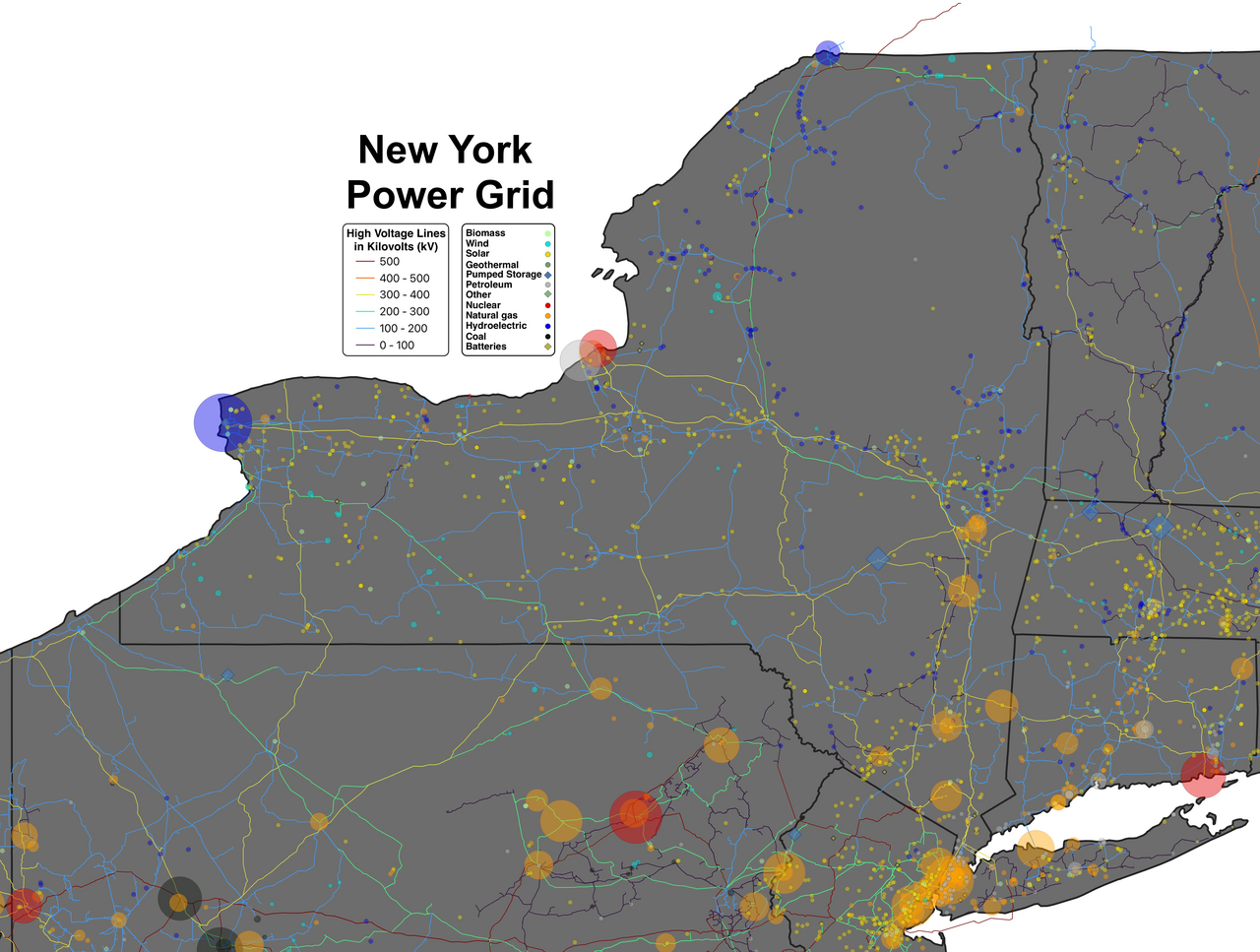

New York City’s sprawling metropolis relies on a vast and intricate electrical network that spans the state. This high-resolution map, created by Wikideas1 using QGIS and public energy datasets, reveals the backbone of that system—from generation sites across upstate New York to the transmission corridors delivering electricity into the city.
The dots scattered across upstate signify power plants—ranging from hydroelectric dams in the Adirondacks to natural gas and nuclear facilities. Transmission lines, depicted as arteries, carry electricity through a hierarchy of high-voltage corridors before stepping down through substations for safe distribution in the dense urban core.
What makes NYC’s grid distinctive is how it merges diverse energy sources across geography. Hydropower, fossil fuels, and imports from neighboring states interplay, balancing supply and demand in real time. These transmission highways are engineered with redundancy—multiple pathways ensure that if one line fails, others can shoulder the load, preserving reliability in the face of storms or equipment issues.
Inside the city, a dense, lower-voltage distribution network sprawls beneath streets, feeding skyscrapers, homes, subways, and infrastructure that never sleeps. Visualizing the grid’s state-wide scale underscores how New York City is deeply interconnected with upstate generation—its lights, subways, and data centers depend on sources hundreds of miles away.
As renewable energy initiatives grow, future grid evolution may include more decentralized sources like rooftop solar or offshore wind, making this visualization both a snapshot and a baseline for a changing energy landscape. By seeing where energy originates and how it arrives, we gain insight into NYC’s reliance on a resilient, multi-layered electrical system—one that must adapt to climate, policy shifts, and technological innovation while keeping the city’s pulse alive.




Leave a Reply