As people age, their immune systems become less efficient, posing a challenge for cancer therapies that rely on harnessing immune cells. In a new study published in Nature Cancer, researchers from the University of Lausanne (UNIL), the Lausanne University Hospital (CHUV), the Geneva University Hospitals (HUG) and the Ecole Polytechnique Fédérale de Lausanne (EPFL), show that this age-related immune decline has a measurable impact on CAR-T cell therapy, one of the most advanced forms of cancer immunotherapy.
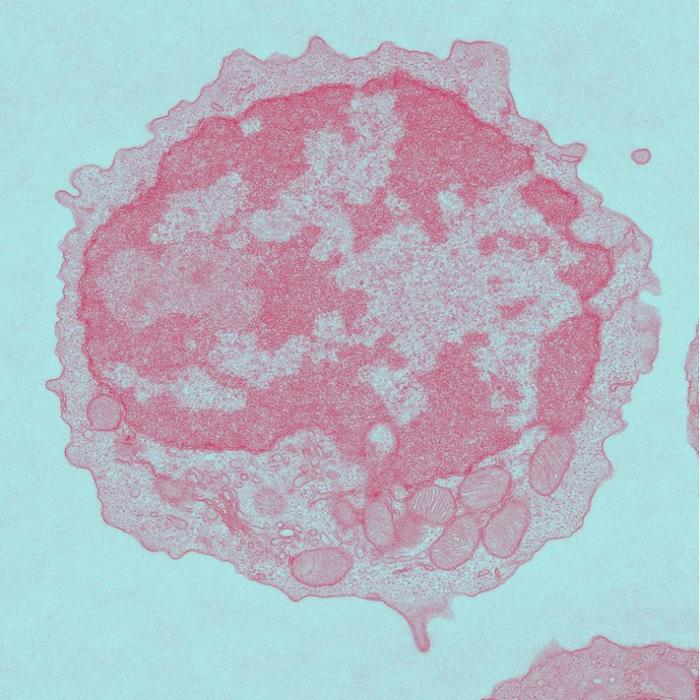
CAR-T therapy works by engineering a patient’s T cells to recognize and destroy cancer cells. But the study found that CAR-T cells from aged mice had poor mitochondrial function, lower “stemness”, and reduced antitumor activity. The culprit: a drop in levels of nicotinamide adenine dinucleotide (NAD), a molecule essential for cellular energy and metabolism of mitochondria.
“CAR-T cells from older individuals are metabolically impaired and significantly less effective,” said first author Dr. Helen Carrasco Hope. “What’s exciting is that we were able to rejuvenate these aged cells by restoring their NAD levels—reviving their antitumor function in preclinical models.”
“Our findings strengthen the growing recognition that aging fundamentally reshapes immune cell function and metabolism,” she added. “They highlight the urgent need to model age more accurately in preclinical studies, so that therapies are developed with the real-world cancer population in mind—where most patients are older adults.”
Sign up for the Daily Dose Newsletter and get every morning’s best science news from around the web delivered straight to your inbox? It’s easy like Sunday morning.
The team used NAD-boosting compounds currently under clinical investigation for other conditions, demonstrating that this approach is translatable and potentially applicable in humans. “This is a major step toward personalized and age-conscious immunotherapy,” said senior author Dr. Nicola Vannini. “By correcting age-related metabolic defects, we could improve outcomes for a large segment of cancer patients.”
The study adds to a growing body of work showing that age is not just a chronological number, but a biological factor that can shape therapy response. The authors call for age to be systematically considered in the development and evaluation of cell-based immunotherapies.
IMAGE CREDIT: Helen Hope / UNIL (2025).




Leave a Reply