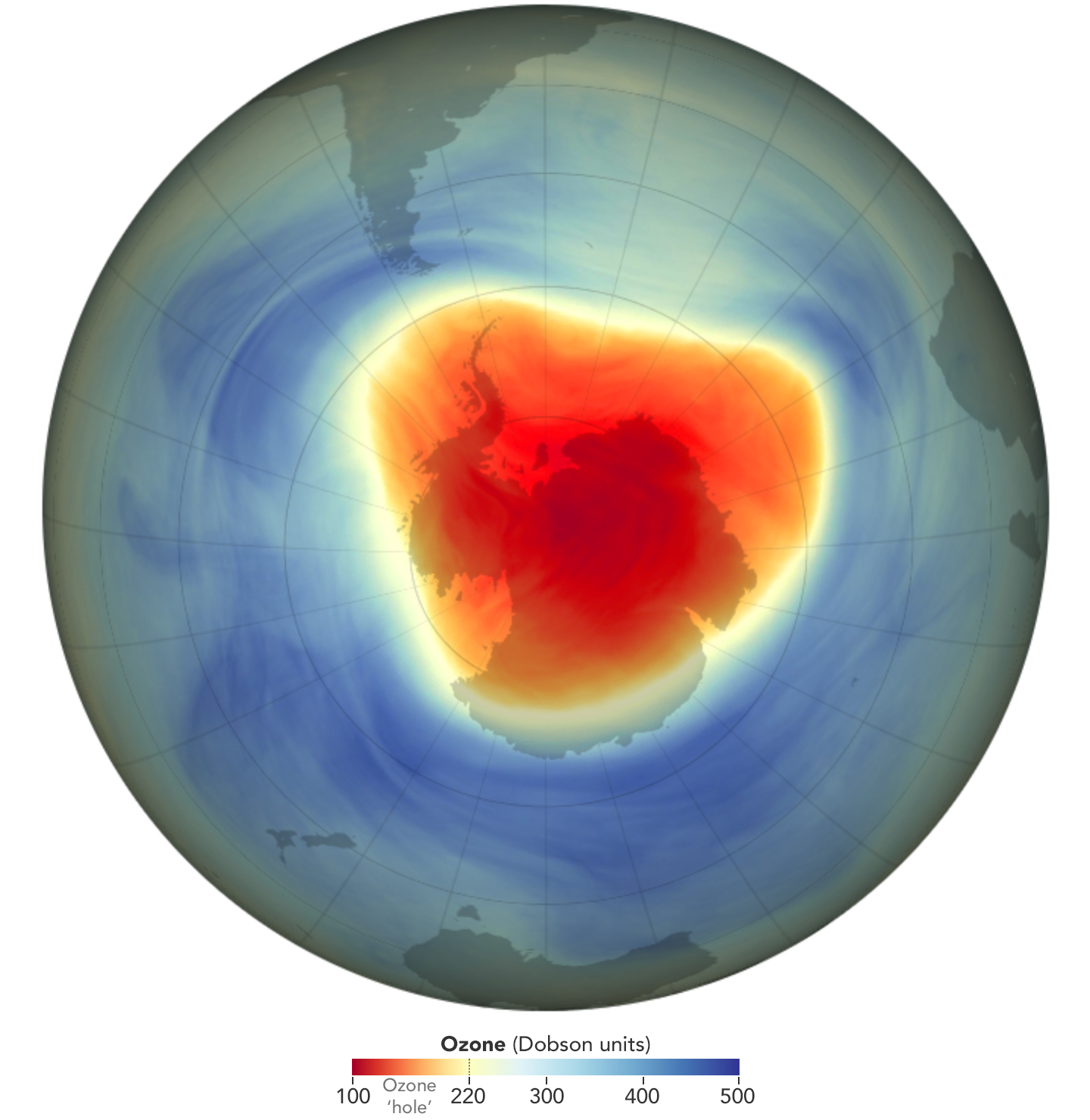

In 2024, the Antarctic ozone hole was relatively small, ranking seventh smallest since 1992, when the Montreal Protocol began phasing out ozone-depleting chemicals. The hole peaked on September 28 at 22.4 million square kilometers and averaged about 20 million square kilometers over the season, almost three times the size of the contiguous U.S. Scientists expect full ozone recovery by 2066 due to reduced chlorofluorocarbons (CFCs) and beneficial air currents from the north.
The ozone layer, Earth’s protective barrier against harmful UV radiation, has shown gradual recovery over the past two decades, thanks to international efforts like the Montreal Protocol. Despite this progress, CFCs already in the atmosphere will take decades to break down fully. Monitoring efforts by NASA and NOAA, including satellites and weather balloons, reveal that while ozone levels are improving, they remain well below pre-pollution levels.


Leave a Reply