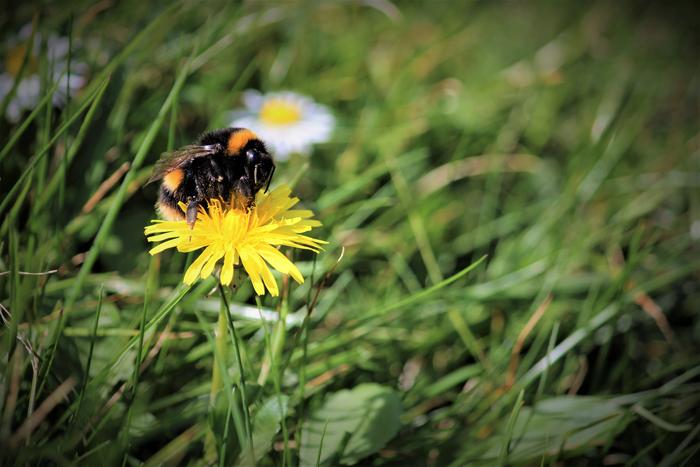
Gardens offer a steady and reliable source of nectar all year round, helping to keep pollinators fed when farmland sources are limited, researchers have discovered.
This consistency means that even small patches of gardens in rural areas can sustain pollinators, particularly in early spring and late summer when nectar is scarce.
In the findings, published today in Proceedings of the Royal Society B, scientists at the University of Bristol discovered that gardens can provide between 50% and 95% of the total nectar during these critical times.
Lead author Dr Thomas Timberlake based in Bristol’s School of Biological Sciences explained: “It’s well known that gardens and urban areas can be great places for pollinators like bees, flies and butterflies. In fact, past research shows that cities often have more types and numbers of pollinators than farming areas.
“There’s also evidence that pollinator populations are healthier in rural areas when they’re close to small towns or villages so we know gardens are good for pollinators, but we don’t fully understand why.
“Our study aimed to figure out exactly what it is about gardens that makes them so beneficial for pollinators.”
The team looked at how much nectar, an essential food for pollinators, is available in gardens and farmland throughout the year. While gardens only provide a relatively small amount of nectar in rural areas (less than 15%), the stability and continuity of this nectar supply makes it much more valuable to pollinators. In contrast, farmland [TT1] nectar almost disappears during certain months potentially leaving pollinators struggling.
Sign up for the Daily Dose Newsletter and get every morning’s best science news from around the web delivered straight to your inbox? It’s easy like Sunday morning.
More than 90% of farmland in Great Britain is within one kilometre of a garden. This means that the flowers in people’s gardens are accessible to many insects living in farmland areas nearby. If gardens are managed in a pollinator-friendly way, their positive impact can extend far beyond the garden fence, helping pollinators all across the country.
Dr Timberlake continued: “Many people feel powerless when it comes to fighting biodiversity loss, thinking it’s too big of a problem to tackle on their own. But our study shows that individual citizens can make a big difference.
“People can support pollinators in their gardens and surrounding farmland by simply making sure their garden has pollinator-friendly flowers blooming throughout the year—especially in early spring and late summer, when pollinators are hungriest.”
Now the team plan to find out which specific plants are best at filling those seasonal hunger gaps and whether gardens should be included in future environmental stewardship schemes. If gardens are proven to benefit pollinators more than some farmland habitats, then the creation of more pollinator-friendly gardens in rural areas could help us tackle pollinator declines.
Dr Timberlake concluded: “In a country like the UK, where towns and villages are spread throughout the countryside, gardens might be helping pollinators more than we ever realised.
“For the 27 million gardeners in the UK, this study highlights just how important their gardens can be in helping to reverse the decline of pollinators.”
IMAGE CREDIT: Tom Timberlake
.



Leave a Reply