One of Earth’s most consequential bursts of biodiversity—a 30-million-year period of explosive evolutionary changes spawning innumerable new species—may have the most modest of creatures to thank for the vital stage in life’s history: worms.
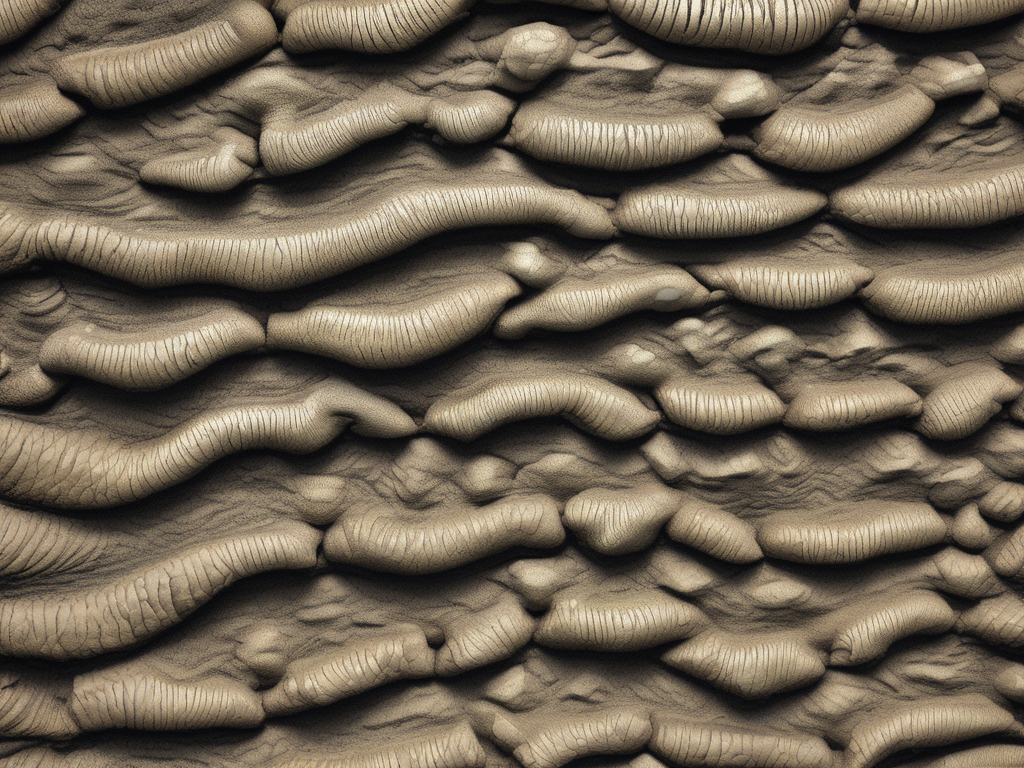
The digging and burrowing of prehistoric worms and other invertebrates along ocean bottoms sparked a chain of events that released oxygen into the ocean and atmosphere and helped kick-start what is known as the Great Ordovician Biodiversification Event, roughly 480 million years ago, according to new findings Johns Hopkins University researchers published in the journal Geochimica et Cosmochimica Acta.
“It’s really incredible to think how such small animals, ones that don’t even exist today, could alter the course of evolutionary history in such a profound way,” said senior author Maya Gomes, an assistant professor in the Department of Earth and Planetary Sciences. “With this work, we’ll be able to examine the chemistry of early oceans and reinterpret parts of the geological record.”
To better understand how changes in oxygen levels influenced large-scale evolutionary events, Gomes and her research team updated models that detail the timing and pace of increasing oxygen over hundreds of millions of years.
They examined the relationship between the mixing of sediment caused, in part, by digging worms with a mineral called pyrite, which plays a key role in oxygen buildup. The more pyrite that forms and becomes buried under the mud, silt, or sand, the more oxygen levels rise.
Researchers measured pyrite from nine sites along a Maryland shoreline of the Chesapeake Bay that serves as a proxy for early ocean conditions. Sites with even just a few centimeters of sediment mixing held substantially more pyrite than those without mixing and those with deep mixing.

The findings challenge previous assumptions that the relationship between pyrite and sediment mixing remained the same across habitats and through time, Gomes said.
Conventional wisdom held that as animals churned up sediments by burrowing in the ocean floor, newly unearthed pyrite would have been exposed to and destroyed by oxygen in the water, a process that would ultimately prevent oxygen from accumulating in the atmosphere and ocean. Mixed sediments have been viewed as evidence that oxygen levels were holding steady.
The new data suggests that a small amount of sediment mixing in water with very low levels of oxygen would have exposed buried pyrite, sulfur, and organic carbon to just enough oxygen to kick-start the formation of more pyrite.
“It’s kind of like Goldilocks. The conditions have to be just right. You have to have a little bit of mixing to bring the oxygen into the sediment, but not so much that the oxygen destroys all the pyrite and there’s no net buildup,” said Kalev Hantsoo, a doctoral candidate at Johns Hopkins and first author on the article.
When the researchers applied this new relationship between pyrite and the depth of sediment mixing to existing models, they found oxygen levels stayed relatively flat for millions of years and then rose during the Paleozoic era, with a steep rise occurring during the Ordovician period.
The extra oxygen likely contributed to the Great Ordovician Biodiversification Event, when new species rapidly flourished, the researchers said.
“There’s always been this question of how oxygen levels relate to the moments in history where evolutionary forces are ramped up and you see a greater diversity of life on the planet,” Gomes said. “The Cambrian period also had a massive speciation event, but the new models allow us to rule out oxygen and focus on other things that may have driven evolution during that time.”
Sign up for the Daily Dose Newsletter and get the morning’s best science news from around the web delivered straight to your inbox? It’s easy like Sunday morning.


Leave a Reply