Photodynamic inactivation wiped out every Campylobacter strain tested from UK poultry, and fifteen rounds of exposure produced no increase in tolerance — a decontamination route with no chemistry to resist.
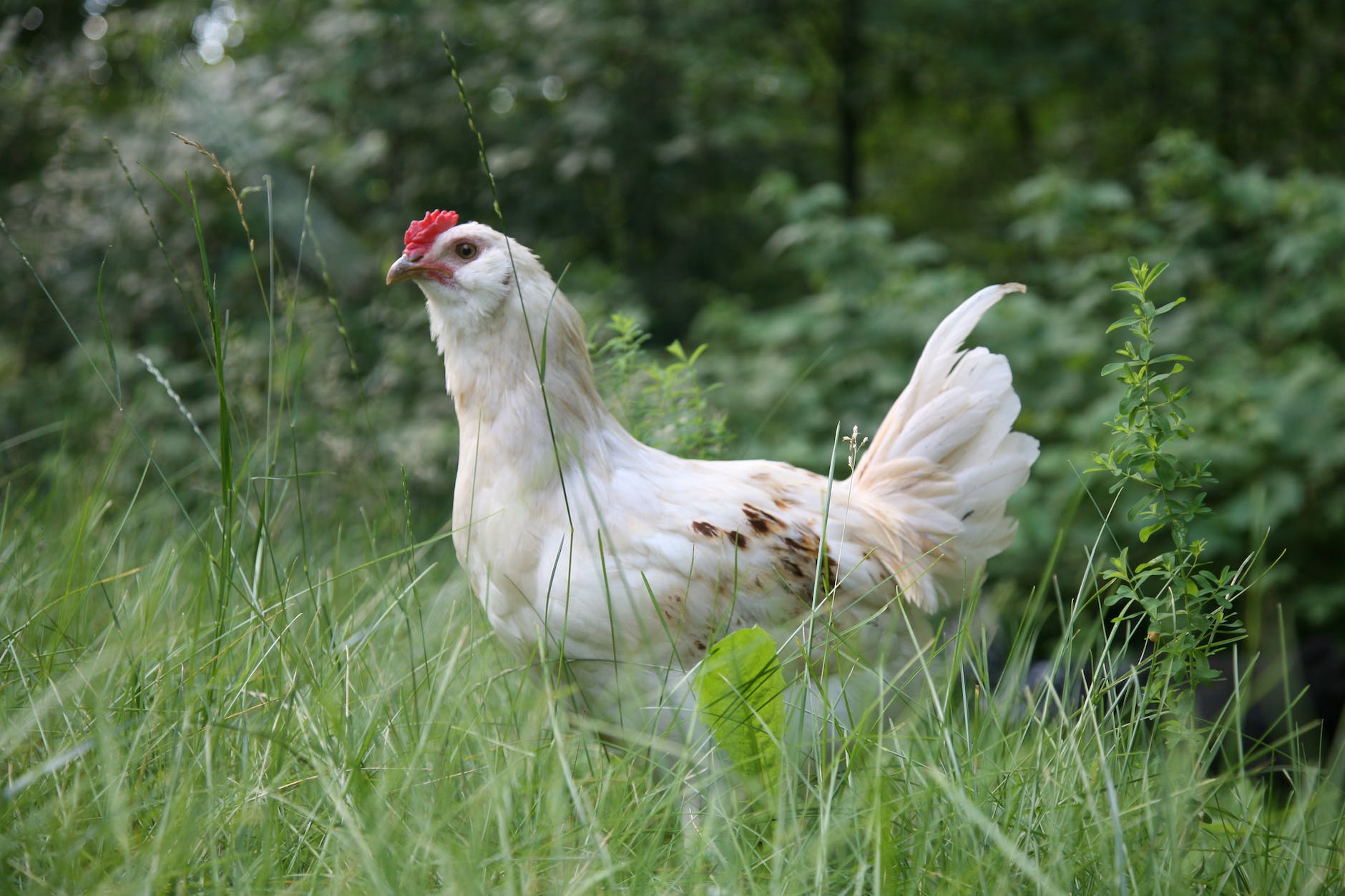
Campylobacter is the most common cause of bacterial food poisoning in the world, and in Britain its main reservoir is chicken. The bacterium turns up on roughly three quarters of raw chicken sold in the UK. Infection brings about a week of stomach cramps, fever, nausea and frequently bloody diarrhoea, and the annual cost to the country in healthcare and lost productivity is estimated at £700 million.
Researchers at the University of Reading, working with the Animal and Plant Health Agency, report in Microbiology that a particular wavelength of light kills it — all of it, including the strains that antibiotics no longer touch.
Sixty-four strains, no survivors
The technique is violet-blue photodynamic inactivation. Light in that part of the spectrum excites naturally occurring porphyrin molecules inside the bacterial cell, which then generate reactive oxygen species that destroy the cell from within. The bacterium supplies its own vulnerability; the light simply triggers it.
The team tested the method against 64 Campylobacter strains taken directly from UK poultry. It killed every one, regardless of species or antibiotic resistance profile. Strains already resistant to antibiotics died as readily as susceptible ones — which follows from the mechanism, since nothing about resistance to a drug protects a cell against being oxidised from the inside.
“Campylobacter is a genuinely nasty bug, and its sheer abundance in the food chain, combined with rising antibiotic resistance, makes it a really difficult problem to tackle,” said Dr Aidan Taylor of the University of Reading, lead author of the study. “What’s exciting about this light-based approach is that it doesn’t rely on chemicals or antibiotics at all, so it sidesteps the resistance problem entirely.”
The experiment that matters most
The claim that resistance cannot develop is the sort of thing that should invite scepticism, because it has been made before about other antimicrobials and has generally proved wrong. The researchers tested it the obvious way: they exposed one strain to the light over 15 successive rounds and looked for any increase in tolerance. They found none.
Fifteen rounds is not a definitive answer — bacterial evolution experiments can run for hundreds of generations — but it is the right experiment, and a negative result is meaningful. The theoretical reason to expect it is that photodynamic inactivation has no single molecular target. An antibiotic usually binds one protein, and a mutation in that protein confers resistance. Oxidative damage from within attacks lipids, proteins and DNA simultaneously, and there is no single mutation that stops it.
“We’ve shown it works against a wide range of real-world strains taken directly from UK poultry, including the multi-drug resistant strains that worry us most, and we can’t find any evidence that resistance could evolve,” Taylor said. “That combination of broad efficacy and durability is what makes this such a promising option for cutting contamination before chicken ever reaches someone’s kitchen.”
What a hundredfold reduction would buy
The practical estimate the researchers offer is specific. A hundredfold reduction in contamination on carcasses would cut the share of highly contaminated carcasses reaching retail from about one in ten to about one in fifty.
That framing is worth unpacking, because it is modest in an important way. The target is not elimination but reduction of the heaviest contamination, which is where the infection risk concentrates. Most Campylobacter infections traced to chicken come not from eating undercooked meat but from cross-contamination during handling — the juices on a worktop, the unwashed hands, the chopping board used next for salad. Lowering the bacterial load on the carcass reduces how much is available to spread around a kitchen.
Going from one in ten to one in fifty is a fivefold cut in the proportion of worst-case carcasses. Against hundreds of thousands of UK cases a year, that is a large absolute number of infections, even though it leaves plenty of contaminated chicken in circulation.
Why the physics is convenient
The method’s appeal is partly in what it does not require. It uses visible light, needs no physical contact with the food, and adds no chemicals — which matters for regulatory approval and for consumer acceptance, both of which have hampered other poultry decontamination methods. Chlorine washes, to take the obvious example, are permitted in the United States and prohibited in the UK and EU, and the objection is to the chemical rather than to the decontamination.
The hardware is also cheap. The team notes that the low-power LEDs involved are low-cost and could be useful to producers in low- and middle-income countries, where cold chains are less reliable and foodborne illness burdens are higher. A decontamination step that needs only an LED array and electricity travels further than one needing a chemical supply chain.
What still has to be shown
Dr Samuel Connelly of the Animal and Plant Health Agency, who co-led the research, was careful about the gap between laboratory and plant. “The consistent results observed across multiple species and resistance profiles are highly encouraging,” he said. “While further evaluation using contaminated meat samples is required, the simplicity and adaptability of this technology suggest that it could be implemented at various stages of the food production process.”
That caveat is the crux. These 64 strains were tested as bacteria, not as bacteria on chicken. A carcass is a complicated optical object — opaque skin, folds, fat, feather follicles, residual moisture — and light reaches some of it well and some of it badly. Bacteria in a crevice or beneath a layer of fat may receive a fraction of the dose that bacteria on an exposed surface get. Every surface-acting decontamination method runs into this, and it is why the researchers say trials on naturally contaminated carcasses in real processing settings are needed before any commercial rollout.
Connelly’s wider point stands regardless: “Such application has the potential to reduce the prevalence of Campylobacter within the food chain and, consequently, contribute to a reduction in the incidence of foodborne illness.”
The release lists no funding sources and no conflict-of-interest statement. It also carries a date inconsistency, being dated 5 October while describing the study as published “today” and giving 6 October as the article’s publication date.
Notes
- “One light to rule them all: photodynamic inactivation of diverse Campylobacter.” Microbiology, 6 October 2026. DOI: 10.1099/mic.0.001769.
- University of Reading. “Blue light could cut food poisoning from raw chicken.” EurekAlert!, 5 October 2026. https://www.eurekalert.org/news-releases/1146477.



Leave a Reply