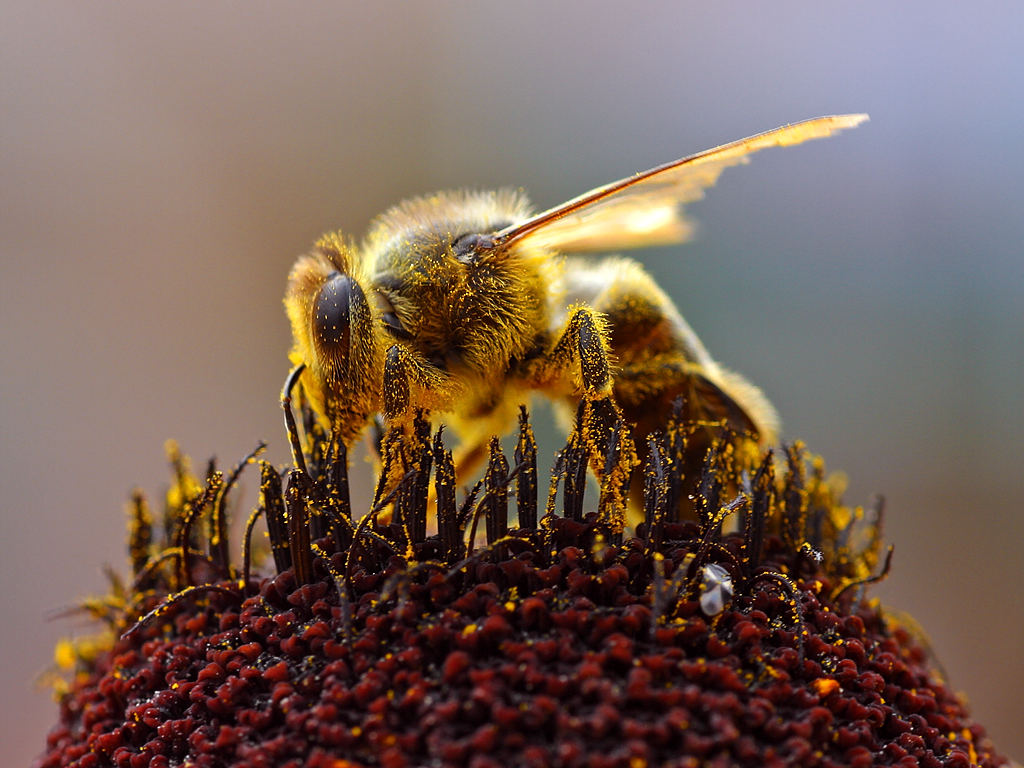
Arizona State University researchers found that the genetic system of ants, bees and wasps does not by itself predict the evolution of eusociality, pointing instead to ecology and life history.
Ant colonies, beehives and wasp nests are among the most remarkable societies in nature. In these eusocial species, most individuals give up reproducing and spend their lives raising the offspring of a queen. Explaining how such self-sacrifice evolved has occupied biologists since Charles Darwin, who saw sterile workers as a serious challenge to his theory.
One influential explanation points to an unusual genetic system. A new study published in Current Biology has now put that idea to its broadest test yet, and it did not hold up.
“When we formally tested it, we found there is no real association between the genetic determination system and eusociality,” said Sachin Suresh, a doctoral student in Arizona State University’s School of Life Sciences and the study’s lead author.
The haplodiploidy hypothesis
Ants, bees and wasps are haplodiploid. Females develop from fertilized eggs and have two sets of chromosomes, while males develop from unfertilized eggs and have only one. A quirk of this system is that sisters can be more closely related to each other than to their own offspring.
In the 1960s, the biologist W. D. Hamilton argued that this could make it evolutionarily advantageous for females to help raise sisters rather than have their own young. The idea, known as the haplodiploidy hypothesis, became a famous illustration of kin selection, the theory that individuals can pass on their genes by helping relatives.
The arithmetic is striking. Because a male passes on his entire single set of chromosomes, sisters with the same father share, on average, three-quarters of their genes, compared with half between a mother and her own daughter. On paper, helping a queen produce more sisters could spread a worker’s genes more effectively than raising offspring of her own.
“People have been discussing this hypothesis for about 60 years,” Suresh said. “There were many theoretical predictions, but formal comparative tests across insects have been surprisingly rare.”
A test at enormous scale
Suresh, working with senior author Timothy Linksvayer, compiled social and genetic data for tens of thousands of insect species and analyzed them across two large family trees covering nearly 69,000 species. That allowed the team to ask whether eusociality evolved more often in haplodiploid lineages than in diploid ones, after accounting for shared ancestry.
At first glance, the pattern seemed to support the hypothesis: eusociality appeared to evolve more often in haplodiploid insects. But nearly all of that signal came from a single group, the aculeate Hymenoptera, which includes ants, bees and stinging wasps.
Outside that group, haplodiploid insects showed rates of eusocial evolution similar to those of diploid insects. Haplodiploidy alone, in other words, did not predict the emergence of insect societies.
Haplodiploidy is not limited to ants, bees and wasps. It also occurs in thrips, some beetles, whiteflies, scale insects and mites. If the genetic system strongly promoted eusociality, those groups should show an elevated tendency to evolve it too. They do not, the analysis suggests, even though a few, such as some thrips and ambrosia beetles, have evolved social behaviors.
Ecology over genetics
The researchers conclude that traits specific to particular lineages, along with ecological and life-history factors, likely matter more.
“It has more to do with environmental factors and the life-history traits of insects,” Suresh said.
That conclusion fits other evidence. Termites, which are diploid, evolved complex societies independently of ants and bees. Researchers have argued that factors such as building and defending a valuable nest, the need for parental care and the benefits of cooperating to gather food can favor social living regardless of genetics. Many biologists had already questioned the haplodiploidy hypothesis on theoretical grounds, noting that the relatedness advantage disappears if queens mate with multiple males.
What it means for kin selection
The findings do not overturn kin selection itself. Relatedness among colony members remains important in most explanations of eusociality, and nearly all eusocial insects live in family groups. What the study challenges is the idea that the particular genetics of haplodiploidy was the key that unlocked insect societies.
Eusociality has evolved independently many times, not only in insects. Termites, some aphids, certain shrimp that live inside sponges and even two species of mole rats live in colonies with reproductive division of labor. That diversity has long suggested that no single genetic factor could explain the phenomenon.
The release does not report specific statistics, and the analysis depends on the accuracy of the data compiled for so many species, some of which are poorly studied. Classifying species as eusocial or not can also be complicated, since social behavior ranges along a spectrum.
The authors declare no competing interests. Their results suggest that one of evolutionary biology’s best-known explanations may have been a coincidence of history: the group that produced the most famous insect societies just happened to have an unusual genetic system.
Notes
- Suresh, S., et al. “Haplodiploidy alone does not predict the evolution of eusociality.” Current Biology, 2026. DOI: 10.1016/j.cub.2026.06.041.
- Arizona State University. “Study challenges a decades-old theory for how insect societies evolve.” EurekAlert!, 3 August 2026. https://www.eurekalert.org/news-releases/1138782.
Jon Sullivan


Leave a Reply