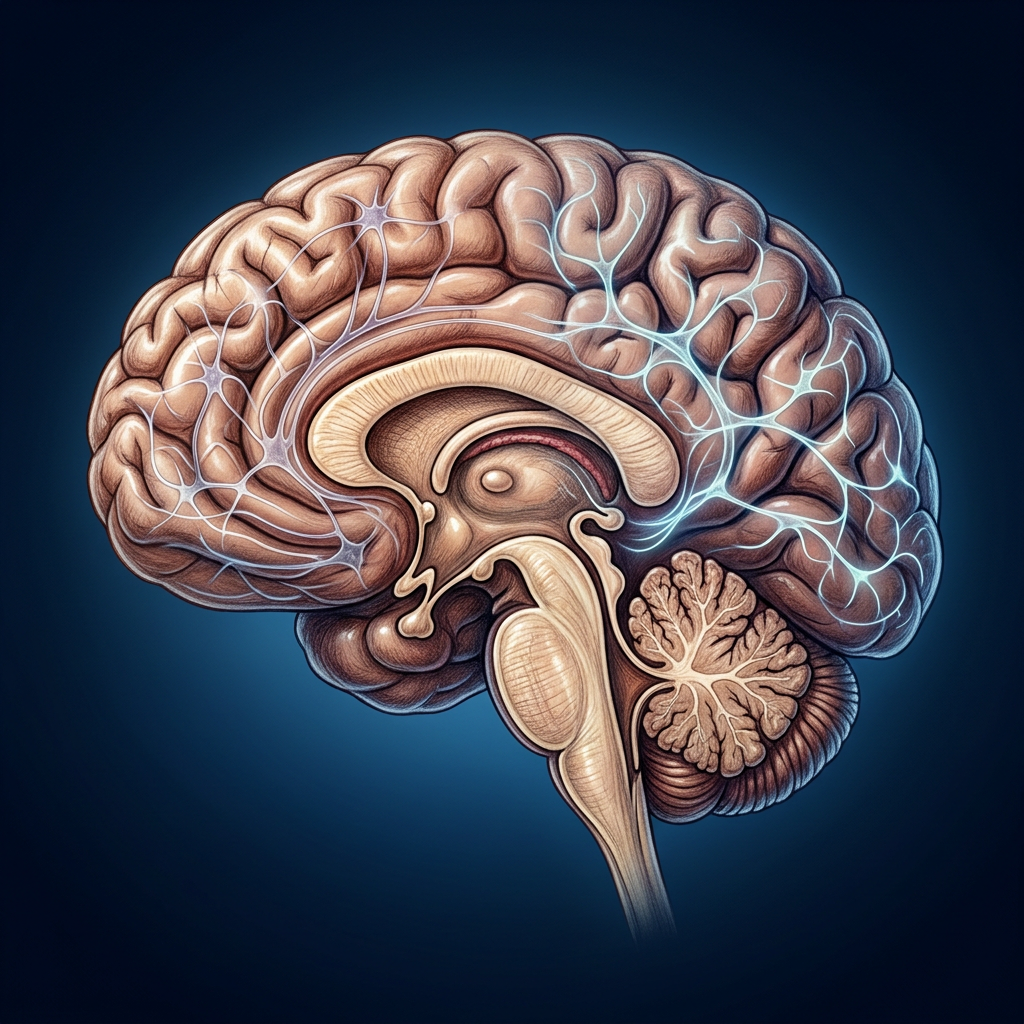
University of Osaka researchers found that pairing stimulation of the primary somatosensory cortex with the insula evoked sensations such as a gentle touch on the face and painless warmth, a small step toward more lifelike neuroprostheses.
Electrically stimulating the brain can create the feeling of touch, but the result is usually crude. Patients typically describe a tingle, a buzz or a patch of numbness, nothing like the soft pressure of a fingertip or the warmth of a hand. For scientists trying to restore touch to people with paralysis or amputations, closing that gap is a major challenge.
Researchers at the University of Osaka now report that stimulating two brain regions at the same time can produce richer, more complex sensations. In a study published in Brain Stimulation, a team led by Takamitsu Iwata describes three patients who felt sensations including a gentle touch on the face and painless warmth when the primary somatosensory cortex and the insular cortex were stimulated together.
“These observations suggest that stimulating the two regions together may change how sensory qualities combine,” Iwata said. According to the release, he added that this can sometimes produce experiences closer to everyday sensation.
Many ingredients in a single touch
Ordinary touch is a blend of qualities. Within an instant, the brain registers where on the body contact occurs, what it feels like, how much pressure is involved and whether it is warm or cool.
Different brain regions contribute different parts of that picture. The primary somatosensory cortex, or S1, is a strip of tissue running across the top of the brain that is organized like a map of the body, and it helps pinpoint where a sensation is located. The insular cortex, or insula, is folded deep inside the brain, beneath the lateral sulcus. It contributes to perceptions of temperature, pressure and pain, as well as to awareness of the body’s internal states.
The body map in S1 was charted in the mid-20th century by the neurosurgeon Wilder Penfield, who electrically stimulated the brains of awake patients undergoing epilepsy surgery and asked them what they felt. The result became the famous “homunculus,” a distorted human figure with outsized hands and lips that reflects how much brain area each body part receives.
An opportunity in epilepsy care
The Osaka team worked with three patients with epilepsy who had electrodes implanted inside their brains. Such electrodes are placed when medications fail to control seizures, so that doctors can locate where seizures begin and decide whether surgery could help. While the electrodes are in place, they also offer a rare chance to study the living human brain.
The researchers delivered 50-hertz electrical stimulation to S1 alone, to the insula alone and to both regions at the same time, and asked the patients to describe what they felt.
Because the brain itself has no pain receptors, such stimulation can be carried out while patients are awake and alert. Their own reports are the main data in experiments of this kind, which is part of why careful controls matter.
Sensations beyond the sum of their parts
Stimulating both regions together produced richer, multicomponent sensations. One patient felt something like a gentle hand touching the face. Another felt an unpleasant tingling in the fingers, known as dysesthesia, together with a choking sensation. The third felt numbness combined with warmth that was not painful.
Notably, these combined sensations were not always what one would expect by simply adding together the effects of stimulating each region on its own. That suggests that activating the two areas at once may change how the brain integrates sensory information, rather than merely layering one sensation on top of another.
Why it matters for prosthetics
The work could eventually inform the design of sensory neuroprostheses, devices that deliver signals directly to the brain to restore feeling. Researchers have already shown that stimulating S1 through implanted electrodes can give people with spinal cord injuries a sense of touch in a robotic hand. In a widely reported 2016 study at the University of Pittsburgh, a man paralyzed in a car accident felt pressure on his fingers when a robotic arm’s fingers were touched.
Those sensations, however, often lack the subtle qualities that make touch feel natural. The authors suggest that pairing S1 stimulation with stimulation of a region like the insula could help convey properties such as warmth or the manner in which something touches the skin. The approach could also help scientists understand how networks of brain regions combine their signals into a single, unified sensation.
An exploratory first look
The authors are careful to describe the study as exploratory, and its limitations are substantial. It involved only three patients and had no sham condition, in which no current is delivered but the patient does not know it. It relied mainly on verbal reports, tested most conditions only once and did not match stimulation intensity across the different conditions.
As a result, the study cannot separate the effects of activating the two regions at the same time from simple differences in the intensity of stimulation, the electrical charge delivered or the amount of tissue activated. The potential applications depend on confirmation in larger, controlled studies.
Still, the findings offer an intriguing hint that the brain’s sense of touch may be built from interactions between regions, and that artificial touch might one day be made richer by engaging more than one of them at once. The research was supported by the Japan Agency for Medical Research and Development and the Japan Science and Technology Agency.
Notes
- Iwata, T., et al. “Multicomponent somatosensory percepts during simultaneous stimulation of the insular and primary somatosensory cortices.” Brain Stimulation, 7 September 2026. DOI: 10.1016/j.brs.2026.103202.
- The University of Osaka. “Toward richer artificial touch through brain stimulation.” EurekAlert!, 30 September 2026. https://www.eurekalert.org/news-releases/1146033.

Leave a Reply