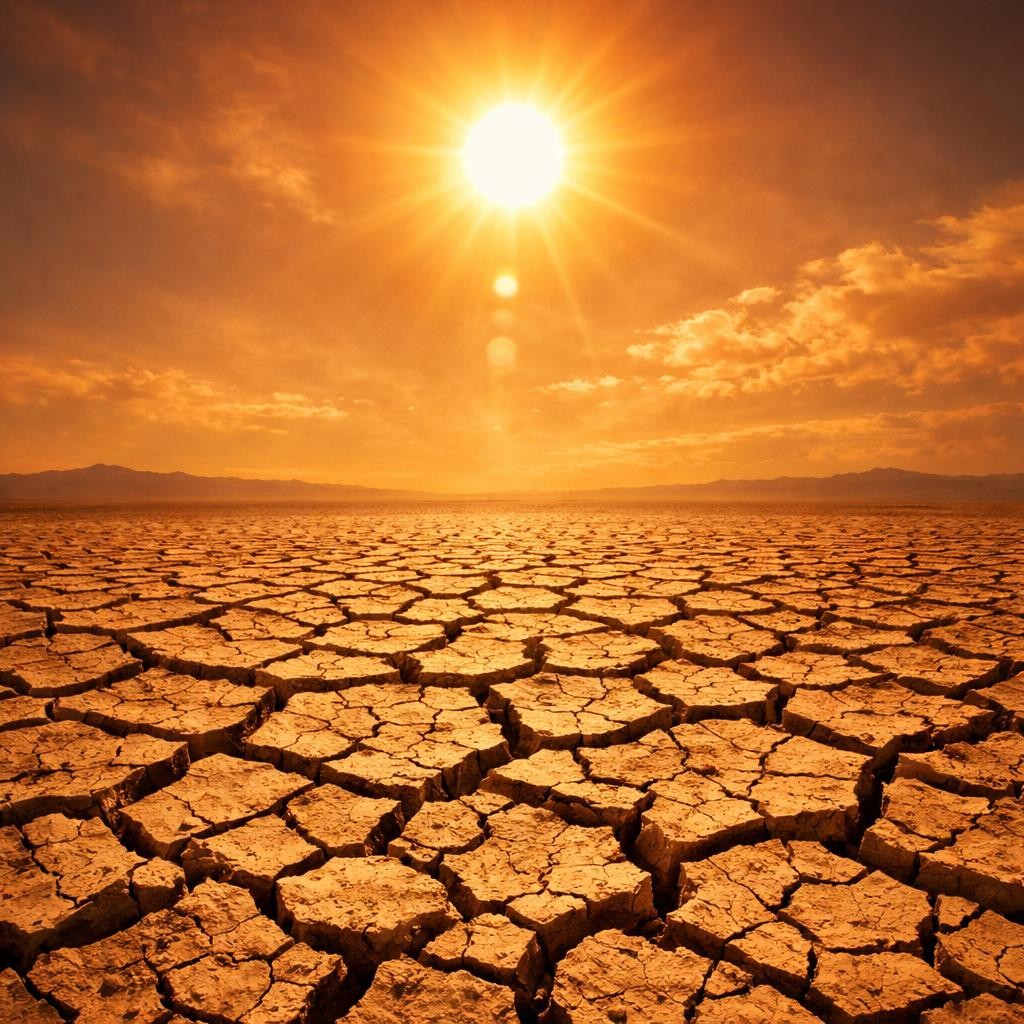
A Zhejiang University study of 2,318 people found that each extra heatwave was associated with about half a year of added biological aging, with signs pointing to disrupted metabolism.
Heatwaves are usually thought of as acute dangers. During a severe one, hospitals fill with people suffering heatstroke, dehydration and heart trouble, and death rates climb. The 2003 European heatwave alone was blamed for tens of thousands of deaths.
A new study suggests that heatwaves may also leave a longer-lasting mark. Researchers at Zhejiang University in China report that repeated exposure to heatwaves was associated with faster biological aging in middle-aged and older adults, and that disrupted metabolism may help explain the link. The findings were published in the journal Cyborg and Bionic Systems.
Heatwaves have been linked to cardiovascular, respiratory, cognitive and mental health problems, and older adults are especially vulnerable. But according to first author Dengyong Xu of Zhejiang University, “whether recurrent heatwave exposure accelerates systemic biological aging, and what biological mechanisms may underlie this association, remain unclear.”
Measuring biological age
Chronological age simply counts years since birth. Biological age is an attempt to capture how much the body has actually declined, across many physiological systems. Two people of the same chronological age can differ widely in biological age, and a higher biological age has been linked to greater risk of disease and death.
The researchers estimated biological age using the Klemera–Doubal method, a widely used statistical approach that combines a set of clinical measurements into a single estimate. In this study, it drew on eight clinical biomarkers. The team then calculated biological age acceleration, the difference between a person’s biological age and chronological age. A positive value means the body appears older than the calendar would suggest.
A national cohort
The study used data from 2,318 adults aged 45 and older who took part in the China Health and Retirement Longitudinal Study, or CHARLS, a large, nationally representative survey of middle-aged and older people in China. Participants were assessed in 2011 and again in 2015.
CHARLS, which began its national baseline survey in 2011, is modeled on the U.S. Health and Retirement Study and collects information on health, economic circumstances and family life, along with blood tests and physical measurements. That combination makes it possible to estimate biological age from clinical data and to link participants to the cities where they live.
Heatwave exposure was estimated from city-level weather data for the 12 months before each assessment. Because there is no single agreed definition of a heatwave, the researchers tested 12 different definitions, ranging from looser to stricter. They used a difference-in-differences design, which compares changes within the same individuals over time, to help account for stable personal characteristics.
The average participant was 58.7 years old. Over the four-year study period, average biological age rose from 57.3 years to 62.3 years, and 58.8 percent of participants showed biological age acceleration.
More heat, faster aging
Across the different definitions, more heatwave exposure was consistently associated with greater biological age acceleration, and the associations grew stronger as the definitions became stricter.
Under the strictest definition, a heatwave was counted when the apparent temperature, which accounts for humidity as well as heat, stayed above the local 97.5th percentile for at least four consecutive days. By that measure, each additional heatwave event was associated with a 0.531-year increase in biological age acceleration, and each additional heatwave day with a 0.057-year increase.
The associations were stronger among people with a body mass index of 23 or higher, among urban residents and among people living in southern China or in subtropical monsoon regions. A BMI of 23 is the threshold for overweight commonly used for Asian populations, which is lower than the cutoff of 25 used in many Western countries.
Clues in metabolism
To look for possible mechanisms, the researchers examined metabolic markers. Heatwave exposure was linked to higher total cholesterol and higher glycated hemoglobin, or HbA1c, a measure that reflects average blood sugar levels over roughly the previous three months.
The team also analyzed gene activity in the livers of aged mice that had been exposed to heat. They identified 29 heatwave-induced genes that were enriched in pathways related to lipid metabolism, atherosclerosis and insulin resistance, broadly consistent with the metabolic changes seen in people.
Together, the authors suggest, the findings point to recurrent heatwave exposure accelerating biological aging by disrupting metabolic balance.
Caveats and next steps
The authors acknowledge important limitations. The study is observational and cannot establish that heatwaves cause faster aging. Heat exposure was estimated at the city level, which may not reflect what individuals actually experienced, for instance if they had air conditioning or worked outdoors. Biological age was based mainly on clinical biomarkers rather than newer molecular aging clocks, and the mouse sample was small.
“In the future, we will conduct long-term follow-up studies in more regions and populations, combined with individual exposure monitoring and molecular mechanism validation, to more accurately assess the impact of heat waves on healthy aging,” Xu said.
The authors argue that, if confirmed, the findings would mean heatwaves affect health over the long term and not just during the hot days themselves. They call for targeted heat-health warnings, urban cooling measures and community-level protections, especially for vulnerable groups, as heatwaves grow more frequent, longer and more intense.
The work was funded by several Zhejiang provincial health and science programs, a national major project on noncommunicable chronic diseases and the National Natural Science Foundation of China.
Notes
- Xu, D., Li, D., Chen, Y., Bai, B., Xie, S., Gao, X., Wang, G., Cui, S., Zhang, W., Bao, J., Huang, H., and Xie, B. “Heatwave Exposure Accelerates Biological Aging via Metabolic Dysregulation.” Cyborg and Bionic Systems, 15 July 2026. DOI: 10.34133/cbsystems.0602.
- Beijing Institute of Technology Press Co., Ltd. “Heatwave exposure accelerates biological aging via metabolic dysregulation.” EurekAlert!, 28 July 2026. https://www.eurekalert.org/news-releases/1137693.



Leave a Reply