The infections left lasting inflammation in the spinal cord after the virus cleared, and both antivirals and anti-inflammatory drugs slowed the disease’s progression.
Amyotrophic lateral sclerosis, or ALS, is one of the cruelest diseases in medicine. It progressively destroys the motor neurons that control movement, leading to weakness, paralysis and, usually within a few years of diagnosis, death. There is no cure, and the handful of approved treatments only modestly slow it down.
Researchers at McMaster University in Canada now report that common viral infections may speed the disease up. In a study published in Nature Communications, they found that a single infection with influenza or the virus that causes COVID-19 accelerated ALS in animal models, and that the effect ran through the immune system.
“ALS is a debilitating and incurable disease, and it’s critical that we improve our understanding of the common environmental factors that can hasten its onset and accelerate its progression,” said principal investigator Matthew Miller, a professor of biochemistry and biomedical sciences at McMaster and scientific director of the Michael G. DeGroote Institute for Infectious Disease Research.
A disease with few answers
ALS is the most common motor neuron disease. According to ALS Canada, cited in the release, it affects about one in 300 Canadians. In North America it is often called Lou Gehrig’s disease, after the New York Yankees star whose career it ended in 1939.
The disease often begins with weakness in a hand or foot, or with slurred speech or difficulty swallowing, and spreads over time. Most people with ALS live two to five years after diagnosis, though a minority survive much longer; the physicist Stephen Hawking lived for decades with an unusually slow form. The 2014 Ice Bucket Challenge raised more than $100 million for the ALS Association in the United States and brought the disease to wide public attention.
Only a small share of cases are clearly inherited. For most patients, the causes remain unclear, and researchers suspect that a mix of genetic susceptibility and environmental exposures shapes who develops the disease and how fast it progresses. Approved drugs, including riluzole, edaravone and, for one rare genetic form, tofersen, offer limited benefit.
“Understanding what triggers or accelerates the disease could illuminate new strategies for slowing or even stopping it,” Miller said.
From association to mechanism
Viral infections have long been linked to neurodegenerative diseases. The most striking example is multiple sclerosis, which a large 2022 study tied strongly to prior infection with Epstein-Barr virus. But it has been unclear why so many very different viruses seem to raise the risk of brain and nerve disorders.
“A lot of the previous work in this area has been epidemiological in nature, without much focus on the molecular mechanisms that actually underpin the connection between infections and ALS,” said co-first author Imran Ahmed, a master’s student in Miller’s lab. “What makes our study unique is that we did take a mechanistic approach, and we explored why this connection might exist.”
The team infected animal models of ALS with either influenza A virus or SARS-CoV-2 and compared them with uninfected animals. Infected animals lost motor function much faster.
“In our pre-clinical models, just one viral infection was enough to significantly accelerate ALS progression, even after the infection itself had resolved,” said co-first author Art Marzok, a postdoctoral alumnus of Miller’s lab.
Inflammation that lingers
Crucially, neither respiratory virus needed to infect neurons to cause harm. Instead, both triggered gliosis, an immune response by the nervous system’s support cells, known as glia. Gliosis is already known to play a role in ALS. In the infected animals, it remained elevated in the spinal cord long after the virus had cleared, a kind of lasting scarring.
Glial cells, including astrocytes and microglia, normally help nourish and protect neurons and clean up debris. When they become chronically activated, they can release inflammatory molecules that damage the very cells they are meant to support. The study suggests that a passing infection can push them into that harmful state and keep them there.
“These findings strongly suggest that viral infections — and the inflammatory responses that they trigger — may fundamentally influence the course of the disease,” Marzok said.
Two ways to slow it
The researchers then tested whether they could interrupt the process. Treating the infections with antiviral drugs slowed ALS progression, and so did suppressing gliosis with anti-inflammatory drugs. The release reports that both approaches significantly slowed the disease but gives no figures.
Miller sees implications well beyond the laboratory. “Developing better vaccines and antiviral therapies — and improving the public’s trust in them — could have health benefits that we don’t fully appreciate,” he said. “Our work here suggests that preventing or limiting common infections could at the same time protect your nervous system from the damage that accelerates ALS.”
What remains unknown
The work is preclinical. The release does not specify the animal species or ALS model used, the number of animals, infection schedules or statistical results, nor does it name the antiviral and anti-inflammatory drugs tested or the paper’s title. Animal models of ALS capture only some features of the human disease, and many treatments that worked in them have failed in patients.
It also remains to be shown whether infections speed the disease in people, and if so, how much. Answering that would require careful studies tracking infections and disease progression in patients.
Still, the findings offer a concrete, testable mechanism for how everyday infections might worsen a devastating disease, and they point to existing classes of drugs that could be tried. Jonathan Mapletoft is also a co-first author of the study.
Notes
- Ahmed, I., Marzok, A., Mapletoft, J., et al. Nature Communications, 29 September 2026. DOI: 10.1038/s41467-026-77353-y.
- McMaster University. “Viral infections can accelerate the progression of ALS, McMaster researchers find.” EurekAlert!, 30 September 2026. https://www.eurekalert.org/news-releases/1146095.
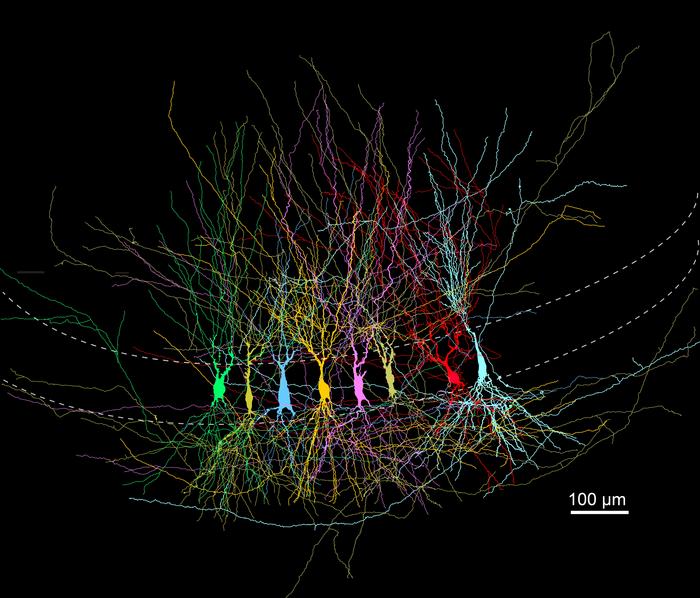
Featured image: File image of neurons. Credit: Jose Guzman / Jonas group at ISTA



Leave a Reply