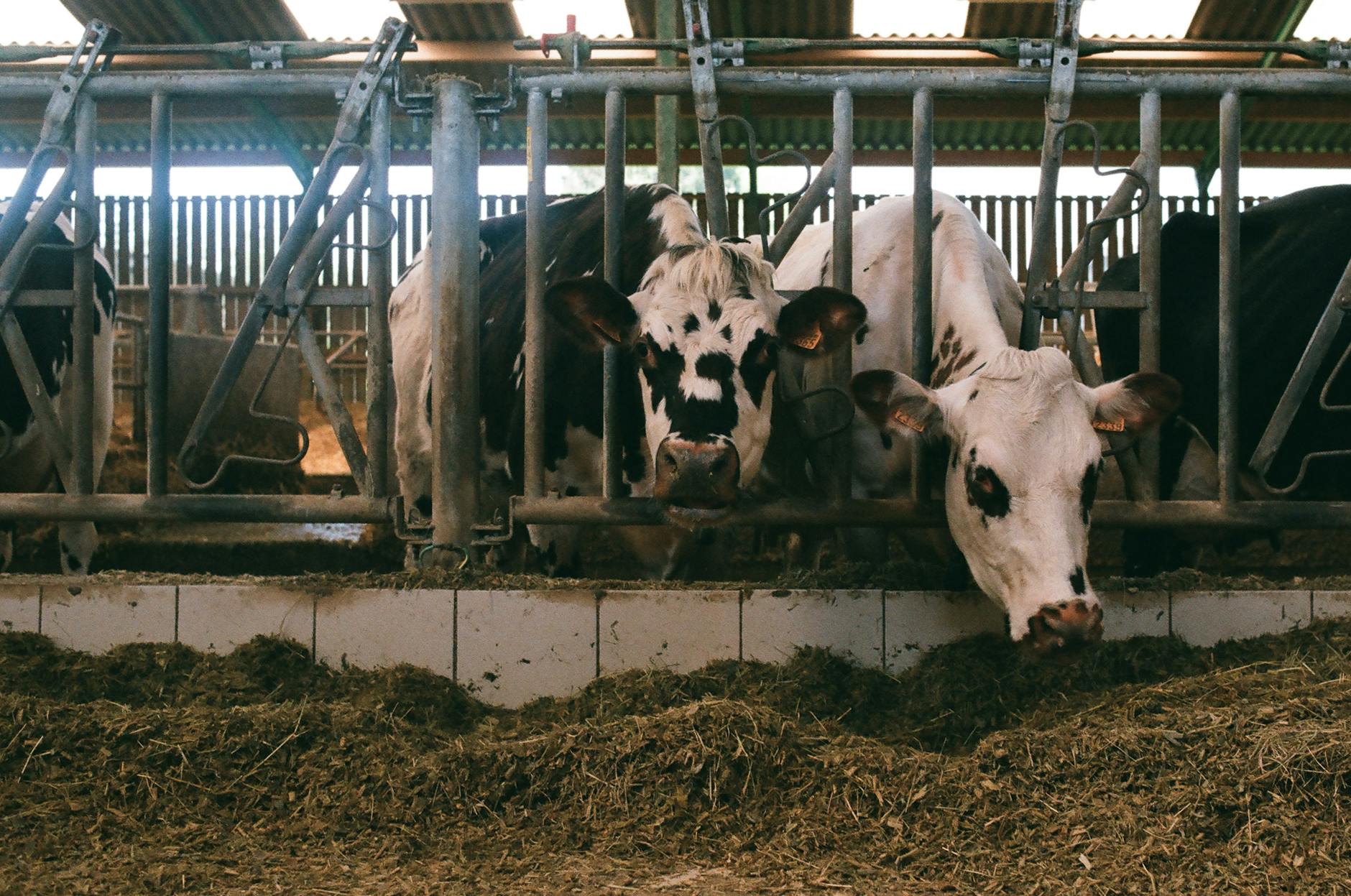
An LMU-led team traced much of farm children’s protection from asthma and allergies to a few cow-gut bacteria, the compounds they make and two airway receptors.
Children who grow up on farms are less likely to develop asthma, hay fever and allergies than children raised elsewhere. The pattern, known as the farm effect, has turned up in studies around the world for decades. What has been missing is a clear explanation of how it works.
An international team led by Ludwig-Maximilians-Universität München (LMU) now reports that it has identified much of the chain: specific bacteria found in cowsheds, the substances they produce and the receptors in children’s airways that respond to them. The findings are published in NEJM Evidence.
The hygiene hypothesis
The idea behind the farm effect dates to 1989, when British epidemiologist David Strachan proposed what became known as the hygiene hypothesis. Rates of allergy, asthma and hay fever had been climbing for decades in Western industrialized countries, and Strachan suggested that reduced exposure to infections and microbes in early childhood might leave the immune system prone to overreacting.
Allergic diseases involve an exaggerated immune response to harmless substances such as pollen, dust or food. Asthma alone affects hundreds of millions of people worldwide, according to the World Health Organization.
Farm children seemed to fit the hypothesis. “Girls and boys who grow up on farms and are exposed to a wider variety of microbes have the problem far less often,” said Markus Ege, Professor of Clinical-Respiratory Epidemiology at LMU University Hospital’s Dr. von Hauner Children’s Hospital, who led the study.
One of the most striking demonstrations came in 2016, when researchers compared Amish and Hutterite children in the United States. The two communities share similar genetic ancestry and lifestyles, but the Amish practice traditional farming with close contact with animals while the Hutterites use industrialized methods. Amish children had far lower rates of asthma, and dust from their homes contained more microbial material.
Ege’s group has long been involved in large European studies of farm children, and earlier work linked protection to contact with livestock and barns and to drinking unprocessed farm milk. Health agencies warn against giving children raw milk, however, because it can carry dangerous pathogens, which is one reason researchers have sought to identify the specific protective ingredients.
From correlation to mechanism
The trouble with such studies is that they show associations, not causes. “This kind of research can only show more or less convincing correlations,” Ege said. “But with our new study, we can make a much stronger case, because we can identify the individual links in the proposed causal chain.”
The team analyzed data from more than 1,000 children in European rural studies. Nasal swabs and mattress dust were collected from all of them, and cowshed dust was also sampled for 47 farm children. The researchers examined which bacteria and fungi were present, how the microbes related to one another and whether particular groups were linked to protection against asthma.
Using genetic and metabolic analyses, computer models and a process of elimination, they narrowed down the key microorganisms. They also tested whether the children’s own genes influenced the protective effect and validated their findings with data from France and Finland.
A handful of bacteria
The results pointed to a surprisingly small cast. “We identified a small number of bacteria, which we can now pinpoint down to the species level,” said first author Giulia Pagani, a bioinformatician at the Institute of Asthma and Allergy Prevention at Helmholtz Munich. “These gram-positive bacteria together mediate two-thirds of the entire farm effect for asthma protection and half of the effect for hay fever and atopic eczema.”
The bacteria, which include Romboutsia timonensis and Glutamicibacter arilaitensis, originate in the digestive tracts of cows. They produce or metabolize a set of compounds, kynurenine, xanthine, alpha-linolenic acid and stearidonic acid, that children inhale in barn air.
Receptors that calm inflammation
In the airways, those compounds are recognized by two receptors on human cells: the aryl hydrocarbon receptor, or AhR, and PPARγ. According to the release, their role in the farm effect was previously unknown.
Both receptors are known to respond to small molecules of this kind. Kynurenine, a product of the breakdown of the amino acid tryptophan, is an established activator of AhR, while PPARγ is activated by certain fatty acids. Gram-positive bacteria, the group the team identified, are distinguished by a thick cell wall that retains a stain used in a classic laboratory test.
“These receptors,” Ege said, “have multiple functions, including in the immune system, where they appear to prevent excessive inflammatory responses.” Both have been studied for their roles in regulating inflammation in other contexts, which makes them plausible links between microbial exposure and a calmer immune system.
A farm in a pill?
The release suggests the findings could give laboratory researchers a clear path to studying the molecular and cellular mechanisms behind the farm effect, and eventually to developing a drug that mimics its benefits without children having to spend time in barns.
That remains a long way off. The analysis is still built on observational data, even if the proposed chain of bacteria, compounds and receptors is far more specific than before. The release does not list the full author list, funders or limitations, and mechanisms identified statistically will need to be confirmed in laboratory and clinical experiments.
Still, by naming specific microbes, molecules and receptors, the study turns one of the most famous observations in allergy research into a set of testable targets.
Notes
- Pagani, G., et al. “Gram-Positive Bacteria and the Inverse Association between Farm Exposure and Childhood Asthma.” NEJM Evidence, 28 July 2026. DOI: 10.1056/EVIDoa2500271.
- Ludwig-Maximilians-Universität München. “Immune system: the farm effect – clearer than ever.” EurekAlert!, 29 July 2026. https://www.eurekalert.org/news-releases/1138041.
Featured image: Photo by Olga Lioncat on Pexels.com


Leave a Reply