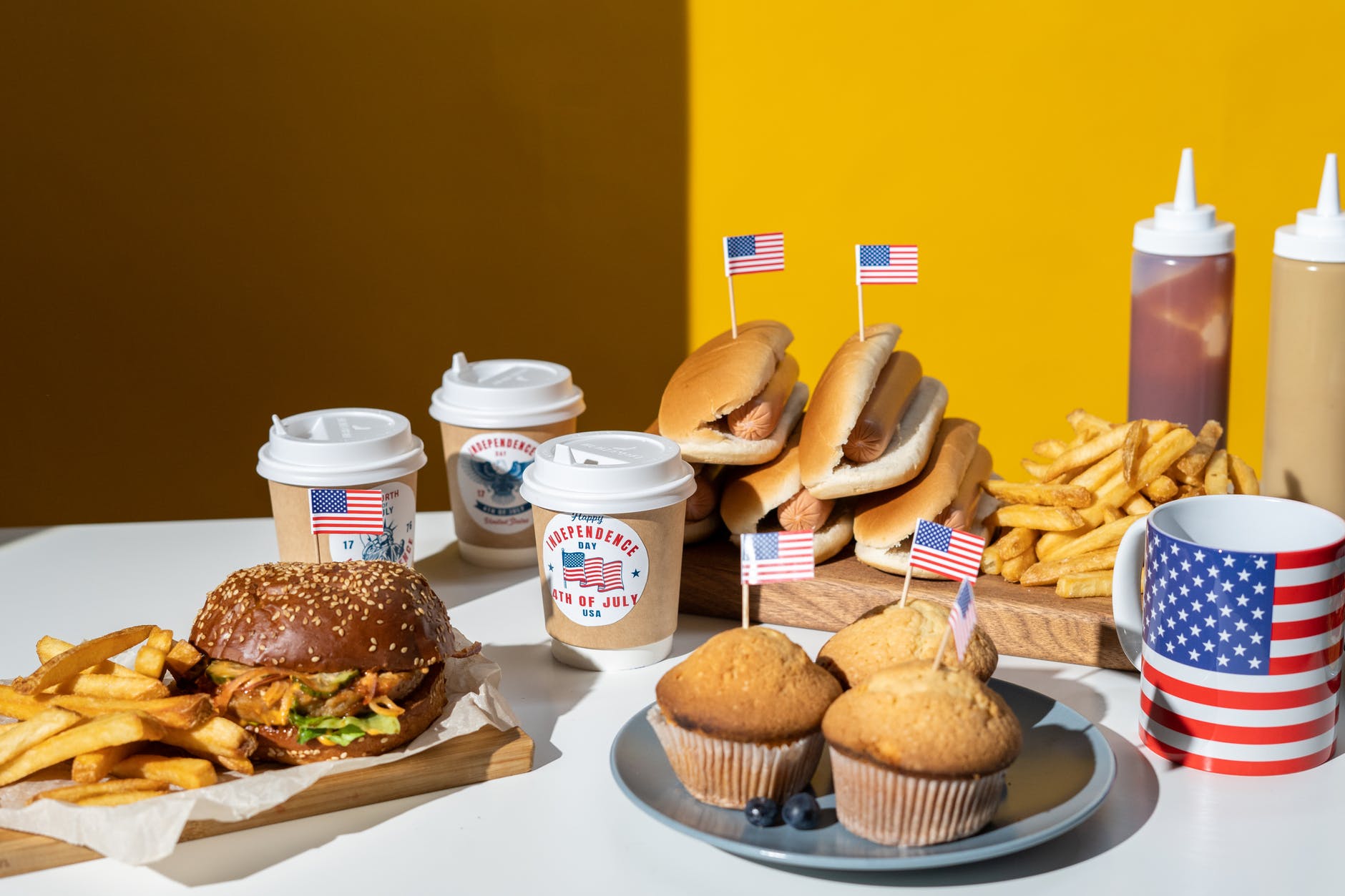
A national survey of more than 1,000 U.S. teens finds mobile food delivery has quietly become part of school life — mostly fast food and sugary drinks — and that policy hasn’t caught up.
School lunch has been the subject of federal nutrition rules for decades. Standards dictate how much fruit and vegetable a meal should contain, how much sodium is allowed, which drinks can be sold in vending machines. But those rules were written for a world in which the food available to students was the food inside the school building. Smartphones have changed that.
A new survey of U.S. teenagers, presented at NUTRITION 2026, the annual meeting of the American Society for Nutrition, finds that nearly one in four teens report using mobile food delivery during school hours.
“Federal and state school nutrition policies are designed to support access to healthy foods and beverages,” said lead author Mika Matsuzaki, PhD, MS, MPH, an assistant professor in the Human Nutrition group of the Department of International Health at the Johns Hopkins Bloomberg School of Public Health. “Today, a smartphone instantly brings a food outlet many miles away right to the school gate.”
What teens are ordering
The researchers conducted a national online survey in the summer of 2025 with 1,027 adolescents aged 13 to 17. Nearly a quarter said they had used mobile food delivery during school hours. Almost half said they used it after school.
What they ordered is the part likely to concern nutrition experts. Among teens who used delivery services, almost 60 percent ordered fast food such as pizza and burgers, and more than a third ordered sodas or other sugar-sweetened beverages — precisely the kinds of foods school nutrition standards are designed to limit.
“We can no longer look at school nutrition without looking at the smartphone in a student’s pocket,” Matsuzaki said.
Regional differences and cost
The survey revealed geographic differences. Students in the western United States were more likely to attend schools that allow mobile food delivery during school hours. Yet western teens were also more likely to say they avoid these services because they see them as expensive — a reminder that delivery fees and menu markups can put the services out of reach for many families, raising questions about equity even where access is permitted.
Teens are divided — and thoughtful
One of the survey’s more surprising findings was how students themselves view the practice. Nearly half of respondents supported allowing mobile food delivery during school.
“Interestingly, students themselves are divided on whether this should be allowed,” Matsuzaki said.
Many students, whether they favored or opposed the practice, raised concerns about its effects on the learning environment, on equity between students who can and cannot afford delivery, and even on bullying.
“It’s rare to see teenagers raise flags about their own digital habits,” Matsuzaki said.
A wake-up call for schools
The researchers see the findings as a prompt for schools, families, and policymakers to rethink school food environments in the smartphone era.
“For many school administrators and parents, this study will be a wake-up call,” Matsuzaki said.
They outline several possible responses. Schools could teach students to navigate digital food environments thoughtfully rather than impulsively. Administrators and policymakers could factor the data into campus safety and phone-use policies, and could consider guardrails to limit unhealthy food arriving during school hours. Schools might also work with delivery platforms to encourage healthier choices. And parents and teens could use the findings to start conversations about nutrition and budgeting.
Early findings
The results come with caveats. They are based on self-reported survey data, which can be affected by how accurately teens recall and describe their behavior, and the researchers recommend future studies to confirm them. The findings were presented as a conference abstract and have not yet undergone the full peer review required for journal publication, so they should be considered preliminary.
Even so, the survey captures a shift that many parents and teachers will recognize. The cafeteria is no longer the only lunch counter on campus. For a growing number of students, the menu is whatever fits on a phone screen — and the policies meant to shape what young people eat at school have yet to account for it.
Matsuzaki’s work was funded by the National Heart, Lung, and Blood Institute and the National Institute on Minority Health and Health Disparities. Co-authors Brisa N. Sánchez and Emma V. Sanchez-Vaznaugh received support from the National Institute on Minority Health and Health Disparities and the Eunice Kennedy Shriver National Institute of Child Health and Human Development.
Featured image: Photo by cottonbro on Pexels.com
Notes
- Matsuzaki, M., et al. Mobile food delivery use among U.S. adolescents during and after school hours. Poster presentation, NUTRITION 2026, American Society for Nutrition, National Harbor, Md., July 27, 2026. (Conference abstract; not yet peer reviewed.)
- American Society for Nutrition. “1 in 4 teens report using mobile food delivery at school.” News release via EurekAlert!, July 27, 2026. https://www.eurekalert.org/news-releases/1136468


Leave a Reply