The choices people make to control mosquitoes in their own backyards may be helping some of those mosquitoes survive the very insecticides meant to kill them, according to two new studies from North Carolina State University.
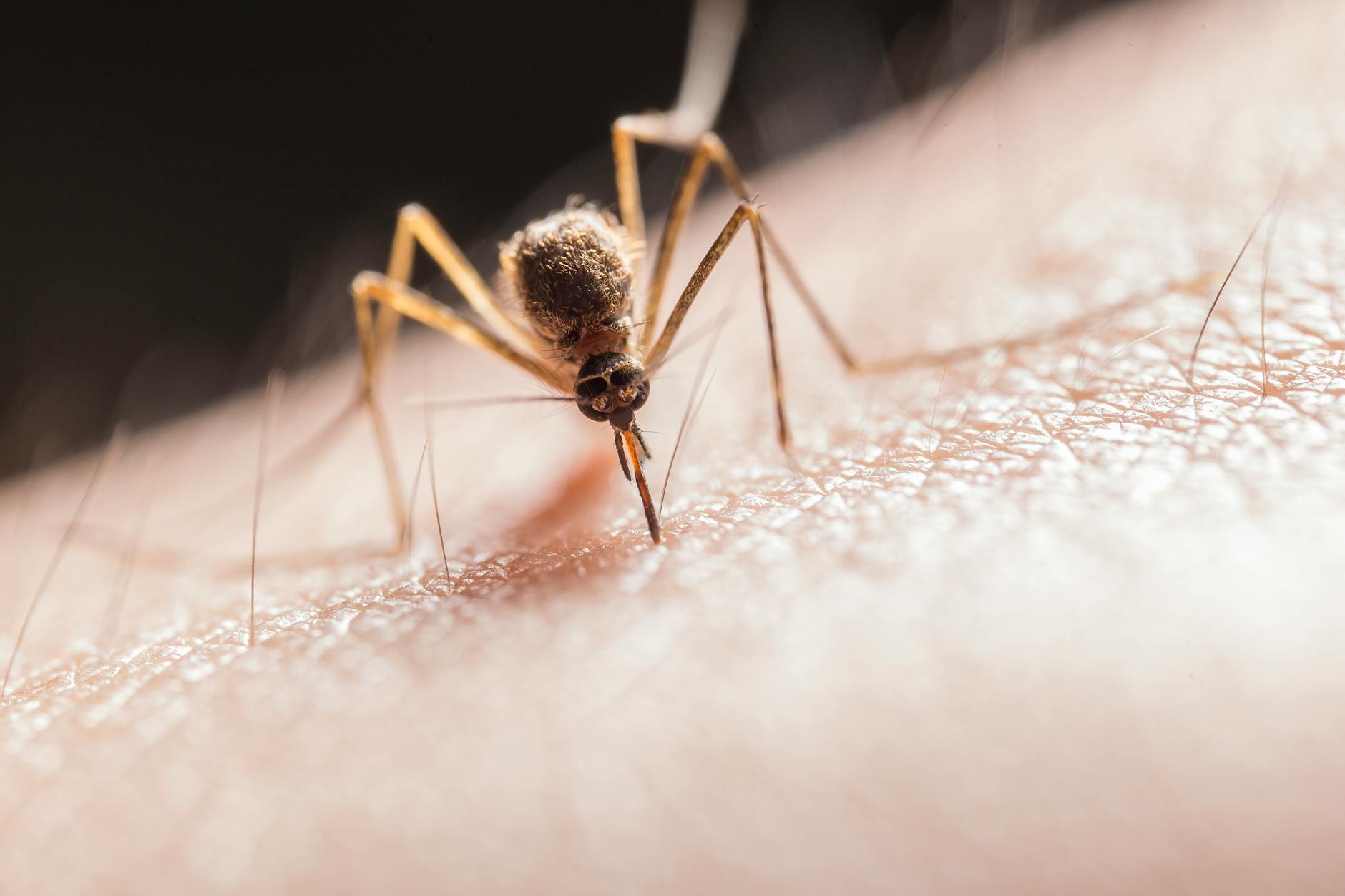
The studies focus on the tiger mosquito (Aedes albopictus), an invasive species now common across much of the eastern United States and a major day-biting mosquito in the Southeast. The mosquito thrives in urban and suburban environments, where it breeds in small containers and other places where water collects. In North Carolina, households may hire private mosquito-control companies or apply insecticides themselves to reduce nuisance biting in their yards — and the studies suggest those individual decisions, repeated across neighborhoods, can create conditions that favor the evolution of insecticide resistance.
“Homeowners with money will pay to spray for mosquitoes, which selects for localized resistance. Over time, as more and more resistance builds up in the population, it will become harder to control populations. The insecticides will no longer be as effective,” said Martha Burford Reiskind, associate professor of biological sciences at NC State.
The research centers on pyrethroids, a class of insecticides commonly used to kill adult mosquitoes. Pyrethroids are relatively inexpensive and considered among the safer insecticides for use around people, pets and homes, and in places where mosquito-borne diseases are common, they can play an important role in limiting transmission. In North Carolina, however, they are often used simply to reduce nuisance biting.
The researchers found that mosquitoes in Wake County developed and maintained mutations associated with pyrethroid resistance. One study used archived mosquito samples from 2016 to 2024 to track how quickly one of those mutations appeared and spread; the other examined whether socioeconomic factors helped predict where insecticide resistance was most common. No resistant mosquitoes turned up in Wake County samples from 2016 and 2017. The first resistant mosquitoes appeared in 2018 in a small cluster, and by 2023, resistance had spread widely: researchers found resistance-associated mutations in 84% of sampled residential blocks, and 39% of sampled mosquitoes carried the mutation.
“We see the rapid rise of pesticide resistance in places like South America and Asia where there is continuous spraying in some countries. But resistance driven by private mosquito control is novel in the contiguous U.S., to our knowledge,” Burford Reiskind said.
The second study found that resistance was higher in neighborhoods with higher total property values, used as a proxy for homeowner wealth. The researchers did not directly measure household insecticide use, but the findings suggest wealthier households may be more likely to use private mosquito-control services or other chemical treatments, creating localized selection pressure for resistance. The researchers used a genetic screening method to identify a mutation in the mosquito’s genome associated with “knockdown resistance,” or kdr, which can reduce mosquitoes’ sensitivity to pyrethroid insecticides. “This mutation is often the first to show up when there’s insecticide resistance,” Burford Reiskind said.
Tiger mosquitoes are aggressive daytime biters that can transmit viruses including dengue, Zika and chikungunya, as well as dog heartworm. The studies focused on insecticide resistance rather than disease transmission, but the findings matter because resistance can reduce the effectiveness of tools used to control mosquitoes when public health risks arise.
Michael Reiskind, professor of entomology at NC State and a co-author of both papers, said the next step is to expand sampling across a broader range of neighborhoods. “We want to make a better effort to get a diversity of neighborhoods, age and wealth in order to extend our findings and see whether they work at different housing densities and wealth levels,” he said.
The findings point to the need for integrated pest management strategies that reduce reliance on chemical insecticides alone. For homeowners, that includes targeting mosquitoes earlier in their life cycle by removing or cleaning anything that can hold rainwater, where mosquito larvae develop. “A reliance on just chemical insecticides is never the best way to control a pest. We really want to integrate pest management practices that look at the whole lifecycle of the pest,” Burford Reiskind said.
The paper on the emergence and spatial distribution of resistance appears in Parasites & Vectors; Jennifer Baltzegar, a former graduate student and postdoctoral researcher at NC State now on faculty at Augusta University, is the paper’s first author. The paper on socioeconomic predictors of resistance appears in Royal Society Open Science; Cole Butler, an NC State Ph.D. graduate in biomathematics now a postdoctoral researcher at the University of Georgia, is the lead author. Co-authors on both papers include Jessica Ding, Emily MX Reed, Zachary Brown, Michael Reiskind and Martha Burford Reiskind of NC State. The research was supported by seed funding from NC State’s Genetics and Genomics Academy and Global One Health Academy.
Journal: Royal Society Open Science
DOI: 10.1098/rsos.251678
Article Title: Socioeconomic predictors of knockdown resistance in the globally invasive tiger mosquito Aedes albopictus
Publication Date: July 8, 2026
Source: EurekAlert




Leave a Reply