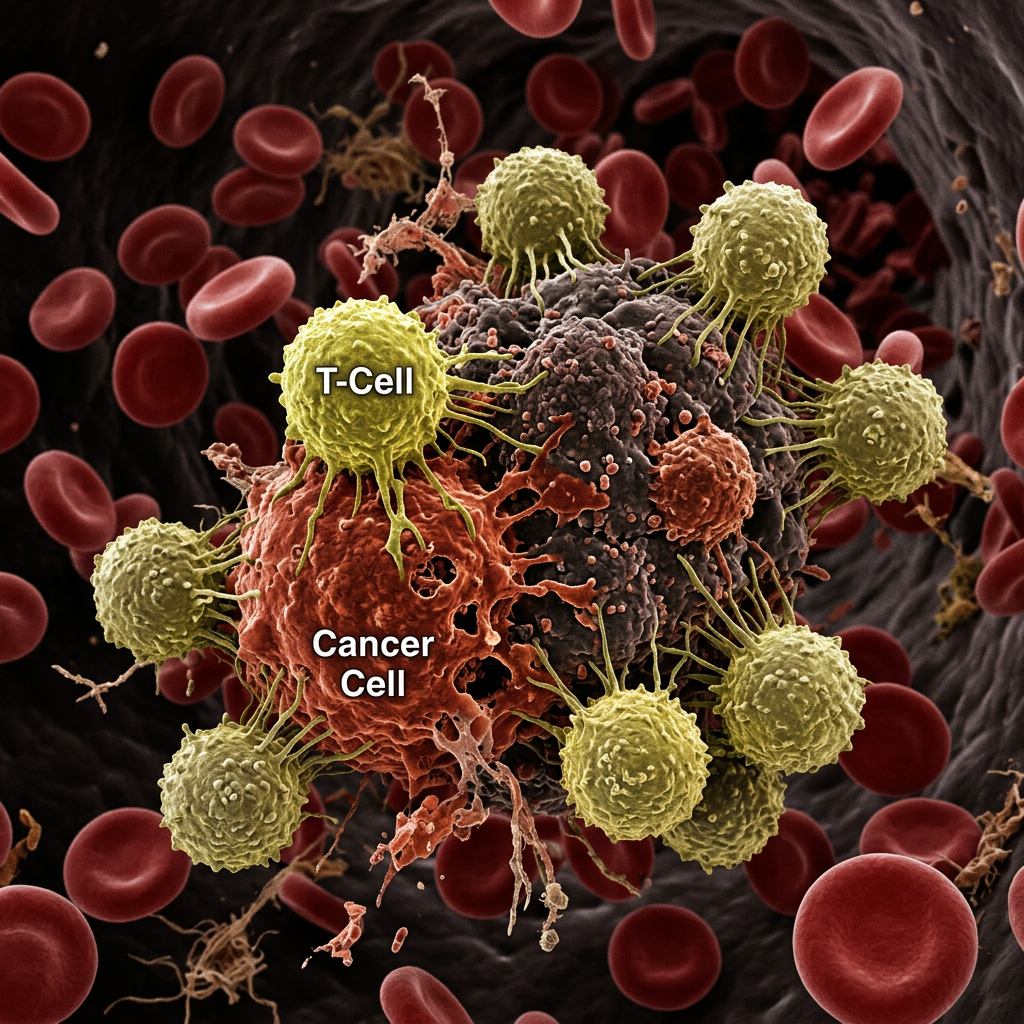
Tumors are not passive masses of cells; they actively communicate with their surroundings, in part through tiny membrane-bound packages called tumor-derived extracellular vesicles (TEVs). These vesicles can carry proteins and genetic material that promote tumor growth, suppress immune responses, and prepare distant sites in the body for metastasis. A team of South Korean researchers has now developed a therapeutic strategy that flips the function of these vesicles, first shutting down their cancer-promoting activity, then repurposing the same vesicle-based communication pathway to activate an anticancer immune response.
Researchers from Sungkyunkwan University (SKKU), the Korea Institute of Science and Technology (KIST), and Incheon National University, led by Professor Yoosoo Yang of SKKU’s Department of Integrative Biotechnology, developed what they call an “EVOTAC” nanoswitch technology, published in Signal Transduction and Targeted Therapy.
A Two-Stage Switch
The EVOTAC platform operates in two sequential stages. In the first, “Switch-Off” stage, the nanoswitch therapeutic degrades intracellular proteins responsible for generating cancer-promoting TEVs, cutting off the tumor’s ability to send out vesicles that suppress immune activity and support tumor progression. In the second, “Switch-On” stage, the researchers apply localized laser irradiation combined with photodynamic therapy, which triggers the tumor cells to instead produce a different population of immunogenic TEVs, ones capable of activating the immune system’s anticancer response.
This sequence effectively converts the tumor’s own vesicle-signaling machinery from a tool that helps the cancer evade the immune system into one that recruits the immune system to attack it.
In mouse models of triple-negative breast cancer and colorectal cancer, both notoriously difficult to treat, the researchers observed complete elimination of tumors following EVOTAC treatment. Importantly, the treatment also suppressed tumor recurrence and metastasis, suggesting that the immune activation triggered during the “Switch-On” phase produced a lasting anticancer effect rather than a temporary reduction in tumor size.
The researchers say the dual-action, sequential design of the EVOTAC platform, first disarming the tumor’s immunosuppressive signaling and then actively provoking an immune attack, represents a distinct approach from conventional cancer immunotherapies, which typically target only one side of this equation. The strategy offers a potential path toward therapies that address both tumor growth and the risk of recurrence and spread within a single treatment framework.
The research was supported by South Korea’s Ministry of Science and ICT through its Bio & Medical Technology Development Program.
Journal: Signal Transduction and Targeted Therapy
DOI: 10.1038/s41392-026-02872-5
Funding: Ministry of Science and ICT (Republic of Korea), Bio & Medical Technology Development Program




Leave a Reply