
As artificial intelligence becomes a powerful force in scientific discovery, researchers are asking a critical question: Is AI truly changing the scientific method, or is it simply the next stage of computational research? A new editorial published in Artificial Intelligence & Environment examines this turning point and calls for transparent, responsible, and human-guided use of AI for Science, also known as AI4S.
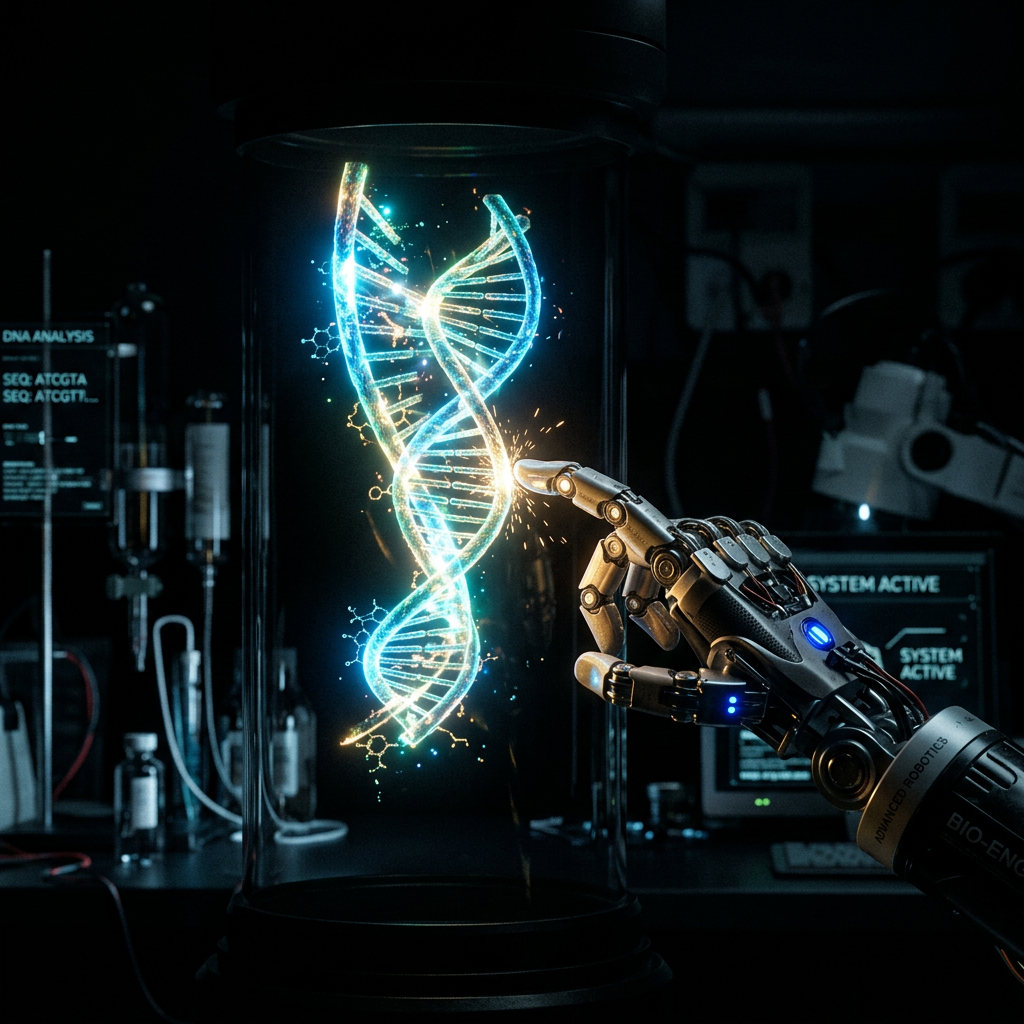
The article, titled “AI for Science: Paradigm shift or phase transition?”, discusses how the 2024 Nobel Prizes in Physics and Chemistry helped bring AI-driven science into the mainstream. The authors argue that AI is no longer only a tool for analyzing data. It is increasingly becoming a partner in research, capable of identifying patterns, helping design experiments, and supporting discovery in fields such as climate modeling, biodiversity monitoring, and sustainable materials development.
“AI is transforming how scientists ask questions, test ideas, and generate knowledge, but it must not replace scientific responsibility, transparency, and human oversight,” said corresponding author Guang-Guo Ying of South China Normal University.
The editorial describes three stages of AI capability in scientific discovery. Keplerian AI finds patterns in existing data. Edisonian AI supports autonomous experimentation and iterative discovery. Einsteinian AI, still largely aspirational, would generate new scientific laws or theoretical frameworks. The authors also highlight the rise of Agentic Science, in which AI systems may formulate hypotheses, design experiments, interpret results, and revise research strategies.
However, the authors warn that these advances bring serious challenges. Bias amplification, black-box decision-making, unclear scientific credit, and weak reproducibility standards could undermine trust if AI-enabled research is not carefully governed.
To address these issues, the editorial proposes a framework for evaluating AI-enabled scholarship based on whether AI acts as an instrument, assistant, collaborator, or agent. The authors emphasize that scientific merit should depend on rigor, transparency, reproducibility, and real-world value, not on technological novelty alone.
The editorial concludes that AI4S may become a lasting driver of discovery only if the research community develops strong standards for ethical governance and keeps human accountability at the heart of scientific progress.
Journal: Artificial Intelligence & Environment
Article Title: AI for Science: Paradigm shift or phase transition?
Journal Reference: Ying G-G; Chen C-E; Hua P; et al. AI Environ. 2026, 1(2): 52-54.
DOI: 10.66178/aie-0026-0009
Method of Research: Commentary/editorial
Article Publication Date: 7-Jun-2026
Source: EurekAlert


Leave a Reply