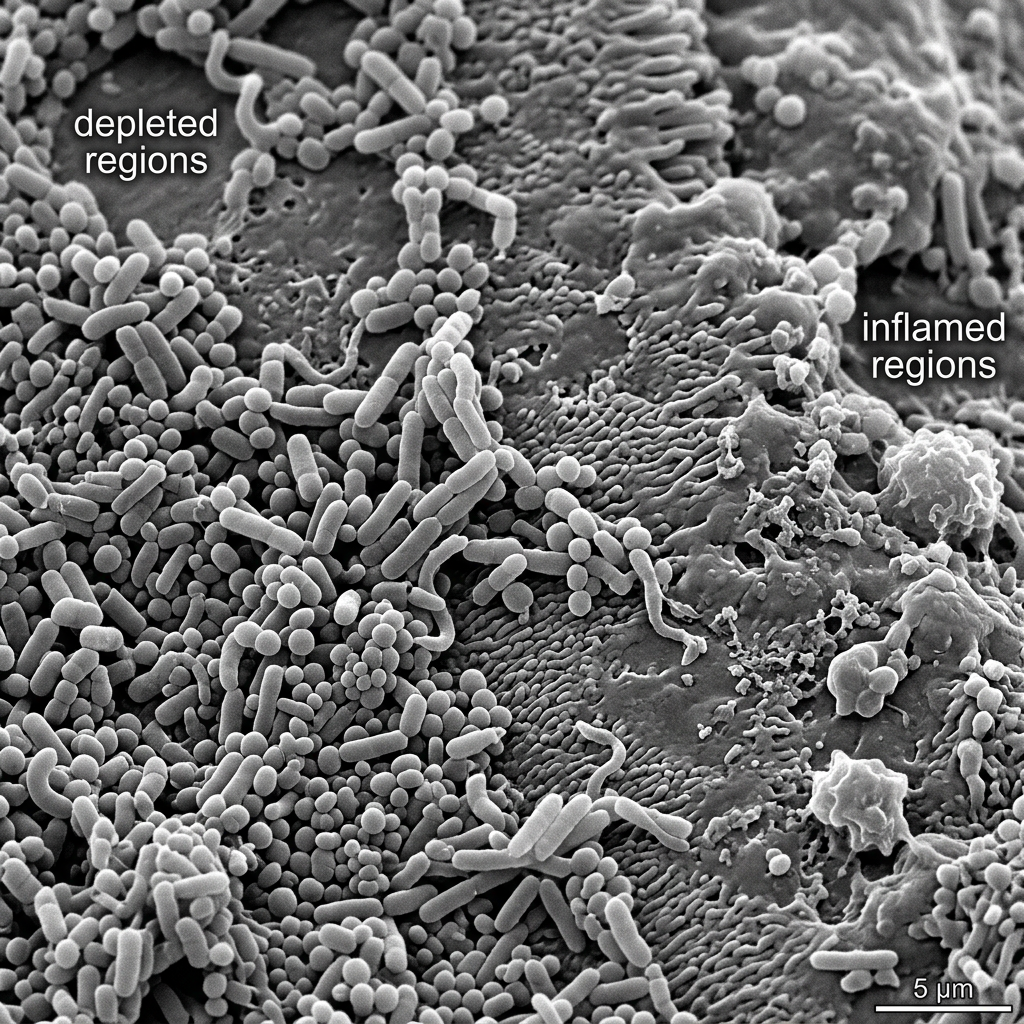
Sleep deprivation has long been known to weaken the immune system. Now UF Health Cancer Institute researchers have made a startling discovery: The gut microbiota drives changes to the immune system caused by chronic sleep loss. These changes promote cancer progression, disrupt circadian rhythm and weaken the effectiveness of chemotherapy.
“Sleep deprivation is very common among patients with cancer, but it’s often overlooked in patient care, and molecular evidence linking it to disease outcomes was lacking,” said Maria Hernandez, a graduate student in the lab of Christian Jobin, Ph.D., who presented the study April 20 at the American Association for Cancer Research Annual Meeting 2026 in San Diego. “This study highlights the importance of maintaining a healthy microbiome by getting good sleep and eating a healthy diet. Our finding is huge because it emphasizes the need to evaluate the patient as a whole and identify how we can better support these systems to improve patient outcomes.”
The gut microbiota is the collection of trillions of microorganisms, including bacteria, that live in the gut. It’s known to have a complex, interconnected relationship with the immune system. Jobin’s team wanted to find out: Is the microbiota being affected by sleep deprivation in a way that promotes cancer progression and decreased treatment response?

The researchers used mouse models to mimic the effects of long-term sleep deprivation in humans. They collected stool samples from sleep-deprived mice and transplanted them into healthy mice whose microbiota had been wiped out, allowing them to zero in on the microbiota’s role.
The researchers measured tumor growth and response to 5-FU, the most common chemotherapy drug given to patients with colorectal cancer, which is now the deadliest cancer in people younger than 50 in the United States. They compared immune cell populations in the tumor microenvironment, genes involved in regulating circadian rhythm, and other immune markers in sleep-deprived and normal mice.
Sleep-deprived mice not only had worse cancer progression assessed through tumor volume, but the chemotherapy drug was less effective and the abundance of immune cells involved in antitumor immunity was reduced, the researchers found. Genes that regulate circadian rhythm were also affected.
“Sleep deprivation altered the composition of the microbiota and beyond that, we think it alters the behavior of the bacteria,” Hernandez said. “We showed that those changes have functional effects in both cancer progression and cancer therapies. Something is happening in the microbiome that’s causing the decrease of treatment efficacy.”
The team is working to identify the mechanism and pinpoint the specific molecule involved. The study highlights the importance of gathering sleep data in large groups of human patients so microbiota changes can be compared over time, said Jobin, co-leader of the UF Health Cancer Institute’s Immuno-Oncology and Microbiology research program.
The good news? The microbiota is “plastic,” meaning it can be modified by lifestyle changes.
“We know so much about the microbiome that we need to start taking care of it, treat it with respect,” said Jobin, the Gatorade Distinguished Professor of Medicine in the UF College of Medicine. “Like your mom used to say, sleep is important, eat well. We understand this holistically, but now we know it may be going through the microbiome. It could be something that’s in tune with your lifestyle.”
Of course, it’s not always possible to get good sleep, particularly for patients who are hospitalized for extended periods or receiving cancer treatment.
Long term, the new findings pave the way for researchers to develop a way to rebalance the microbiota, such as restoring “good bacteria” or creating a targeted drug. Jobin’s lab has pioneered new ways to harvest the microbiota’s therapeutic potential, recently pinpointing a molecule that boosted cancer treatment response and can be made into a drug. A similar technique could be applied to target changes caused by sleep disruption.



Leave a Reply