Measles Outbreaks Expose Vaccination Gaps: Two new reports show how low vaccination coverage, distrust, and repeated school exposures made recent U.S. measles outbreaks difficult to contain. In West Texas, a 2025 outbreak in Gaines County sickened 762 people, hospitalized 99, and killed two; 97% of cases were unvaccinated or had unknown vaccination status. Officials held clinics and distributed culturally tailored materials, but only about 275 MMR doses were administered, and researchers suspect many cases went unreported. In South Carolina, a 2025-26 school outbreak spread through 32 schools, causing 997 confirmed cases and 21 hospitalizations. Schools with lower MMR coverage faced repeated quarantines. Both reports argue that high vaccination rates remain the most effective way to prevent outbreaks and school disruption. (CIDRAP)
Universe May Stay Stringy at Giant Scales: A new Nature study challenges one of cosmology’s core assumptions: that the universe becomes smooth and uniform when viewed on sufficiently large scales. Using the Dark Energy Spectroscopic Instrument’s 3D map of 47 million galaxies, researchers Francesco Sylos Labini and Marco Galoppo found that galaxies may remain aligned in vast filament-like structures up to 1 gigaparsec, or about 3 billion light-years. That is far larger than the roughly 300 million light-year scale where earlier work suggested cosmic uniformity emerges. If confirmed, the result could undermine the cosmological principle, a foundation of the lambda-CDM model and its need for dark energy. Some cosmologists see the finding as potentially serious, while others argue it conflicts with precise cosmic microwave background measurements. (Science)

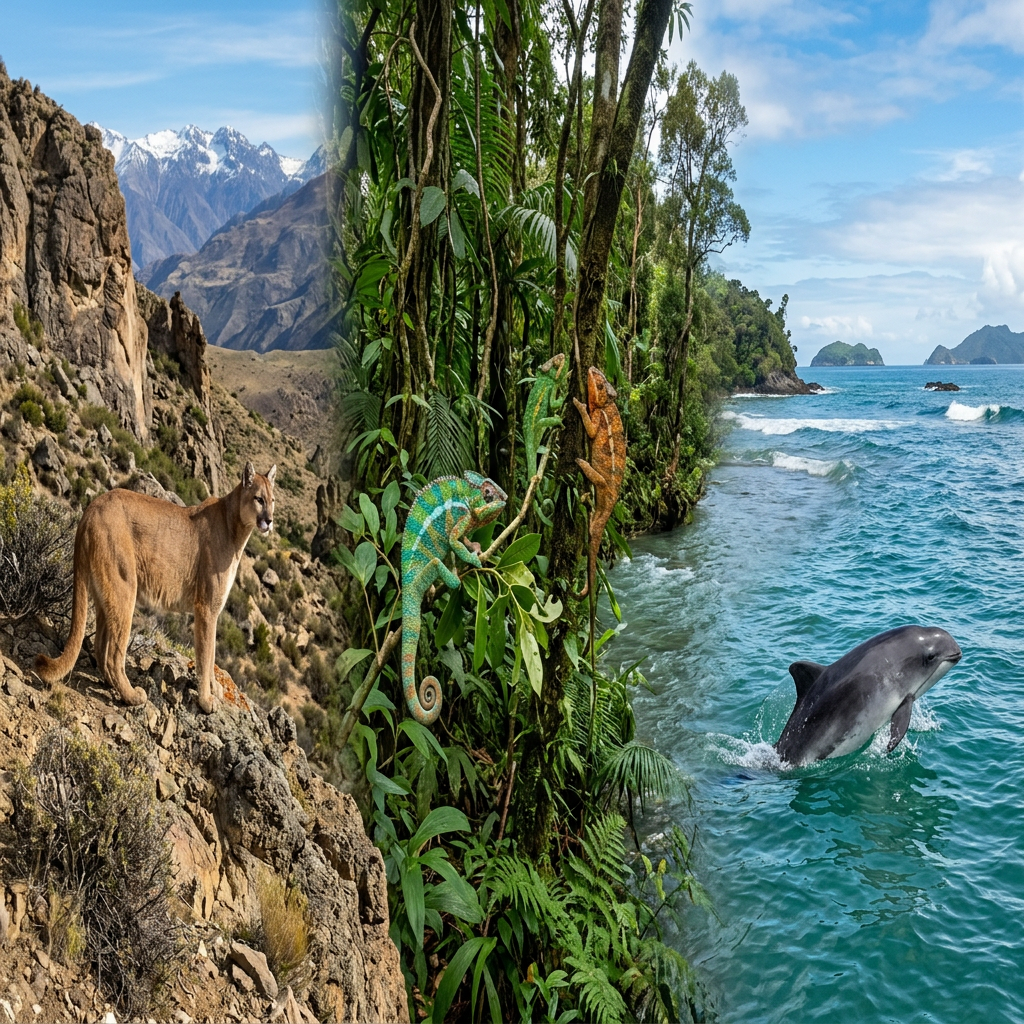
Four New Chameleons Found on Mozambique’s Sky Islands: Scientists have described four new sylvan chameleon species from isolated “sky island” rainforests in northern Mozambique, underscoring how much biodiversity can remain hidden in small, fragmented habitats. The species were found on separate granite mountains where cool, moist forest patches rise out of surrounding savanna. Because each mountain is ecologically isolated, each appears to have produced its own distinct chameleon lineage. The names honor Jane Goodall, Rosalind Franklin, and the idea of “vanishing,” a nod to both scientific discovery and habitat loss. Researchers warn that these forests are under growing pressure from agriculture and could lose species before they are fully documented, making local conservation urgent. (Phys.org)
More Trees Can Mean Fewer Birds: A new study from Japan complicates the assumption that planting trees is always good for biodiversity. Researchers studying wetland farmland around Lake Kahokugata found that shelterbelts — rows of trees planted to protect fields from wind — helped some shrub and edge birds but harmed species that depend on open grassland and wetland habitat. Grassland bird abundance was more than 70 percent lower near shelterbelts than at open sites roughly a kilometer away. The findings matter because rice paddies and other wet-farmed landscapes can serve as substitute wetlands for migratory birds along major flyways. The takeaway is not “fewer trees,” but smarter placement that balances woody cover with open habitat. (ScienceDaily)
Mountain Lions Reshape Small Preserves: A Stanford study shows that even small protected areas can host major predator-driven ecological effects. Researchers tracked wildlife at Jasper Ridge Biological Preserve, a suburban preserve connected to the Santa Cruz Mountains, and found that mountain lions began appearing more often on trail cameras from 2015 to 2020. As puma activity increased, deer activity declined, and vegetation surveys showed that woody plants deer often browse or trample, including young oaks, began to thrive. Coyotes and bobcats also reduced their activity, suggesting a broader “ecology of fear.” The study challenges the idea that small preserves have limited ecological value, especially when they remain connected to larger wild landscapes. (Stanford News)
Pumas and People Can Share Trails: Another Santa Cruz Mountains study offers a practical roadmap for coexistence between mountain lions and outdoor recreation. Researchers analyzed six years of GPS data from 36 wild pumas and compared their movements with human trail-use patterns from Strava. The cats generally avoided heavily trafficked trail areas, especially within about 30 meters of busy trail segments, and appeared to anticipate predictable human activity rather than simply fleeing after encounters. More human-tolerant pumas were not more likely to be linked with conflict locations. Instead, human recreation intensity explained conflict patterns better. The results suggest that predictable trail policies, nighttime closures, and careful backcountry access rules could protect both people and threatened puma populations. (News)
Climate Local Extinctions Hit Temperate Species Hard: A University of Arizona-led analysis challenges the long-standing expectation that tropical species face the greatest climate-driven local extinction risk. Researchers compared historical and recent biodiversity surveys from nearly 40,000 sites, covering more than 5,100 plant and animal species. They found that 49 percent of temperate species had disappeared locally from the hottest parts of their ranges, compared with 33 percent of tropical species. The likely reason is faster warming in temperate regions, where maximum 25-year temperature increases were nearly twice those in the tropics. The study does not claim tropical species are safe, but it shows climate impacts are already changing biodiversity patterns in places conservation planners may have underestimated. (University of Arizona News)
Cozumel’s Dwarf Fox Reappears on Camera: The elusive Cozumel dwarf fox, unseen in confirmed records since 2001, has been photographed for the first time. The adult male was spotted in 2023 near a road on Cozumel, Mexico, evaluated by veterinarians, and released into Laguna Colombia State Reserve. Scientists reported the images in a new study, and Smithsonian covered the rediscovery this week. The fox is roughly the size of a small house cat and may represent a distinct island dwarf lineage related to mainland gray foxes. Its status remains highly uncertain because no species-specific systematic survey has ever been conducted. Researchers say the sighting is encouraging but also alarming, given threats from vehicles, development, and feral predators. (Smithsonian Magazine)
Vaquita Skeleton Becomes a Digital Lifeline: Scientists have created a detailed digital archive of a vaquita skeleton, preserving anatomical information about the world’s most endangered marine mammal. The vaquita, a tiny porpoise found only in Mexico’s northern Gulf of California, is critically threatened by gillnet entanglement, especially in illegal totoaba fishing. Researchers from Florida Atlantic University and collaborators used medical CT, micro-CT imaging, and photography to scan a rare female skeleton collected in 1966. The resulting 3D models can be rotated, studied, reproduced, and shared without risking damage to the fragile original specimen. The work will not save the species by itself, but it preserves irreplaceable biological information and may support education, research, and conservation outreach. (ScienceDaily)
DNA Barcoding Exposes Hidden Frog Trade: DNA barcoding has revealed that threatened amphibians may be slipping through online wildlife markets under the wrong names. Researchers bought four frogs advertised in China as Chinese edible frogs, a widely farmed species, but genetic testing showed they were actually Chinese spiny frogs, which are classified as Vulnerable by the IUCN. The two species look similar, creating room for honest misidentification or deliberate laundering of protected wild-caught animals as legal farmed stock. The study warns that trade records can badly underestimate pressure on threatened species when names are wrong. Researchers argue that molecular identification should become a routine part of customs inspection, trade monitoring, and amphibian conservation. (EurekAlert!)
Military Lands May Get Ecosystem-Level Conservation: Virginia Tech researchers have received two $2 million grants to improve endangered species management on U.S. military lands. Many installations include large restricted landscapes that preserve habitat lost elsewhere, but managers often must juggle separate recovery plans for multiple protected species. The new projects aim to shift from species-by-species management toward ecosystem-scale planning that reduces redundancy and conflict. One project focuses on fire-managed ecosystems in southeastern Georgia, where prescribed burning has often been designed around a few focal species, such as red-cockaded woodpeckers. Researchers will use monitoring technologies to track broader species responses. The goal is a management framework that can better balance conservation obligations, military training, and complex multi-species habitats. (EurekAlert!)
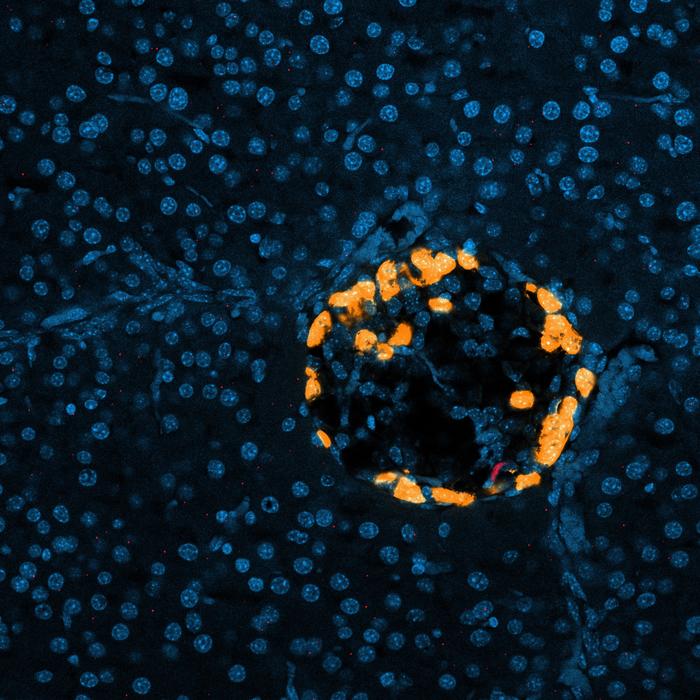
Jumping Gene Seen Moving Between Species: Researchers at the Max Planck Institute for Marine Microbiology report the first direct observation of a jumping gene moving between species, from predator to prey. The team studied a microbial community in which a tiny predatory bacterium, Candidatus Velamenicoccus archaeovorus, attacks methane-producing Methanothrix soehngenii. Using specialized probes, they detected intron RNA from the predator inside dead prey cells. The finding suggests some mobile genetic elements may transfer as stable circular RNA, not only by hitchhiking through plasmids or viruses. Although this is microbial rather than wildlife conservation news, it is a notable zoology-adjacent evolution story because horizontal gene transfer can reshape lineages and accelerate adaptation across living systems. (Phys.org)


Leave a Reply