
Measles Outbreak Explodes in South Carolina, Passing 400 Cases: South Carolina’s measles outbreak has climbed to 434 confirmed cases after 124 new infections, prompting 409 people to quarantine and 17 to isolate, with some quarantines lasting until Feb. 6. Officials are deploying mobile vaccine units and urging residents to get the MMR shot; vaccination within 72 hours of exposure can prevent infection, they said. Nearly all cases are in the Upstate, centered on Spartanburg County, with exposures reported at schools and churches. The outbreak is concentrated in communities with low vaccination coverage and religious exemptions; one charter school tied to early exposures reported a 17% vaccination rate in the 2024–25 school year. Of patients tracked, 378 are unvaccinated, 47 have unknown status, and most are children ages 5–17 (287 cases). (CIDRAP)
How to “Deliver” Genome Editors Inside the Body Is Becoming the Main Bottleneck: CRISPR and other genome editors keep getting sharper—but in vivo delivery (getting the editor into the right cells, at the right dose, without collateral damage) is now the hard part. A new Nature Biotechnology review maps the delivery landscape: viral vectors such as AAV (powerful, but dose- and immune-limited), lipid nanoparticles (successful for RNA, increasingly adaptable for editors), and emerging strategies that add cell-type “address labels” through engineered capsids, targeted ligands, tissue-tuned chemistry, and smarter payload designs. The authors emphasize practical tradeoffs—efficiency vs. specificity, durability vs. reversibility, and safety issues like off-target exposure and immune responses—arguing that the next wave of therapeutic editing will be won or lost on delivery engineering as much as on editing enzymes. (nature.com)
Ancient Gut Microbes Point to New Antibiotics in a Post-Antibiotic World: Researchers are increasingly “mining” microbial DNA for antimicrobial peptides—short protein fragments that can kill bacteria in ways classic antibiotics can’t. A new Nature Communications paper pushes that idea into deep time, systematically characterizing antimicrobial candidates derived from ancient biological material and testing them against modern pathogens. The work combines large-scale computational screening with lab validation to identify peptides that remain potent despite today’s resistance landscape, then probes how these molecules work and how stable/safe they might be as drug leads. The big pitch: ancient microbial ecosystems faced their own chemical warfare, and some of those solutions may still function against contemporary bacteria—offering a new pipeline for antibiotic discovery that doesn’t rely on re-tweaking the same old scaffolds. (Nature)
CRISPR–Cas3 Takes Aim at Transthyretin Amyloidosis With Big, Clean Deletions: Cas9 is the celebrity editor, but Cas3 edits differently—more like a molecular “shredder” that can delete longer DNA stretches. In a study highlighted by Phys.org, researchers tested CRISPR–Cas3 against the TTR gene, a major target in transthyretin amyloidosis (ATTR). Using lipid nanoparticles (LNPs) to deliver the system to the liver in mice, they report substantial editing (over 48% hepatic editing) and an ~80% drop in serum TTR after a single treatment, with results suggesting fewer problematic off-target outcomes than some Cas9 approaches. If it holds up in further safety work, Cas3-style editing could become a valuable option for diseases where knocking down a gene permanently—and predictably—is the goal. (Phys.org)
AI Designs Genetic Circuits—But Only After a Sequencing “Factory” Makes the Training Data: Synthetic biologists can imagine cells that sense disease and manufacture therapies—but designing the DNA “circuits” that control those behaviors is still a brutal search problem. A Rice University-led team reports a workflow called CLASSIC that generates huge libraries of circuit variants, reads each full design with long-read sequencing, tags them with barcodes, then measures performance in human cells using short-read sequencing to connect genotype to phenotype at scale. With that dataset, the team trains machine-learning models to predict circuit behavior—and then cycles predictions back into new designs. The headline claim is less “AI magic” than “data infrastructure”: once you can measure enough circuit outcomes, AI becomes usable for design, accelerating cell therapies and engineered tissues from artisanal to industrial. (Phys.org)
A Tiny Heart Pump as a New “Route” for Cardiac Gene Therapy: Gene therapy’s promise keeps colliding with delivery reality—especially for the heart, where high doses and off-target exposure can turn risky fast. Fierce Biotech reports that Lexeo Therapeutics is teaming with Johnson & Johnson’s Abiomed to explore using the Impella heart pump as a localized delivery method for cardiac gene therapies. The idea is straightforward but powerful: concentrate AAV delivery in the heart to reduce the total viral dose, potentially lowering immune reactions and limiting liver accumulation—two recurring pain points in the field. The article frames the collaboration against a backdrop of recent gene-therapy setbacks and safety concerns, underscoring that “how you deliver” may matter as much as the construct itself. If the approach works preclinically, it could reshape how cardiac-targeted genetic medicines are administered. (Fierce Biotech)
Gilead’s JPM Message: Lenacapavir Momentum, High Bar for Deals
At the 2026 J.P. Morgan Healthcare Conference, Gilead CEO Daniel O’Day pitched a company that can afford to be choosy. Fierce Biotech reports Gilead is “riding the high” of lenacapavir’s momentum in HIV prevention (approved last year as Yeztugo, per the article) and positioning itself as a mature biopharma spanning virology, cancer, and inflammation. O’Day’s posture is that scientific selectivity—not deal volume—will drive the next phase, with the company prioritizing external assets that fit strategy and deliver meaningful patient impact. The piece also nods to Gilead’s oncology ambitions (including Trodelvy) and the conference setting that often catalyzes biotech partnering. Net: expect disciplined shopping, not a shopping spree. (Fierce Biotech)
Personalized, Multi-Antigen T Cells Show Signals in Pancreatic Cancer—In the Right Patients
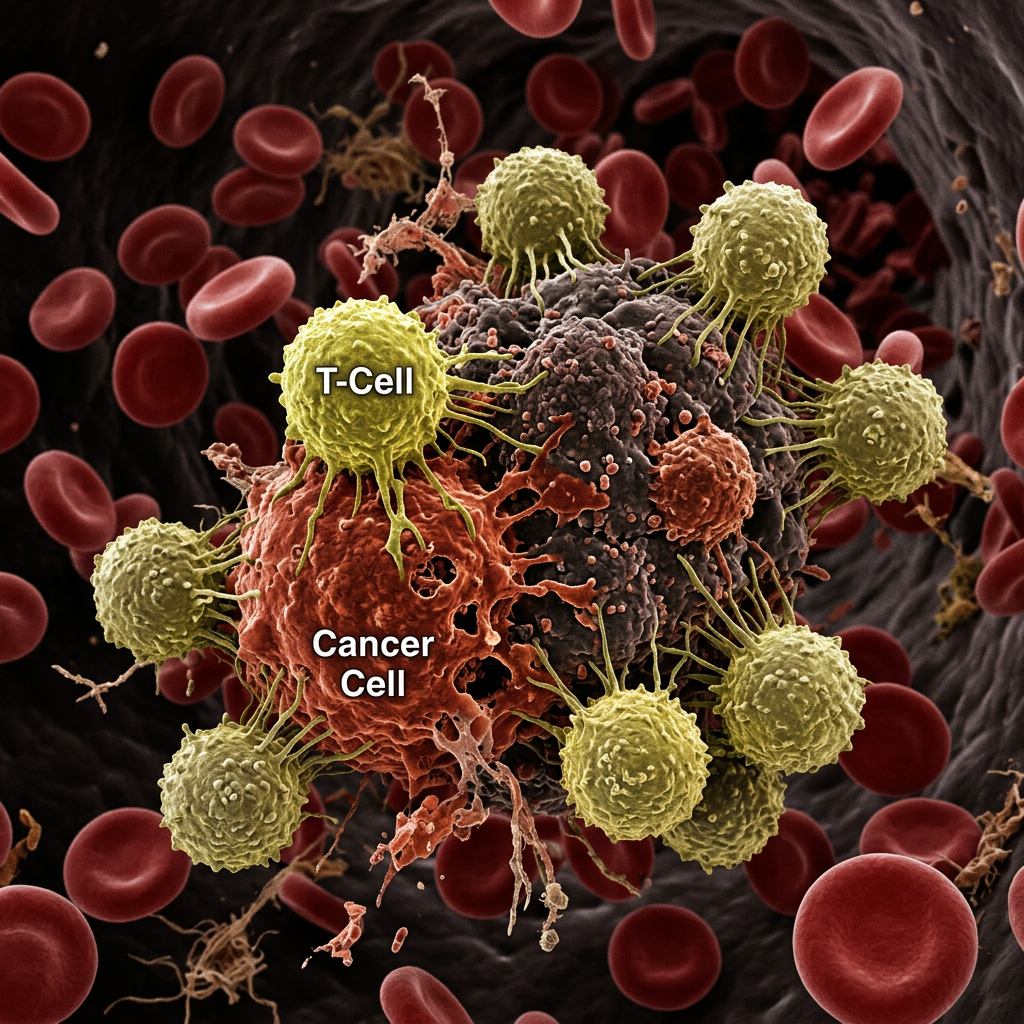
Pancreatic cancer has been notoriously resistant to immunotherapy, partly because tumors can look “not foreign enough” to the immune system. In the TACTOPS phase 1/2 trial described via EurekAlert, researchers manufactured autologous T cells targeting five tumor-associated antigens and infused patients monthly (six infusions total; 37 participants). Outcomes depended heavily on disease setting: patients still responding to first-line chemotherapy (Arm A) saw an 84.6% disease control rate, while refractory metastatic disease (Arm B) was much weaker (25%). In resectable disease (Arm C), 2 of 9 patients were disease-free more than five years after surgery. The therapy was reported as well tolerated, and biological readouts linked benefit to T cell expansion and persistence—fuel for the next trial design. (EurekAlert!)
“Smart” Nanoparticles That Home in on Osteoarthritis Damage—and Carry Ghrelin mRNA
Osteoarthritis has no FDA-approved therapy that truly slows or reverses cartilage loss, and RNA therapies can’t help if they don’t reach the lesion. A EurekAlert research spotlight describes MINT nanoparticles that exploit a biochemical signature of degeneration: as cartilage breaks down, it loses glycosaminoglycans and its negative charge drops. The particles are engineered to be repelled by healthy cartilage and drawn into damaged zones—more severe lesions attract more nanoparticles. Loaded with ghrelin mRNA, the system reduced cartilage breakdown and markers of joint pathology in mouse models, while also lowering inflammatory signals and pain-related nerve pathway activation. The researchers pitch the platform as “disease-responsive” delivery that could generalize beyond ghrelin to other RNA payloads, with next steps focused on longer-lasting effects and larger models. (EurekAlert!)
Illumina’s “Billion Cell Atlas” Bets Big on AI-Ready Biology Data: Illumina wants to be more than the company that reads DNA—it wants to power what happens after sequencing. STAT reports Illumina unveiled the Billion Cell Atlas, a dataset built from systematically turning genes on/off across 200 cell lines spanning disease-relevant systems (heart, neuro, immune, cancer). Illumina says it has already generated data from ~150 million cells and expects to hit one billion by the end of the year. The payoff is drug R&D: perturbation maps can validate targets and help build “virtual cells,” AI models that predict cellular responses before a wet-lab experiment. STAT notes three early pharma customers—Merck, AstraZeneca, and Eli Lilly—and frames the atlas as a growth play in an era where biology data, not just sequencing hardware, becomes the moat. (STAT)
$26.7M Push for Next-Gen Filovirus Vaccines—Plus New Signals in Pneumococcal and HIV Shots: CIDRAP’s “Quick takes” rounds up several vaccine developments with real biotech weight. First, CEPI and the EU’s Horizon Europe program announced $26.7 million to advance vaccine work targeting filoviruses—including Ebola, Sudan, Bundibugyo, and Marburg—with a University of Oxford team leading the research. The urgency is clear: there are licensed vaccines for Ebola virus, but none for Sudan virus or Marburg, and CEPI’s Richard Hatchett warns that outbreaks like Marburg’s emergence in Ethiopia show how high the stakes are. The brief also notes phase 1 topline data for a serotype-independent pneumococcal candidate (V-212) and the first dosing in an IAVI HIV vaccine trial using Moderna’s mRNA platform, highlighting how diversified the vaccine pipeline has become. (CIDRAP)
Antarctica’s Driest Peak Opens a New Window on the Terahertz Universe: Astronomers have long struggled to observe terahertz light because Earth’s water vapor absorbs it. A Chinese team now reports progress by placing a small terahertz telescope—ATE60, with a 60-centimeter dish—at Dome A in East Antarctica, one of the driest, highest, and coldest sites on the planet. Over two weeks of observations, the prototype detected faint carbon emission from gas clouds in distant stellar nurseries, letting researchers probe how newborn stars alter surrounding material. Beyond the science result, the study argues Dome A could become a premier platform for submillimeter/terahertz astronomy, though extreme remoteness makes deployment difficult. China’s earlier plans for much larger telescopes were suspended, but ATE60’s success is spurring new funding for 1-meter instruments and future interferometry—steps toward far more powerful observatories. (Science)



Leave a Reply