A Rare Particle Decay Keeps the Standard Model Under Pressure: One of particle physics’ last major anomalies may be getting stronger. New results from CERN’s LHCb experiment suggest that rare B meson decays into a kaon and two muons emerge at angles that do not fully match Standard Model predictions. The result, based on roughly 650 billion decays collected from 2011 to 2018, reaches about 4 sigma, meaning the odds of random Standard Model noise producing the signal are about 1 in 16,000. Physicists are cautious because related “charming penguin” decays may complicate the theory. Still, if the signal holds, it could point to new particles such as a Z’ boson or leptoquark, possibly revealing forces beyond known physics. (Nature)
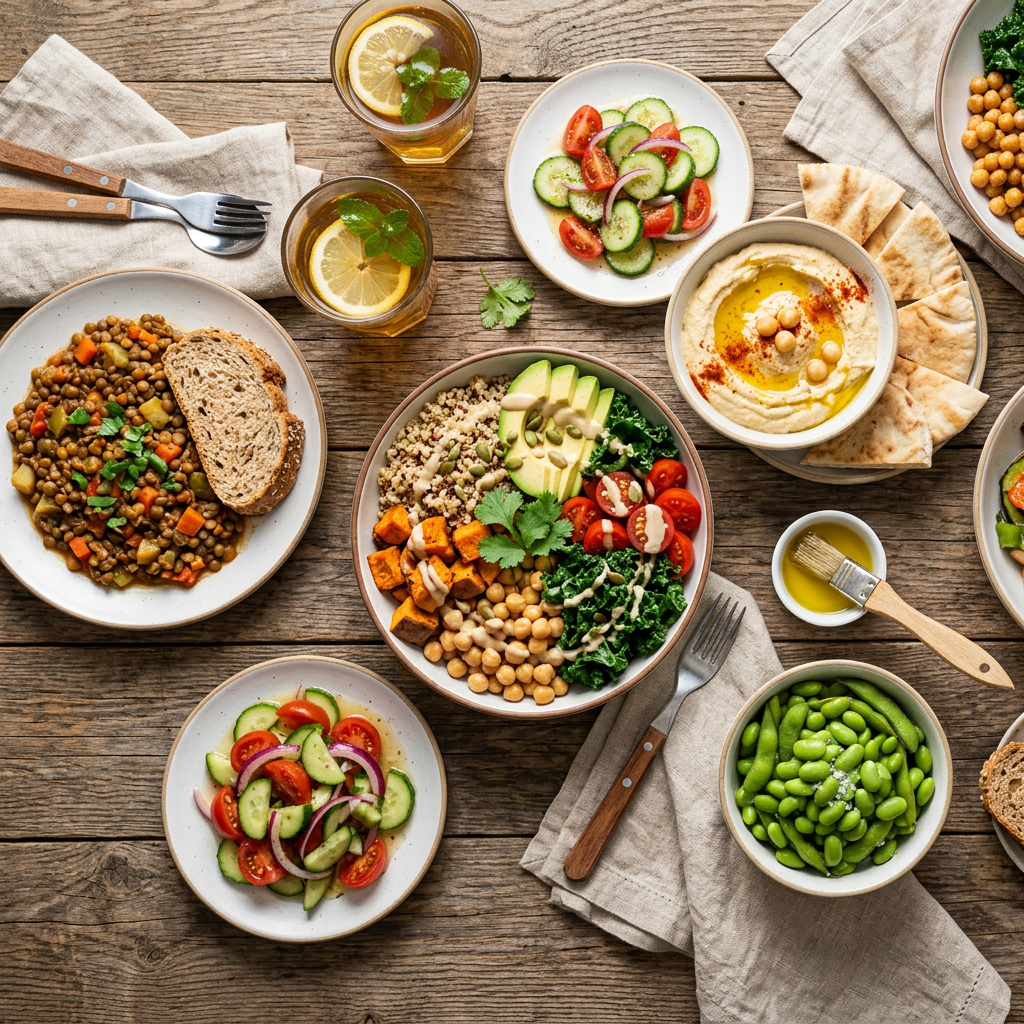
Plant-Based Diets May Lower Inflammation: A new systematic review and meta-analysis suggests plant-based eating may reduce systemic inflammation, one of the background processes linked to cardiovascular disease, metabolic disease, and other chronic conditions. Researchers screened nearly 3,000 studies but included only seven randomized controlled trials, covering 541 participants, which gives the finding more weight than purely observational work. The key result: plant-based dietary patterns, including vegan, vegetarian, and whole-food plant-based diets, were associated with significantly lower C-reactive protein, a widely used inflammation marker, compared with omnivorous diets. The authors suggest the effect may come from higher fiber, antioxidants, unsaturated fats, fruits, vegetables, whole grains, legumes, nuts, and seeds, along with lower saturated fat intake. (EurekAlert!)
Stem-Like Immune Cells Could Strengthen CAR-T Cancer Therapy: An early clinical trial suggests that CAR-T cancer therapy may work better when enriched with long-lived “stem-cell memory” T cells. CAR-T therapy reprograms a patient’s T cells to attack cancer, but standard treatments contain a mixed population of immune cells. In the new Cell study, researchers boosted the share of stem-like T cells nearly tenfold and tested the therapy in 11 people with difficult blood cancers. Five entered full remission and one had a partial response, compared with one full remission among 10 people given conventional CAR-T cells at similar doses. The enriched therapy also appeared potent at lower doses and caused milder cytokine release syndrome. Larger trials will test whether it works against other cancers, including solid tumours. (Nature)

Low-Fat Vegan Diet Cuts Food-Related Emissions: A randomized clinical trial comparing diet patterns found that a low-fat vegan diet sharply reduced food-related greenhouse gas emissions while improving cardiometabolic outcomes. The study, published in BMJ Nutrition, Prevention & Health, compared a low-fat vegan diet with a Mediterranean diet and reported a 57% reduction in food-related emissions for the vegan group, nearly three times greater than the Mediterranean comparison. The trial is notable because it moves beyond modeling and uses clinical intervention data, making the climate-health link more concrete. The diet centered on fruits, vegetables, grains, and legumes, tying the environmental benefits to a dietary pattern already associated with improvements in weight and metabolic risk markers. (EurekAlert!)
Nutrition Before Surgery May Improve Recovery: A systematic review and meta-analysis in the Journal of the American College of Surgeons reports that structured prehabilitation programs, including nutrition and exercise support before surgery, may reduce complications and shorten hospital stays. Prehabilitation reframes surgical care as something that begins before the operating room, not just after discharge. These programs can include nutrition support, exercise, psychological preparation, and education designed to make patients more resilient going into a procedure. The review’s emphasis on nutrition is especially important because poor protein intake, frailty, and inflammation can affect wound healing and recovery. The findings suggest that hospitals may be able to improve outcomes by treating the weeks before surgery as a clinical intervention window. (EurekAlert!)
Stress and Late-Night Eating May Hit the Gut Together: New findings presented for Digestive Disease Week 2026 suggest that late-night eating may worsen the digestive effects of chronic stress. Stress is already known to disrupt gut function, contributing to diarrhea, constipation, and microbiome imbalance. The new work adds meal timing to the picture, suggesting that the gut may take a “double hit” when stress combines with eating late. While the research is being presented at a meeting rather than as a fully settled clinical guideline, it fits into a growing field of chrono-nutrition, which studies how the timing of food intake affects metabolism, digestion, sleep, and microbial rhythms. The practical implication is straightforward: for stressed people, meal timing may matter alongside food quality. (ScienceDaily)
Carbon Pollution Is Diluting Food Nutrients: A major Washington Post science feature examined a nutrition problem that often gets overshadowed by crop-yield debates: rising carbon dioxide may make staple foods less nutritious. The article summarizes research showing that higher CO₂ can increase plant carbohydrate production while reducing concentrations of minerals and protein, a pattern often called the dilution effect. A Leiden University meta-analysis cited in the story found average nutrient declines of 3.2% across edible plants since the late 1980s, with risks especially serious for populations reliant on rice, wheat, beans, and other staples. The concern is not only future food quantity, but future food quality, especially for people already vulnerable to iron, zinc, and protein deficiencies. (The Washington Post)
Carbohydrate Quality Matters for Diabetes Risk: A new American Journal of Clinical Nutrition paper asks a deceptively practical question: which measures of carbohydrate quality best predict lower type 2 diabetes risk? The study, based on three prospective cohort studies, evaluates carbohydrate quality through a more nuanced lens than the usual “carbs are good” or “carbs are bad” framing. Search-indexed details indicate that the paper compares multiple carbohydrate quality variables and focuses on diabetes risk across long-running cohorts. The broader message is consistent with recent nutrition science: food source and fiber-rich structure matter. Whole grains, whole fruit carbohydrates, and cereal fiber appear to tell a different metabolic story than refined starches or sugar-sweetened beverage sugar. (ScienceDirect)
Virgin Olive Oil Linked to Better Cognitive Measures: A new analysis from the PREDIMED-Plus trial suggests the type of olive oil people consume may matter for brain health. Researchers examined 656 older adults and compared intake of virgin olive oil with common refined olive oil, while also looking at gut microbiota and cognitive change. Higher total olive oil and virgin olive oil intake were associated with better global cognition and some cognitive domains, while higher common olive oil intake was linked to worse cognitive changes. Virgin olive oil also appeared to support greater gut microbiome diversity. The study is observational, so it cannot prove cause and effect, but it strengthens the case for extra-virgin or virgin olive oil within Mediterranean-style eating. (EatingWell)
High Sodium Intake May Be Tied to Memory Decline in Older Men: A six-year study discussed by EatingWell, based on research in Neurobiology of Aging, links higher sodium intake with faster episodic memory decline in older men. Researchers followed 1,208 Australian adults with an average age of 71 and no cognitive impairment at baseline. Participants reported dietary intake, then returned every 18 months for cognitive testing across several domains. The overall group did not show a clear sodium-cognition link, but when researchers separated men and women, men with higher sodium intake showed faster episodic memory decline. The association persisted after accounting for blood pressure, suggesting sodium may affect the aging brain through other pathways, such as inflammation, blood-brain barrier disruption, or small-vessel effects. (EatingWell)
Pigmented Rice Contains Hidden Bioactive Fats: A Hokkaido University study published in Food Research International identified 196 lipid molecules in japonica rice, including compounds not previously detected in rice. Food & Wine’s coverage highlights two especially interesting groups: FAHMFAs, associated in early research with anti-inflammatory and insulin-sensitizing effects, and LNAPEs, which may be involved in appetite and satiety signaling. These lipids were more prominent in pigmented rice varieties such as black, brown, and green rice than in white rice. The story is a useful reminder that foods should not be reduced to a single macronutrient category. Rice is usually discussed as a carbohydrate, but less-refined and colorful varieties may contain bioactive compounds with metabolic relevance. (Food & Wine)
Diet, Lifestyle, and Treatment Shape Cancer Patients’ Microbiomes: A new scoping review and network analysis in Oncoscience looks at how physical activity, diet, and clinical factors shape the gut microbiome of cancer patients. The review is important because microbiome research in cancer often focuses on immunotherapy response, but patients’ microbial communities are also influenced by everyday exposures such as diet, activity, medications, cancer type, and treatment history. The authors emphasize that two patients with the same diagnosis may have very different microbiome profiles because lifestyle and clinical variables interact. For nutrition coverage, the key point is that diet cannot be isolated from the wider treatment context. Future cancer nutrition research may need to account for microbiome differences when studying recovery, inflammation, and treatment tolerance. (EurekAlert!)
IMAGE CREDIT: NASA.




Leave a Reply