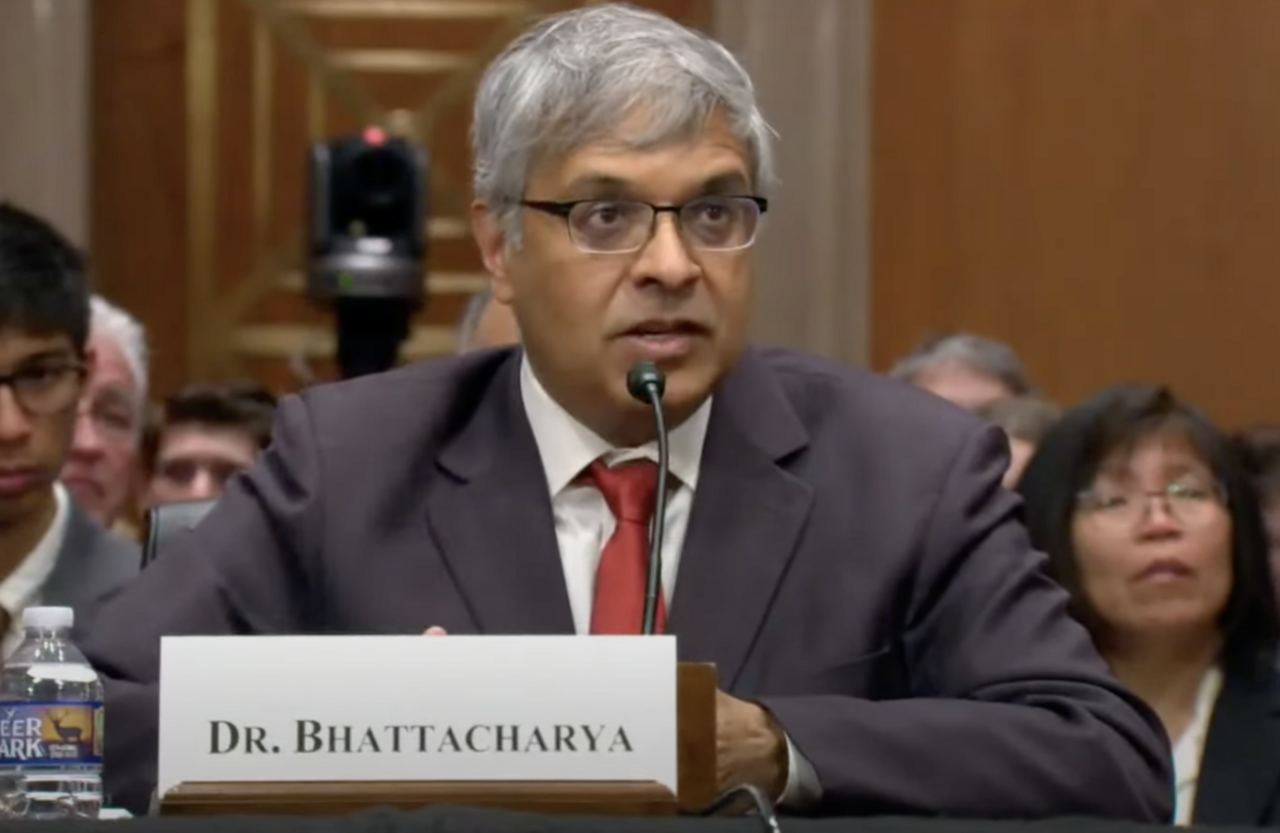
Trump Administration Takes Harder Line on Outbreak Quarantines: Trump administration health officials are imposing unusually strict quarantine measures during overlapping Ebola and Andes hantavirus exposures, surprising public health experts who note that several officials previously opposed Covid-era restrictions. The response includes home confinement with twice-daily checks, 21-day federal quarantine for 18 Americans from a hantavirus-exposed cruise ship, and keeping Ebola-exposed U.S. doctors abroad rather than repatriating them. Critics say the policy is inconsistent with past U.S. practice, especially since Andes virus is rare, only weakly contagious person-to-person, and was previously contained with less restrictive monitoring. Some passengers say they were threatened with law enforcement if they left quarantine. Experts warn the approach could put health workers at risk, undermine trust, and raise troubling questions about Americans’ rights during emergencies. (New York Times)
Ebola Outbreak Raises Global Alarm in Central Africa: A rapidly expanding Ebola outbreak in the Democratic Republic of the Congo and Uganda is alarming global health officials because of its scale, speed, and likely undercount. By May 15, officials had reported 246 suspected cases and 80 deaths, but modeling suggests actual infections could already exceed 900 or even 1,000. The outbreak is caused by Bundibugyo virus, a rarer Ebola species with a lower fatality rate than Zaire virus but still capable of killing 30% to 50% of infected people. WHO declared a Public Health Emergency of International Concern on May 17, citing spread in urban and semi-urban areas. Experts say the next few weeks will determine whether containment efforts can slow transmission before the outbreak grows substantially. (Nature)
STIs Surge to Record Levels Across Europe: New European surveillance data show sexually transmitted infections are climbing sharply across EU/EEA countries, with gonorrhea, syphilis, and congenital syphilis reaching their highest levels in more than a decade. Gonorrhea cases have risen 303% since 2015, while syphilis cases have more than doubled. The increases remain especially pronounced among men who have sex with men, but syphilis is also rising among heterosexual men and women. Congenital syphilis nearly doubled in 2024, a troubling sign because it is preventable through screening and treatment during pregnancy. ECDC officials cite possible drivers including dating apps, post-pandemic behavior changes, lower condom use, and increased testing. They urge better STI strategies, expanded testing, sexual education, condom promotion, and careful targeted use of doxyPEP. (cidrap.umn.edu)

Trump Pulls Back AI Safety Order: President Donald Trump abruptly called off a planned executive order on artificial intelligence hours before a White House signing ceremony, saying he worried the measure could slow America’s lead in AI. The proposal would have created a voluntary framework for companies such as OpenAI, Google, and Anthropic to let the government review advanced AI systems before public release for national-security and cybersecurity risks. The decision exposes a central policy tension: officials and banks increasingly fear AI systems that can locate software vulnerabilities, while industry allies warn that pre-release scrutiny could slow development. The episode also shows how AI governance remains unsettled even inside the administration, split between innovation-first and safety-first factions. (AP News)
Google Search Moves Toward an AI-First Future
Google used I/O 2026 to unveil one of the biggest redesigns in Search history, turning the familiar search box into a more AI-centered interface. The new system connects AI Overviews with AI Mode, allowing users to ask longer natural-language questions, attach files or Chrome tabs, and move into follow-up conversations more easily. Powered by Gemini 3.5 Flash, the update also adds AI autocomplete and will roll out globally across desktop and mobile. More significant are Google’s planned “information agents” for AI Pro and Ultra subscribers, which can monitor topics, retrieve updates, and even help book services. The shift points toward a web where search engines increasingly act rather than simply list results. (The Verge)
Google’s Gemini Omni Collapses the Media Stack
Google’s newly unveiled Gemini Omni model is being positioned as a major step toward “any-to-any” generative AI. Rather than treating text, images, audio, and video as separate tools, Gemini Omni is designed as a native multimodal model that can generate or transform content across formats from a single foundation system. VentureBeat frames the announcement as an enterprise-relevant attempt to collapse today’s fragmented AI media workflow—text-to-image, image-to-video, video editing, and audio generation—into one unified surface. The model begins with video, signaling how much AI competition has moved beyond chatbots and into full multimedia production. For businesses, the question becomes whether one platform can replace specialized creative tools. (Venturebeat)
Google AI Studio Turns Prompts Into Phone Apps
A hands-on test of Google AI Studio suggests that “vibe coding” may be moving from novelty to practical consumer software creation. The Verge’s Sean Hollister reported building three Android apps in one afternoon, including one generated from a 148-word prompt and installed on a real phone after about ten minutes. The results were imperfect—a calorie counter and games that worked but were not especially polished—but the experience showed how quickly AI can move from idea to functioning software. The friction remains real, including daily limits, debugging requirements, and mediocre output. Still, the experiment suggests a future in which non-programmers can prototype personal tools directly on their devices. (The Verge)
OpenAI Tries to Manage Its Reputation Crisis
OpenAI’s global affairs chief Chris Lehane is at the center of a campaign to reshape the company’s public and political image as AI anxiety intensifies. WIRED reports that Lehane, known for crisis-management work, wants to cool public debate around AI harms while encouraging state laws that do not impede OpenAI’s growth. The story matters because OpenAI is no longer just a research lab or product company; it is a political actor trying to influence how governments define safety, jobs, competition, and accountability. As states explore their own AI rules, the company faces a delicate balance: reassure skeptics without accepting regulations that might constrain its business model. (WIRED)
The Gulf’s AI Ambitions Depend on Fragile Cables
The Gulf region’s AI boom is running into a physical infrastructure problem: undersea internet cables. WIRED reports that hyperscalers and regional governments are being forced to rethink connectivity because AI data centers depend on reliable, high-capacity links across waterways that are politically and geographically vulnerable. The story is a useful reminder that AI does not float in the cloud; it relies on fiber routes, power, cooling, ports, and geopolitical stability. As Gulf states try to become global AI hubs, cable disruptions could become strategic bottlenecks. The risk is not simply slower internet but interruptions to the data flows that make large-scale AI training, deployment, and enterprise services possible. (WIRED)
Māori Voice AI Centers Data Sovereignty
A new IEEE Spectrum story highlights Indigenous-led AI voice projects that challenge Big Tech’s default assumptions about data ownership. At the University of Waikato, computer scientist Te Taka Keegan and collaborators are building Māori text-to-speech technology shaped by the principle that the synthetic voice and training materials should remain owned by the people who speak the dialect. The project addresses technical challenges common in minority-language AI, including errors that arise when systems built primarily for English are applied to languages with different phonetic features, such as vowel length in te reo Māori. The work offers a model for language preservation that treats AI not only as engineering but as cultural sovereignty. (IEEE Spectrum)
AI Audio Cues Make Bots Feel Human—and Rude
Researchers at Carnegie Mellon University are studying how audio-only AI agents can feel more physically present. Their system used spatialized sound and Foley effects—typing, paper rustling, pouring water—to make a chatbot seem as though it occupied the same room as the user. Participants found the agents more engaging and humanlike, but that realism created an unexpected problem: users began applying human social expectations to the AI. When the agent seemed to type or rustle papers while speaking, some participants interpreted it as distracted or rude. The findings matter for smart glasses, accessibility tools, and screen-free interfaces, where audio may carry much of the emotional burden of AI interaction. (Tech Xplore)
AI Models Can Be Nudged Into False Beliefs
A new study described in Tech Xplore examined whether large language models resist or accept false premises. Researchers asked five leading models to describe scenes in films or novels that do not exist, then observed how they handled gentle pressure toward falsehoods. The trigger example involved asking ChatGPT about a nonexistent Hitler reference in Good Will Hunting, after which the model generated a plausible but false description. The concern is not just hallucination but compliance: models may preserve conversational flow by accepting a user’s false framing. That has implications for education, research, law, and journalism, where users may unintentionally—or deliberately—push AI systems toward confident misinformation. (Tech Xplore)
Machine Learning Finds New Cancer Immunotherapy Targets
A Nature Machine Intelligence paper presents a multimodal graph neural network designed to identify cancer immunotherapy drug targets. The system distinguishes between already approved targets and promising candidates, then validates selected targets using patient-derived tumor explants, a platform meant to better reflect clinical biology than simpler lab models. The study is important because AI drug-discovery claims often stop at prediction; here, the model’s outputs were tied to experimental validation. If the approach scales, it could help prioritize targets in a field where the search space is enormous and biological context matters. The broader takeaway is that AI in biomedicine is becoming most persuasive when paired with rigorous wet-lab testing. (nature.com)
IMAGE CREDIT: Creative Commons.




Leave a Reply