
OMB Proposal Could Invite Lawsuits Over “Woke” Research Grants: A proposed Office of Management and Budget rule could make it easier for private citizens or groups to challenge federal research grants they consider wasteful, “woke,” or otherwise inappropriate. The 400-plus-page proposal, announced May 29, would let the Department of Justice cooperate with lawsuits alleging violations of grant terms and conditions, expanding beyond traditional fraud claims under the False Claims Act. Critics warn the vague language could expose researchers to politically motivated litigation over DEI work, foreign collaborations, or controversial topics, creating a chilling effect even without many lawsuits. Research advocates also object to NSF’s plan to align grant guidance with the unfinished rule before comments close July 13. Supporters frame the proposal as oversight; opponents see science pushed aside. (Science)
WHO Blueprint Targets Fungal Disease Threat: The World Health Organization has released a new blueprint to help countries respond to fungal disease and antifungal resistance, a threat it says remains under-recognized despite affecting more than 300 million people annually. The framework urges nations to improve awareness, preparedness, laboratory networks, surveillance, equitable access to diagnostics and antifungal drugs, and research into new treatments. WHO says the danger is rising because of climate change, global travel, immune-suppressing therapies, and antifungal pesticide use in agriculture. CIDRAP notes particular concern over Candida auris, a multidrug-resistant yeast spreading in healthcare settings; a CDC report found U.S. clinical cases rose from 2,882 in 2022 to 6,197 in 2024. Vulnerable groups include people with HIV, cancer, transplants, chronic lung disease, or trauma. (CIDRAP)
Superworms May Give Museums a Cleaner Way to Prepare Skeletons: Museum curators may have a new tool for preparing animal skeletons: superworms, the larvae of the darkling beetle Zophobas atratus. In a PLOS ONE study, researchers tested whether the larvae could strip flesh from carcasses while preserving delicate bones. After skinning and gutting animals ranging from a house mouse to a gray wolf, the team placed them with hundreds of larvae. Superworms cleaned small specimens within hours and larger ones within a day or more, especially when fresh larvae were added regularly. Unlike dermestid beetles, commonly used in museums, grouped superworms do not readily become adults, reducing infestation risk. Researchers found the best ratio was 10 to 15 grams of larvae per gram of carcass, though tiny bones remained vulnerable to damage. (Science)

Five-Minute Walks Offer a Practical Antidote to Sitting: A new British Journal of Sports Medicine study suggests that brief walking breaks can blunt some of the fatigue and mood costs of deskbound work. Researchers followed about 11,500 adults recruited through NPR’s Body Electric project and assigned them to walk for five minutes every half hour, every hour, or every two hours over two weeks. All groups reported less fatigue, better mood, and small gains in work engagement or performance, but hourly walks appeared to strike the best balance between feasibility and benefit. Experts cautioned that the study was short, self-reported, and not a substitute for standard exercise targets, but the finding gives office workers a realistic starting point. (Health)
Creatine Shows a Cautious Signal in Depression Research: A new review in Brain Medicine finds that creatine, best known as a sports supplement, may have potential as an add-on treatment for depression, but the evidence remains too small and mixed for routine use. The review examined five randomized controlled trials involving 238 participants across South Korea, the United States, Brazil, Israel, and India. Two studies, including trials pairing creatine with escitalopram or cognitive behavioral therapy, reported meaningful symptom improvements, while three found no clear benefit. Safety questions remain, especially after two participants with bipolar depression developed hypomania or mania while receiving creatine. Researchers framed the results as cautiously promising, not definitive, and called for larger, better-designed trials before clinical adoption. (ScienceDaily)
Major Review Reaffirms mRNA Vaccine Safety and Effectiveness: A comprehensive review published in The Lancet concludes that COVID-19 mRNA vaccines remain safe and effective after billions of administered doses worldwide. The review found that serious adverse events, including anaphylaxis and myocarditis, are rare, while protection against severe disease, hospitalization, and death remains substantial, including for pregnant and immunocompromised people. The authors also argue that the platform’s success could accelerate vaccines for influenza, RSV, cancer, and other RNA-based therapies. Still, the review flags unresolved problems: mRNA vaccines do not always generate long-lived plasma-cell responses, and global deployment remains hampered by ultra-cold storage, cost, and access barriers. The takeaway is reassuring, but not complacent. (CIDRAP)
Vaccine Misinformation Has a Persuadable Middle: A new KFF poll highlighted by CIDRAP suggests that vaccine misinformation is widespread, but not always deeply entrenched. The survey of 2,480 U.S. adults found many Americans had heard false claims, including the MMR-autism myth, claims that COVID vaccines caused widespread deaths, and assertions that mRNA vaccines alter DNA. Yet fewer than one in ten firmly believed most myths. A large “mixed-middle” group instead appeared uncertain, creating space for targeted public health communication. The finding matters as U.S. kindergarten MMR coverage remains below the 95% target and measles cases continue to threaten elimination status. Trust in healthcare providers was linked with lower myth belief; social media and AI health information were linked with higher myth belief. (CIDRAP)
Virtual Reality and Neurostimulation Boost Stroke Recovery: A Nature Medicine feasibility trial reports encouraging results for MultiSensy, a rehabilitation system combining immersive virtual reality with synchronized transcutaneous sensory neurostimulation for people recovering from chronic stroke. The study included 34 patients across a pilot phase and a randomized 33-day trial, comparing the system with conventional rehabilitation. Patients using MultiSensy showed greater upper-limb motor improvement on standard measures, including the Fugl-Meyer Upper Extremity assessment and Action Research Arm Test. The intervention also improved tactile acuity and aspects of body self-representation, while enabling continuous performance monitoring. Researchers emphasized that the study was small and designed for feasibility, but said the approach could support larger trials and possibly home-based rehabilitation for long-term stroke disability. (Nature)
Primary-Care AI Proves Safe but Not Clearly Better: A pragmatic Nature Medicine trial tested whether an LLM-enabled clinical decision support system could improve primary care in Kenya. Sixteen facilities were randomized to electronic medical records with or without AI assistance, involving 103 clinical officers and more than 9,300 patients analyzed for outcomes. The primary measure was expert-adjudicated treatment failure within 14 days. The AI-assisted group had a 2.2% failure rate, compared with 2.0% in usual care, a difference that was not statistically significant. No serious adverse events were judged related to the system. The result is important because it suggests generative AI can be deployed safely in a real-world, lower-resource setting, but any clinical benefit may be modest and harder to prove than hype suggests. (Nature)
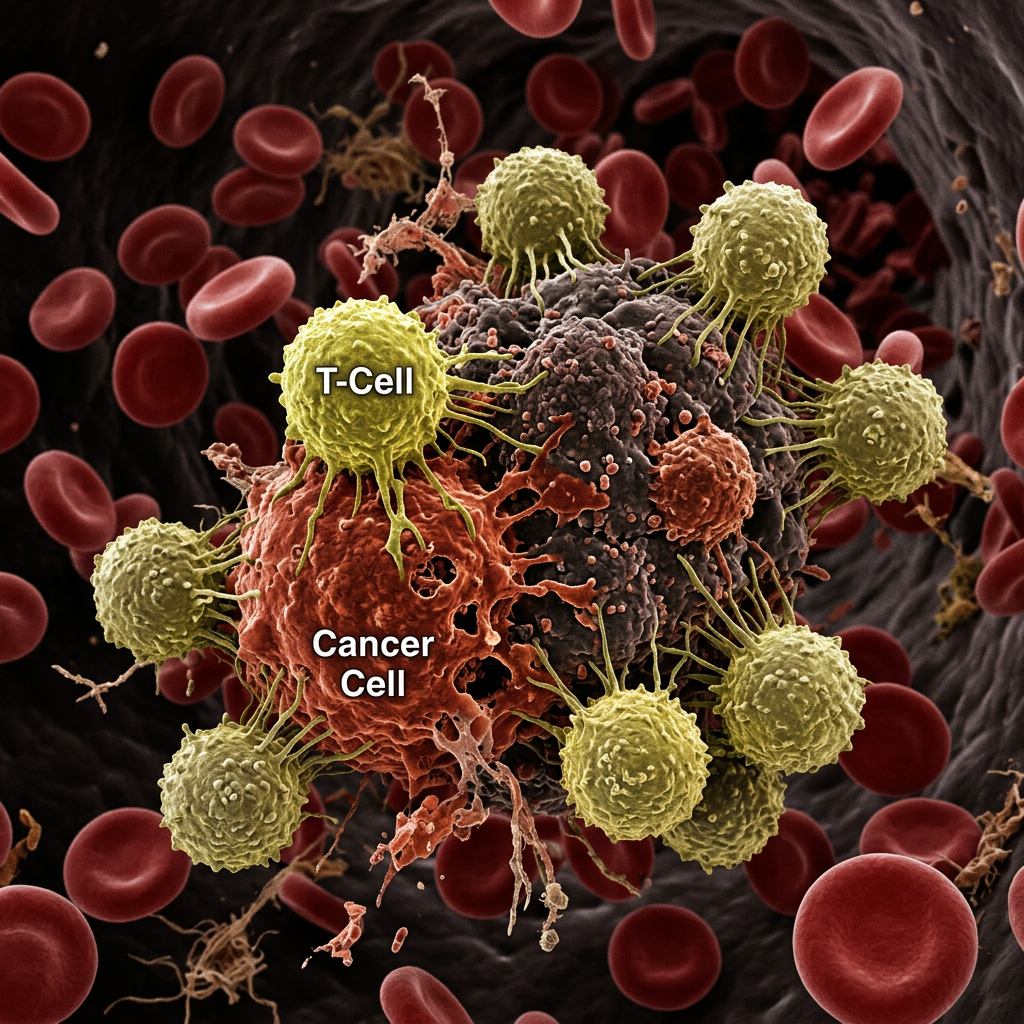
First Human Trial Targets Aging Immune Cells: New Atlas reports that researchers are preparing a first-in-human trial of a drug designed to rejuvenate senescent T cells, the immune cells that become exhausted with age and chronic disease. Developed by Sentcell and tied to work at University College London, the intramuscular therapy aims to reprogram pathways involved in immune dysfunction rather than targeting a single pathogen. The Phase 1 trial will recruit adults with evidence of immune dysfunction, including immune aging or chronic viral infection. Researchers say the concept could matter for HIV, cancer, and other conditions in which immune decline weakens resilience. The story is early-stage by definition: the trial is primarily about safety and biological signal, not proving anti-aging benefits. (New Atlas)
Vitamin C Levels Linked to Brain Aging Markers: A new PLOS-linked study covered by ScienceDaily connects lower blood vitamin C with structural and functional brain differences in older adults. Researchers analyzed more than 2,000 older adults in Japan and found that participants with lower vitamin C levels also tended to have less gray matter and weaker connections in the default mode network, a brain system involved in memory, attention, and other cognitive functions. The finding does not prove that vitamin C prevents cognitive decline, since observational links can reflect diet, health status, lifestyle, or other confounders. Still, the study strengthens the case that nutrition and micronutrient status may be relevant to late-life brain health. It also points toward blood biomarkers as useful clues in aging research. (ScienceDaily)
NEJM Reviews Bundibugyo Virus Disease Risks: A new New England Journal of Medicine review examines Bundibugyo virus disease, a rare but dangerous orthoebolavirus infection, through the lens of a 2026 outbreak in the Democratic Republic of Congo. The article highlights persistent weaknesses that repeatedly complicate filovirus control: delayed detection, difficult diagnosis, clinical management under pressure, and public health response in resource-limited settings. Bundibugyo virus has caused only a small number of recognized outbreaks compared with Ebola virus, but it can still produce severe epidemic disease with substantial mortality. The review’s importance lies less in novelty than in readiness. It reminds clinicians, laboratories, and public health agencies that rare pathogens become urgent when surveillance, supplies, trust, and response capacity lag behind transmission. (New England Journal of Medicine)
Adaptive Brain Pacemaker May Improve Parkinson’s Walking: UCSF scientists have developed an adaptive deep brain stimulation system that responds in real time to a Parkinson’s patient’s walking rhythm, New Atlas reports. Conventional DBS can improve tremor, stiffness, and slowness, but walking problems are harder because gait requires rapid coordination between both sides of the body. The new implanted system detects neural signals tied to different gait phases, such as whether the left or right leg is swinging, and adjusts stimulation within fractions of a second. In laboratory testing, adaptive DBS improved gait symmetry and reduced walking-pattern variability, while participants reported fewer falls during daily use. The trial remains early, but the approach points toward more personalized neurotechnology for one of Parkinson’s most disabling symptoms. (New Atlas)



Leave a Reply