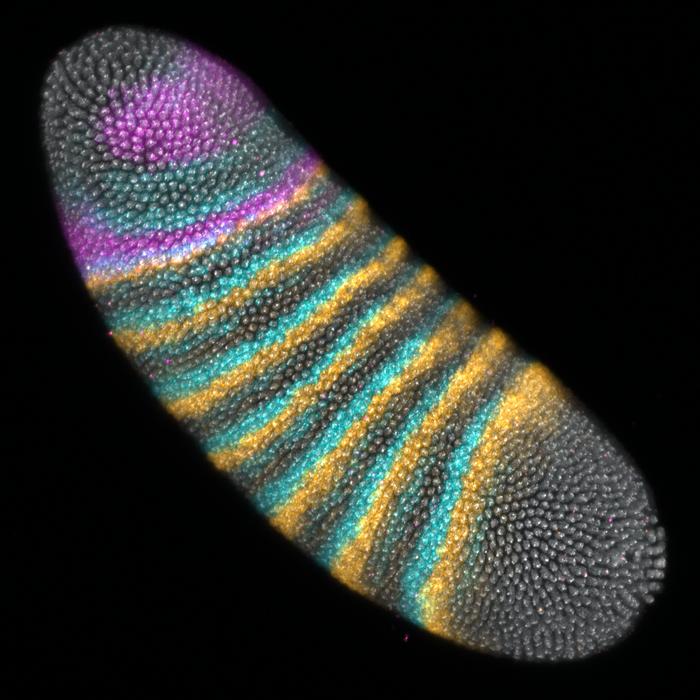
A brief but crucial structure in fruit fly embryos may have played an outsized role in the species’ evolutionary path, according to new research from the Max Planck Institute of Molecular Cell Biology and Genetics.
The structure, called the cephalic furrow, appears early in Drosophila melanogaster embryos during gastrulation, when tissues are rearranged into layers that later form the body. Though the furrow vanishes without leaving a permanent trace, scientists found it serves an important function: buffering mechanical stress generated during rapid cell movements and divisions. Without it, embryos risk tissue buckling and deformation.
Researchers led by Pavel Tomancak and Carl Modes combined laboratory experiments with mathematical modeling to investigate the furrow’s role. Their models showed that the timing and location of the fold were more critical than its strength. When positioned near the center and forming early, the furrow effectively resisted compressive forces threatening the embryo’s stability.
A companion study from teams in Germany and Japan showed that other fly species lacking the cephalic furrow developed alternative mechanisms. In those cases, cells divide downward, reducing surface tension and distributing stress across tissues. Both strategies serve as mechanical “sinks” that prevent damaging tissue collisions.
Sign up for the Daily Dose Newsletter and get every morning’s best science news from around the web delivered straight to your inbox? It’s easy like Sunday morning.
The findings highlight how evolution can be shaped not only by genetics but also by the physical forces of development. The cephalic furrow, though fleeting, may represent an evolutionary innovation that helped stabilize embryonic growth in fruit flies.
IMAGE CREDIT: Bruno C. Vellutini / MPI-CBG / Nature (2025).




Leave a Reply