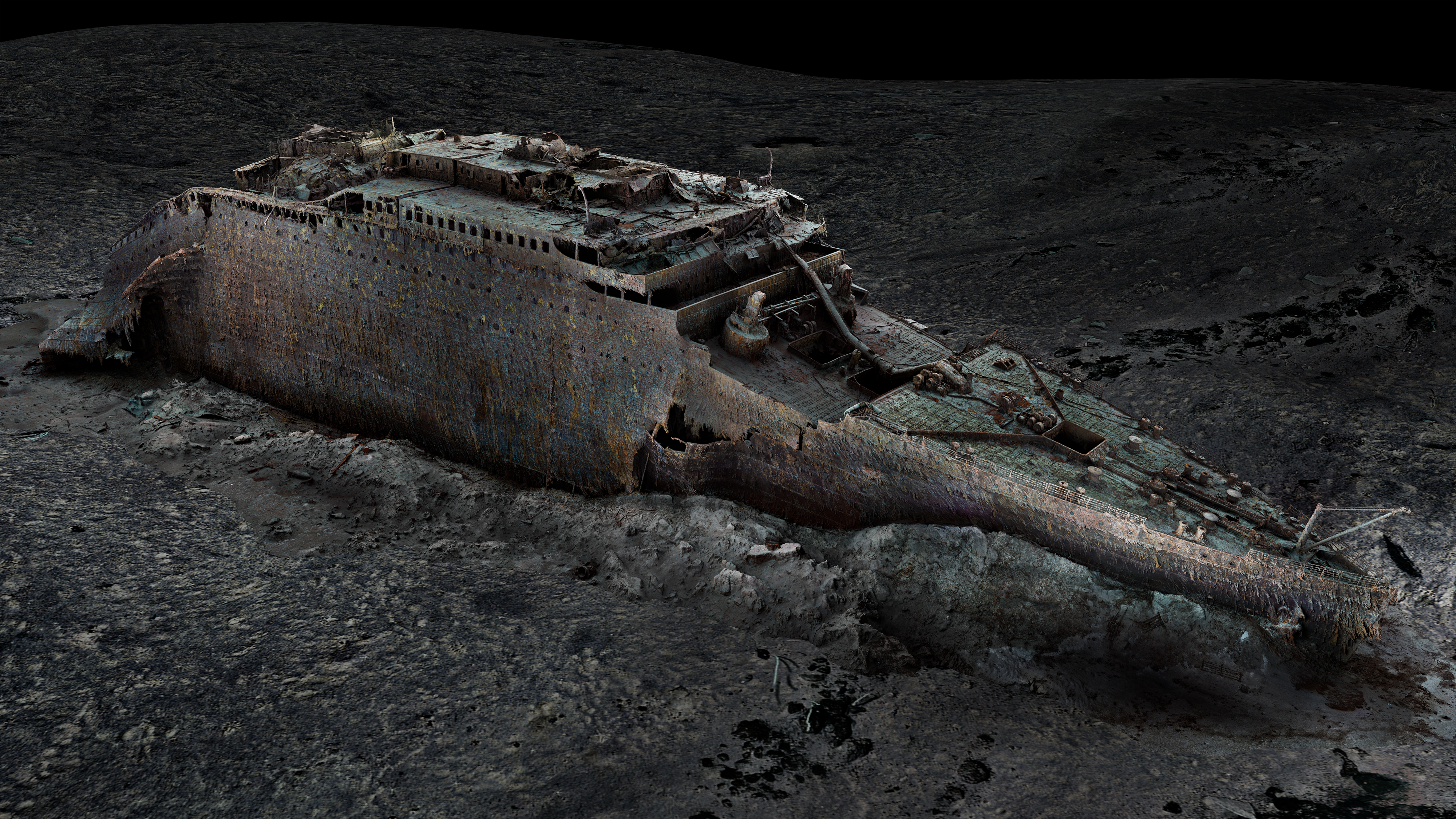
National Geographic’s Titanic: The Digital Resurrection is more than a documentary—it’s a haunting, high-definition time machine. With unmatched technical precision and emotional gravity, the film resurrects history’s most infamous maritime disaster using cutting-edge 3D scanning technology, giving viewers the most detailed, intimate portrait of the Titanic ever created.
Guided by award-winning filmmaker Anthony Geffen and powered by the expertise of Magellan’s deep-sea mapping team, the film follows two robotic submersibles—poetically named Romeo and Juliet—as they sweep across the wreck 12,500 feet below the Atlantic surface. Romeo captures stunning high-res images of the Titanic and surrounding debris field, while Juliet meticulously scans every rivet and fracture of the ship’s battered remains.
What emerges is nothing short of revelatory: a photorealistic, full-scale digital twin of the Titanic. Viewers are pulled into a jaw-dropping visual experience as the ship, too vast to have ever been seen in full until now, is reconstructed in eerie, magnificent detail. LED walls project the 1:1 model like a ghost rising from the depths, and experts walk its length in a surreal blend of archaeology and virtual resurrection.
But it’s not just the visuals that captivate—it’s the insight. We learn that the Titanic’s breakup was not a clean snap but a violent, chaotic tear that ripped through first-class cabins. A tiny pair of holes between four compartments doomed the unsinkable ship. And the infamous iceberg strike? It was a 6.5-second glancing blow—more of a serrated shredding than the long gash we’ve come to imagine.
The forensic clarity extends to poignant human elements. A steam valve left open in the boiler room confirms that engineers stayed at their posts to keep power flowing for distress signals—heroically buying precious time for others. Lifeboat equipment placements lend weight to the exoneration of First Officer Murdoch, long maligned in Titanic lore.
Throughout, the filmmakers manage a delicate balance: the wreck is treated not as spectacle, but as sacred ground. The debris field—spanning 15 square miles—is littered with gold coins, hair combs, shoes, and even a shark’s tooth charm. Each item, lovingly scanned and contextualized, becomes a whisper from the past. These fragments, paired with historian Yasmin Khan’s efforts to trace them to their owners, humanize the tragedy in a way that stuns the heart.
Above all, Titanic: The Digital Resurrection feels like an act of preservation as much as presentation. With parts of the ship rapidly deteriorating into the seafloor, this digital twin may be the last complete image we ever see of the Titanic as she lies.
IMAGE CREDIT: National Geographic




Leave a Reply