Prior exposures to specific types of seasonal influenza viruses promote cross-reactive immunity against the H5N1 avian influenza virus, according to new research from the Perelman School of Medicine at the University of Pennsylvania. Older adults who were exposed to seasonal flu viruses that circulated prior to 1968 were found to be more likely to have antibodies that bind to the H5N1 avian flu virus.
The findings, published today in Nature Medicine¸ suggest that younger adults and children would benefit more from H5N1 vaccines, even those not tailored specifically to the current strain circulating in birds and cattle.
“We know that early childhood influenza exposures can elicit immune responses that last a lifetime,” said senior author Scott Hensley, PhD, a professor of Microbiology. “We found that antibody responses that were primed by H1N1 and H3N2 viruses decades ago can cross-react to H5N1 avian viruses circulating today. Most of these cross-reactive antibodies cannot prevent infections, but they will likely limit disease if we have an H5N1 pandemic.”
Potential protection from a rapidly changing virus
H5N1 viruses have circulated in birds for many years, but a new version, called clade 2.3.4.4b H5N1 virus emerged more recently, and has since spread among cattle. This current H5N1 strain does not bind well to receptors in the human upper airway, but widespread circulation in mammals could lead to mutations that help the virus infect human airway cells and increase transmission. If this occurs, H5N1 could potentially start spreading from human to human.
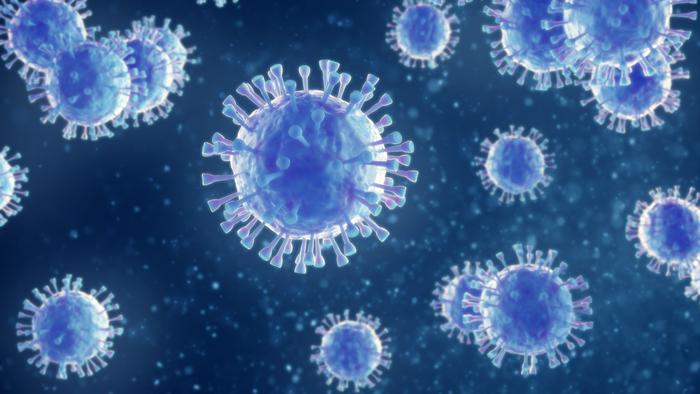
Influenza viruses are covered with two lollipop-shaped proteins called hemagglutinin and neuraminidase, for which the viruses are named (H5N1, for example). These proteins are what allows a virus to attach to “healthy” cells and start the process of infection. Current influenza vaccines primarily elicit antibodies that recognize hemagglutinin proteins, and prevent them from infecting a person’s cells. The lollipop “heads” of hemagglutinin proteins evolve more frequently while the “sticks” of the hemagglutinin lollipops, called stalks, don’t evolve as quickly.
Sign up for the Daily Dose Newsletter and get every morning’s best science news from around the web delivered straight to your inbox? It’s easy like Sunday morning.
Researchers tested blood samples from over 150 people born between 1927 and 2016 for antibodies targeting the stalk proteins of different influenza viruses, including H5N1. They found that blood samples from older adults born prior to 1968 who were likely first exposed to H1N1 or H2N2 in childhood had higher levels of antibodies that could bind to the stalk of the H5N1 virus. They found that an individual’s birth year was closely linked to the amount of H5N1-fighting antibodies in their blood. Young children who were not exposed to seasonal flu viruses possessed low levels of antibodies that could fight H5N1.
Existing vaccines are effective
To determine how individuals with different birth years respond to H5N1 vaccinations, researchers obtained blood samples from a separate group of individuals born between 1918 and 2003 before and after they were vaccinated with a 2004 H5N1 vaccine that did not perfectly match the clade 2.3.4.4b H5N1 virus that is currently circulating.
Consistent with the researchers’ initial findings, older adults had higher amounts of antibodies that could bind to H5 stalks before vaccination. Following vaccination, H5 stalk antibodies increased slightly in older adults, but increased substantially in children. These antibodies bound to both the 2004 H5N1 virus and to the clade 2.3.4.4b H5N1 virus that is circulating today.
“In the event of an H5N1 pandemic, all age groups will likely be highly susceptible, but it is possible that the highest disease burden will be in children,” said Hensley. “If this is the case, children should be prioritized for H5N1 vaccinations.”
IMAGE CREDIT: Getty images


Leave a Reply