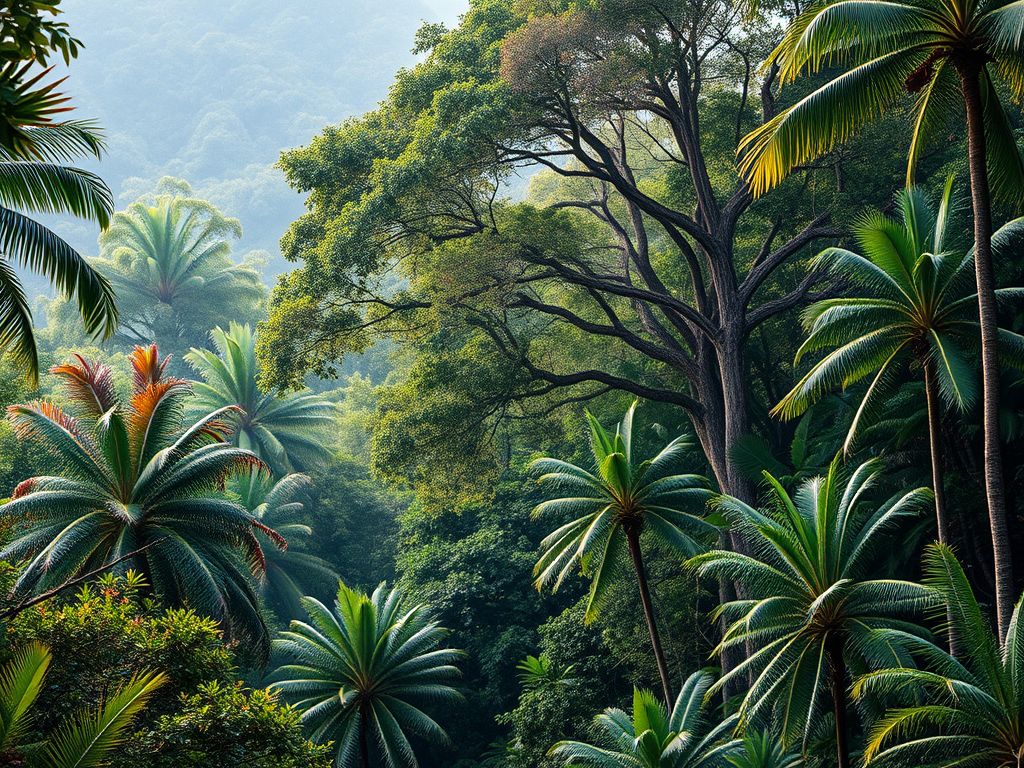
Tropical rainforests play a vital role in global climate regulation and biodiversity conservation. However, a major new study published in Science reveals that forests across the Americas are not adapting quickly enough to keep pace with climate change, raising concerns about their long-term resilience.
The research, led by Dr. Jesús Aguirre-Gutiérrez from the University of Oxford’s Environmental Change Institute (ECI), involved over 100 scientists and local partners analysing data from 415 permanent forest plots spanning Mexico to southern Brazil. By examining the traits of more than 250,000 trees, the team assessed how different species are responding to shifting temperatures and rainfall patterns.
Key Findings:
Future risks: By 2100, temperatures in the region could rise by up to 4°C, with rainfall decreasing by as much as 20%. This could push tropical forests further out of balance, making them more vulnerable to extreme climate events.
Forest adaptation is lagging: While climate change is altering temperature and precipitation patterns, tree communities are changing too slowly to remain in equilibrium with their environment.
Survival strategies vary: Some tree species are thriving while others struggle. Traits such as being deciduous, wood density, leaf thickness, and drought tolerance influence a tree’s ability to survive in a changing climate.
Elevation matters: Mountainous forests show more rapid adaptation than lowland forests, likely due to greater climate variability.
Recruitment differences: Younger trees (recruits) show the most noticeable shifts in traits, yet the overall forest composition remains largely unchanged.
Professor José Javier Corral Rivas, a co-author from the Juarez University of the State of Durango and lead of the MONAFOR network in Mexico, commented, “It is thanks to the extensive collection of field data over the past decades, largely supported by Latin American institutions and international collaborations, that we are able to make discoveries like this one, particularly in highly biodiverse regions such as the tropical forests of the Americas.”
Professor Oliver Phillips, a co-author based at the University of Leeds and co-ordinator of the Amazon RAINFOR network, commented “What is remarkable is that we discovered this not with satellites or artificial intelligence, but by the efforts of botanists, foresters and hundreds of other skilled partners. These undervalued colleagues provide a great service to the world.”
Sign up for the Daily Dose Newsletter and get every morning’s best science news from around the web delivered straight to your inbox? It’s easy like Sunday morning.
Professor Beatriz Marimon, a co-author from the State University of Mato Grosso, Brazil, added: “Measuring forests carefully tree-by-tree, species-by-species and year-after-year, teaches us about the health of trees and the risks they face. In some of our Amazon plots the forest is facing a deadly combination of fire, heat and drought. Understanding which tree species can survive these threats is critical to creating a liveable future for all of us.”
The study highlights the urgent need for further research and conservation strategies to support the resilience of these critical ecosystems.



Leave a Reply