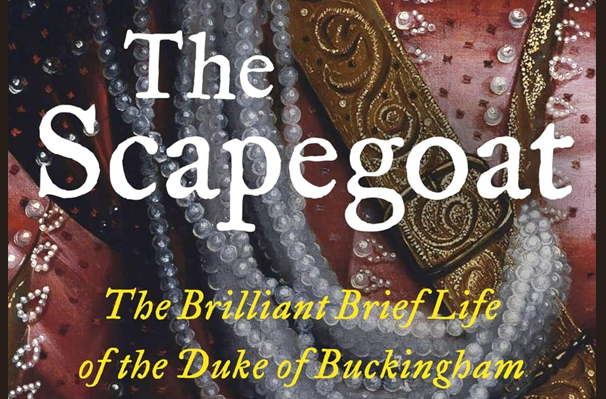
Lucy Hughes-Hallett’s The Scapegoat is an irresistible dive into the swirling, theatrical world of Jacobean England, with George Villiers, Duke of Buckingham, at its glittering, controversial center. To call Villiers a man of contradictions feels inadequate; he was an embodiment of the tensions of his time, a man who soared to dizzying heights of power and fame, only to fall as abruptly as he had risen. Hughes-Hallett’s biography, both exuberant and deeply insightful, captures the man and the moment with wit, scholarly rigor, and a palpable affection for her subject.
Born in 1592, Villiers was the second son of a modest squire, hardly destined for the dazzling future that awaited him. But his beauty—a luminous, unblemished face in an era of pox-scarred visages—captured the attention of James I in 1614, and the rest was history. Raised to court, knighted, and lavished with estates, titles, and offices, Buckingham became the king’s inseparable companion, a favorite in every sense of the word. Yet to dismiss him as merely a “pretty boy” would be a mistake. Hughes-Hallett refuses to indulge this easy trope, detailing Villiers’ education under Francis Bacon and his surprising aptitude for statecraft, even as his rapid ascent provoked envy and scandal.

The relationship between James and Villiers has long intrigued historians, and Hughes-Hallett approaches it with refreshing candor. James, known for his intellectual pursuits and his belief in the divine right of kings, found solace in Buckingham’s companionship. Their letters, in which James affectionately called Buckingham his “sweet child and wife,” suggest a bond that was both tender and profound. Whether this extended to physical intimacy remains unknowable, and Hughes-Hallett wisely avoids speculative prurience. Instead, she paints a picture of mutual affection, ambition, and dependency, with Buckingham fulfilling James’ yearning for family life and James serving as the cornerstone of Buckingham’s meteoric rise.
Villiers was no mere court ornament. He wielded significant political power, influencing key policies, including contentious religious compromises and the ill-fated negotiations for Prince Charles’ marriage to the Spanish Infanta. His penchant for spectacle—arriving at a Paris dinner in pearl-encrusted armor or dining to the sound of trumpets—symbolized both his charisma and the opulence of his era. But his political maneuvers, particularly his push toward war with Spain in 1624, alienated parliament and the public. By the time of his assassination in 1628, Buckingham had become a scapegoat for the failures of James’ and Charles’ reigns.
Hughes-Hallett doesn’t shy from Buckingham’s flaws: his vanity, his misjudgments, his susceptibility to flattery. But she also reveals his humanity, his connoisseurship, and his capacity for love and loyalty. She contextualizes his story within the broader tapestry of Jacobean England—a world of ghosts and magic, ambition and betrayal, where the seeds of civil war were already being sown.In Hughes-Hallett’s hands, Buckingham is more than a figure of historical fascination; he is alive, his life a blend of grandeur and fragility. The Scapegoat is a triumph, a biography that sings with the vitality of its subject while illuminating the complexities of his turbulent world.




Leave a Reply