As Halloween approaches, we venture into five of the world’s most notoriously haunted locations. From England’s Ancient Ram Inn to Italy’s cursed Poveglia Island, these sites harbor centuries of dark history and unexplained phenomena that continue to chill visitors to their core.
Journey with us through Romania’s mysterious Hoia Baciu Forest, where twisted trees whisper ancient secrets. Explore Colorado’s Stanley Hotel, whose ghostly corridors inspired “The Shining.” Discover Edinburgh Castle’s blood-soaked history, where phantom pipers still play their haunting melodies.
These aren’t just places of ghost stories – they’re windows into history’s darkest moments, where the veil between our world and the next grows frighteningly thin. Welcome to a journey through the world’s most haunted places, where every creak, whisper, and shadow might be more than just your imagination…

The Ancient Ram Inn, nestled in the quaint town of Wotton-under-Edge, Gloucestershire, stands as a testament to England’s haunted heritage and ranks among its most spiritually active locations. Built in 1145, this imposing structure carries centuries of dark history within its weathered walls. The building’s very foundation is said to be cursed, constructed atop an ancient pagan burial ground and positioned at the intersection of two powerful ley lines, which practitioners of the occult believe create a vortex of supernatural energy.
The inn’s rooms each tell their own terrifying tales. The notorious Witch’s Room harbors the restless spirit of a woman who sought sanctuary within its confines while fleeing persecution, only to be captured and burned at the stake. Her presence manifests in inexplicable furniture movements and an oppressive atmosphere that leaves visitors feeling watched and unwelcome. The Bishop’s Room, equally infamous, gained notoriety when former owner John Humphries reported being violently dragged from his bed by an unseen force, an experience that would become just one of many supernatural encounters he would document after purchasing the property in 1968.
Perhaps the most chilling presence within the Ancient Ram Inn is that of a young girl named Rosie, whose spirit is said to linger near the staircase beneath which her body was allegedly buried following her murder. Visitors frequently report hearing the pitter-patter of small footsteps and feeling the touch of tiny, ghostly hands. Adding to the property’s dark history, the apparition of a high priestess is said to roam the corridors, a spectral reminder of the pagan ceremonies once performed within these walls.
Archaeological discoveries have lent credence to the inn’s macabre reputation. Excavations have unearthed evidence of a Roman road beneath the structure, along with artifacts suggesting ritual sacrifices, including small bones and ceremonial daggers. These findings have only deepened the mystery surrounding this centuries-old building and strengthened its reputation as a paranormal hotspot. Today, the Ancient Ram Inn continues to draw paranormal investigators and thrill-seekers from across the globe, each hoping to document evidence of the supernatural through EVP recordings, photographs, or personal encounters with the other side. The inn stands as a dark monument to England’s spiritual history, its halls forever echoing with the whispers of its troubled past.


The Hoia Baciu Forest, often called “Romania’s Bermuda Triangle” or the “World’s Most Haunted Forest,” spreads across roughly 250 hectares near Cluj-Napoca, Transylvania. This mysterious woodland has earned a sinister reputation that extends far beyond Romania’s borders, with a history of paranormal encounters that have both terrified and intrigued visitors for generations.
At the heart of the forest’s unsettling legacy lies a peculiar circular clearing where nothing has grown for centuries. Local folklore speaks of this barren area as a portal or gateway to another dimension. Scientists have studied the soil and environmental conditions but have found no definitive explanation for why vegetation refuses to take root in this perfectly formed circle. Adding to the mystery, many of the trees within the forest exhibit bizarrely twisted and contorted shapes, their trunks and branches bent at unnatural angles that defy typical growth patterns.
The forest first captured international attention in 1968 when a military technician photographed what appeared to be a UFO hovering over the clearing. This documented sighting sparked worldwide interest and led to numerous investigations. Visitors frequently report extraordinary phenomena: unexplained lights dancing through the trees at night, disembodied voices echoing through the woods, and electronic devices malfunctioning inexplicably. Some claim to experience intense physical reactions within the forest, including nausea, anxiety, headaches, and the peculiar sensation of being watched.
Local legends tell of a shepherd who disappeared into the forest with a flock of 200 sheep, never to be seen again. Others speak of young women venturing into the woods to gather berries, only to emerge hours later with no memory of their time within. These tales have contributed to the belief that the forest exists as a thin spot between our world and something else entirely. Many who have entered the forest report losing time or experiencing temporal distortions, emerging to find that hours have passed in what felt like minutes.
Modern paranormal researchers have documented numerous electronic voice phenomena (EVP) recordings and captured unusual photographs featuring orbs and unexplained figures among the trees. The forest has also become associated with intense electromagnetic fluctuations that some theorize could explain the frequent equipment malfunctions and physical discomfort reported by visitors. Despite—or perhaps because of—its fearsome reputation, Hoia Baciu continues to draw paranormal investigators, thrill-seekers, and curious tourists from around the world, each hoping to unlock the secrets of this mysterious woodland or experience its otherworldly phenomena firsthand.

The Stanley Hotel, majestically perched in Estes Park, Colorado, gained immortal fame as the inspiration for Stephen King’s “The Shining” after the author’s stay in room 217 in 1974. Built in 1909 by F.O. Stanley, inventor of the Stanley Steamer automobile, this grand Colonial Revival hotel stands as an imposing figure against the backdrop of the Rocky Mountains, harboring over a century of supernatural tales within its elegant walls.
The hotel’s most famous ghostly resident is said to be F.O. Stanley himself, along with his wife Flora. Staff and guests regularly report seeing the dapper Mr. Stanley in the lobby and billiard room, while Flora’s piano playing often echoes through the music room despite no one being there. The fourth floor, once housing children and nannies during the hotel’s early days, is particularly active with paranormal activity. Guests frequently report hearing children running, playing, and giggling in the hallways, only to find them empty upon investigation.
Room 217, where King stayed, holds its own dark history. In 1911, during a gas leak incident, housekeeper Elizabeth Wilson was nearly killed in an explosion that blew her through the floor into the room below. Though she survived, her spirit is said to remain, making her presence known by unpacking guests’ suitcases and folding their clothes. She’s known to be especially active when unmarried couples occupy her room, often creating cold spots between them in bed.
The Concert Hall stands as another paranormal hotspot within the property. Paul, a former handyman, is said to enforce order from beyond the grave, telling people to “get out” when he disapproves of their behavior. Lucy, another ghostly presence, is often seen dancing on the concert hall’s stage. The basement tunnels, once used by staff to move quietly throughout the hotel, are said to harbor darker entities that create an overwhelming sense of dread in visitors.
Modern ghost hunters and paranormal investigators regularly document unusual phenomena throughout the hotel, including unexplained temperature fluctuations, orbs in photographs, and EVP recordings. The hotel embraces its haunted reputation, offering ghost tours and paranormal investigations for guests brave enough to explore its supernatural side. Some visitors report their electronics malfunctioning or batteries suddenly draining, while others experience doors opening and closing on their own, lights flickering without explanation, and shadows moving through halls.
The Stanley’s haunted legacy continues to grow as new generations visit and experience unexplained phenomena. The hotel maintains much of its original architecture and furnishings, which many believe helps retain the spiritual energy within its walls. Unlike many haunted locations that fall into disrepair, the Stanley Hotel remains a luxurious destination that seamlessly blends its ghost stories with high-end hospitality, allowing guests to potentially experience both comfort and paranormal activity during their stay. The hotel stands as a testament to the idea that not all haunted places need to be dark and decrepit to harbor extraordinary supernatural activity.

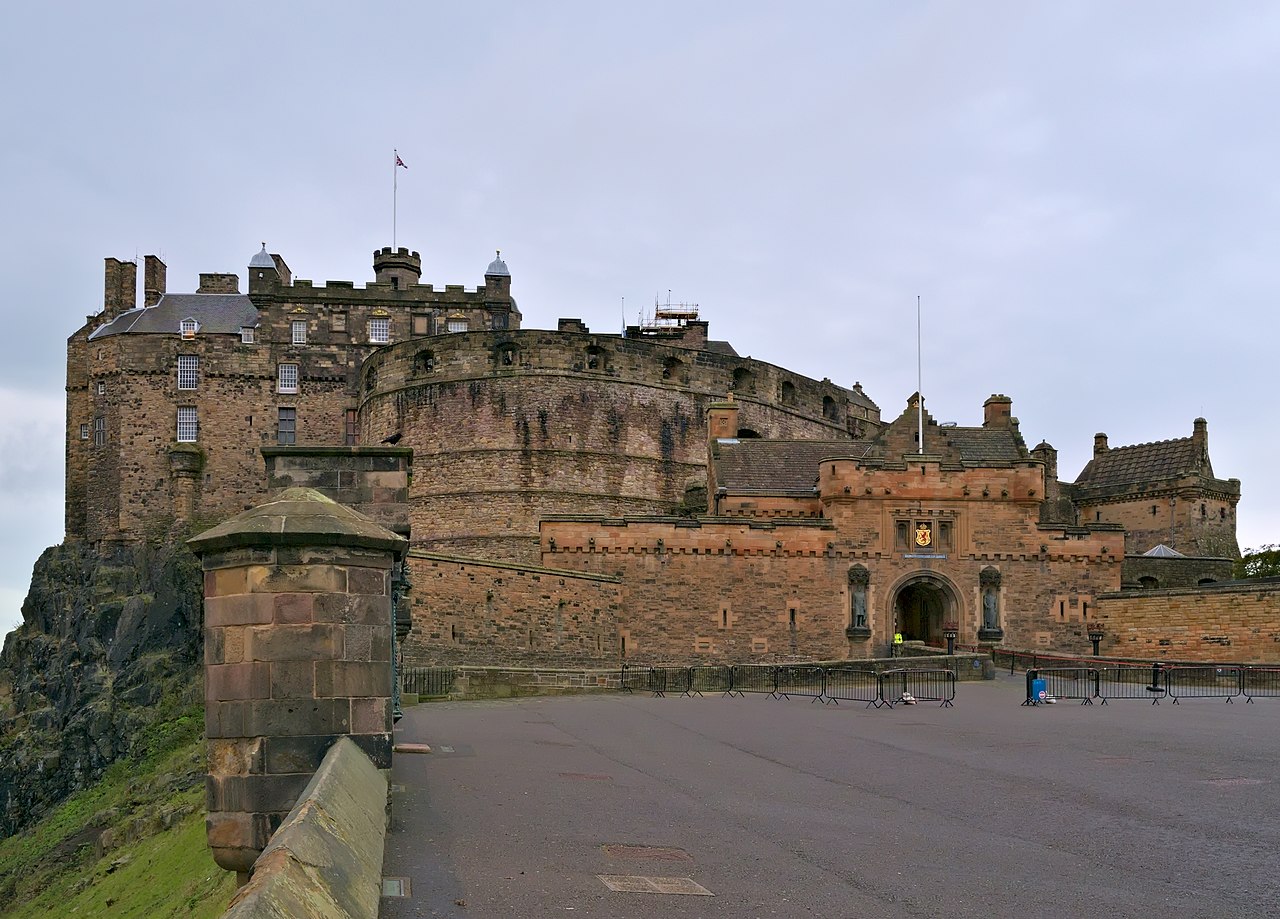
Edinburgh Castle, towering over Scotland’s capital city from its perch atop Castle Rock, stands as one of the most haunted locations in Scotland, with a history spanning nearly 900 years of warfare, imprisonment, torture, and royal intrigue. The castle’s paranormal reputation is deeply intertwined with Scotland’s turbulent history, making it a focal point for supernatural activity.
One of the castle’s most famous spectral residents is the Phantom Piper, whose story dates back to a centuries-old tradition. When underground tunnels were discovered beneath the castle, a piper was sent to explore and map them while playing his bagpipes so those above could track his progress. As the music ventured deeper beneath the city, it suddenly stopped, and the piper was never seen again. To this day, visitors and staff report hearing phantom bagpipes echoing through the castle’s corridors, particularly in the underground vaults and tunnels.
The castle’s dungeons, which held countless prisoners throughout its history, are considered particularly active with paranormal energy. Former prisoners are said to still haunt their cells, with visitors reporting cold spots, mysterious touches, and the sound of ghostly breathing and whispers. One notable spirit is that of Lady Janet Douglas of Glamis, who was imprisoned and later burned at the stake for witchcraft in 1537. Her apparition has been seen wandering the castle grounds, often accompanied by a spectral mist.
The military drums of Edinburgh Castle tell their own haunting tale. During times of war or danger, a phantom drummer is said to appear on the ramparts, beating out a warning to the city. The origin of this legend dates back to 1650, when a drummer boy first appeared before Cromwell’s attack on the castle. Today, the drumming is still heard, though the drummer himself is only seen headless – a detail that adds to the macabre nature of the tale.
Perhaps the most famous supernatural residents are the castle’s ghost dog and colonial prisoners. The dog, often spotted in the castle’s pet cemetery, is known to roam the grounds and has been captured in numerous photographs. The colonial prisoners, who were held in the castle’s vaults during various conflicts, are said to manifest as cold spots and shadow figures, with some visitors reporting feelings of being watched or followed in these areas.
The castle also harbors more tragic spirits, including those of French prisoners held during the Seven Years’ War and American Revolutionary War. These spirits are often associated with the castle’s notorious torture chambers, where implements of torture are still displayed. Visitors to these areas frequently report feeling overwhelming sadness or anxiety, with some experiencing unexplained physical sensations like being touched or pushed.
More recently, the castle has been the subject of numerous paranormal investigations, including a notable 2001 study involving 240 volunteers who explored different areas of the castle over a ten-day period. Many participants reported supernatural experiences, from unexplained temperature drops to full apparition sightings. The study helped document the variety and frequency of paranormal activity within the castle walls.
The castle’s network of underground vaults and chambers, many of which were sealed for centuries before being rediscovered, are considered particularly active with supernatural energy. These spaces, used for everything from storage to imprisonment to secret meetings, seem to retain the emotional energy of their past inhabitants, creating what many believe to be a perfect environment for paranormal activity.
Today, Edinburgh Castle continues to draw both tourists and paranormal investigators, offering ghost tours that highlight its supernatural history. Its combination of violent history, ancient architecture, and countless reported paranormal encounters has cemented its reputation as one of Scotland’s most haunted locations, where the veil between past and present seems particularly thin.

Poveglia Island, a small landmass between Venice and Lido in the Venetian Lagoon, holds one of the darkest histories in Italy, earning it the nickname “Island of Ghosts.” This seemingly peaceful 17-acre island conceals a horrific past that spans centuries of death, disease, and human suffering, making it one of the world’s most notoriously haunted locations.
The island’s dark history began during the Roman Empire when it was used to quarantine plague victims. However, its most infamous period started in 1793 when two ships arriving in Venice carried passengers infected with the plague. In response, the island became a lazaretto (quarantine station), where both the infected and those merely suspected of carrying disease were exiled. According to historical accounts, more than 160,000 people died on Poveglia during various plague outbreaks. Local legend claims that the soil is made up of more than 50% human remains, with plague victims’ ashes mixed into the earth.
The horror of Poveglia intensified in the 1920s when the island was converted into a mental asylum. Stories from this period tell of a particularly sadistic doctor who performed cruel experimental procedures on patients. According to local lore, the doctor himself met a violent end when he claimed to be tormented by the island’s ghosts and jumped (or was pushed) from the hospital’s bell tower. Though he survived the fall, witnesses claimed a mysterious “mist” emerged from the ground and strangled him. The bell tower still stands today, although the bells were removed years ago – yet visitors claim to hear them ringing across the water.
The mental hospital’s building has become a focal point for paranormal activity. Former workers and visitors report hearing screams echoing through the abandoned corridors, seeing shadow figures moving through walls, and experiencing intense feelings of being watched. Many claim to feel hands touching them or pushing them while exploring the buildings. Electronic equipment frequently malfunctions on the island, with batteries mysteriously draining and cameras failing to work.
The island’s grass-covered mass graves are said to be particularly active with supernatural energy. Visitors report seeing apparitions of plague victims and hearing whispers in both Italian and English. Some have witnessed orbs of light moving across the island at night, while others describe experiencing overwhelming feelings of sadness and despair that seem to emanate from the ground itself.
In recent years, paranormal investigators have captured numerous EVP recordings on the island, many featuring what sound like screams, crying, and pleas for help. Thermal imaging cameras have detected unexplained heat signatures in empty rooms, and electromagnetic field meters consistently show unusual activity throughout the property.
Perhaps most disturbing are the accounts of visitors who claim to have been possessed or influenced by the island’s entities. Several people have reported experiencing sudden violent thoughts or urges while on the island, leading some paranormal researchers to suggest that the sheer volume of suffering experienced there has created a sort of negative energy vortex.
Today, Poveglia Island remains largely abandoned and officially closed to the public, though some tour companies offer special permitted visits. Local fishermen refuse to fish near its shores, fearing they might catch human remains in their nets or that the island’s cursed souls might follow them home. Despite numerous proposals for development, including plans for luxury hotels, the island remains untouched – perhaps a testament to its haunting reputation and the respect (or fear) locals have for its dark history.
The combination of its tragic past, isolation, and countless reports of paranormal activity has earned Poveglia a reputation as one of the world’s most haunted locations, where the echoes of suffering seem to resonate through time, affecting all who dare to visit its shores.




Leave a Reply