Researchers have discovered how a bacteria found in hospitals uses ‘nano-weapons’ to enable their spread, unlocking new clues in the fight against antibiotic-resistant superbugs.
Published in Nature Communications, the Monash Biomedicine Discovery Institute (BDI)-led study investigated the common hospital bacterium, Acinetobacter baumannii.
A. baumannii is particularly dangerous as it is often resistant to common antibiotics, making infections hard to treat. Due to this, the World Health Organization has listed it as a top-priority critical bacterium, where new treatments are urgently needed.
Co-first author and BDI research fellow Dr Marina Harper explained that bacteria rarely exist alone; like plants and animals, different types compete for space and resources. “In many environments, A. baumannii must engage in bacterial ‘warfare’ to survive in the presence of other species,” Dr Harper said.
“To outcompete surrounding bacteria, A. baumannii (and many other bacteria) use a nano-weapon called the Type VI Secretion System (T6SS). This is a tiny needle-like machine that injects toxins directly into nearby bacteria, killing them so that A. baumannii can dominate.”
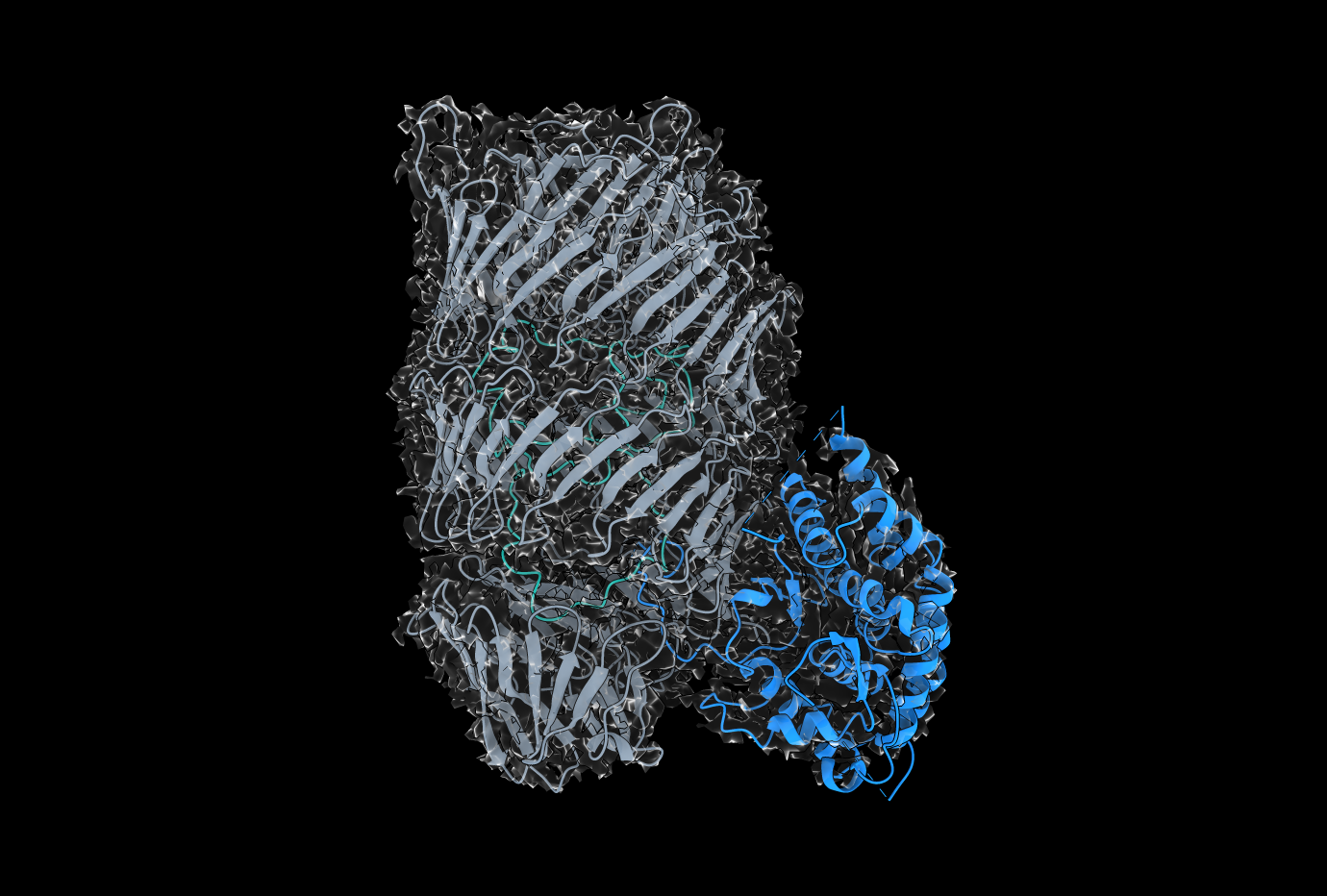
Co-first author and BDI research fellow Dr Brooke Hayes said the study investigated how this needle-like machine worked in A. baumannii. “Using advanced microscopy on a highly purified bacterial protein, we discovered the molecular structure of a key toxin from a hospital strain of A. baumannii,” Dr Hayes said.
“We learned how this toxin, called Tse15, is attached to the needle and then delivered into other bacteria to kill them. We showed that the toxin is stored in a protective cage-like structure inside A. baumannii, preventing it from harming the bacterium itself. When ready to attack other bacteria, the toxin must be released from the cage.
“This happens through a series of interactions between the toxin, the exterior of the cage, and the T6SS needle. Once the needle injects the toxin into a competitor, the toxin activates and kills the other bacterium, allowing A. baumannii to take over that surface.”
Sign up for the Daily Dose Newsletter and get every morning’s best science news from around the web delivered straight to your inbox? It’s easy like Sunday morning.
Senior authors Professor John Boyce, who leads the BDI Boyce Laboratory, and Associate Professor Sheena McGowan, who heads the BDI Structural Microbiology Group, said the find was a significant step in the fight against antibiotic-resistant superbugs.
“This discovery is the first time we’ve understood what the toxin Tse15 looks like, but also the molecular level details of how it and similar toxins are delivered by this bacterial nanomachine,” Professor Boyce said.
Associate Professor McGowan added: “Understanding how such toxins are delivered may allow us to engineer new protein toxins for delivery into bacteria. By learning how this system works, we can explore new ways to fight against antibiotic resistant bacteria like A. baumannii.”
IMAGE CREDIT: Brooke Hayes.

Leave a Reply