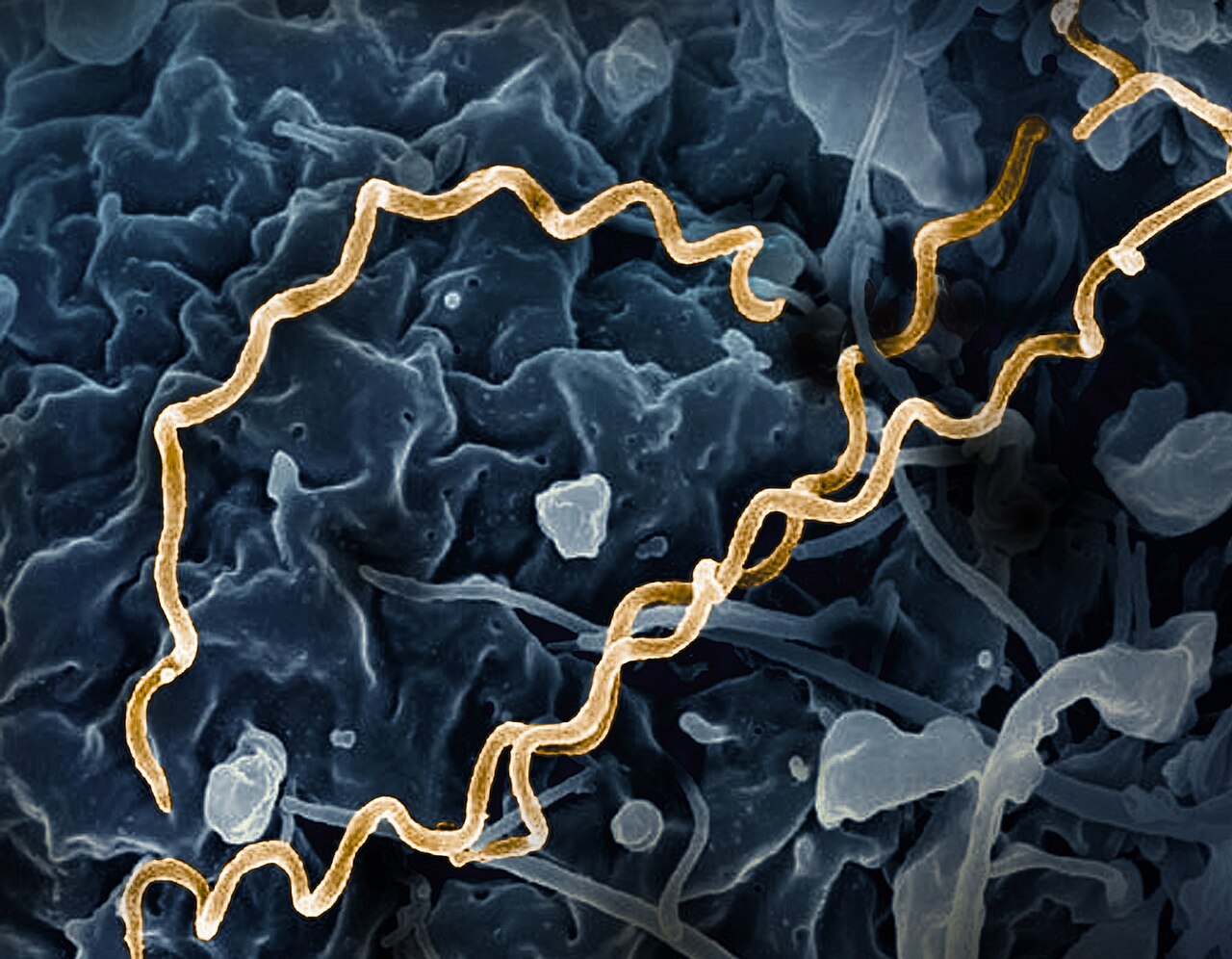
Syphilis cases have surged worldwide, leaving public health officials scrounging for ways to stop the spread. Now, a large, collaborative study of syphilis genetics from four continents has found hints of a possible target for a vaccine.
Syphilis is a sexually transmitted illness that first appeared in Europe about 500 years ago. Its initial symptoms can vary, but the spiral shaped bacterium that causes it can persist in the body for years, often in the central nervous system, and cause birth defects when it infects infants in utero. Syphilis cases decreased in the middle 20th century as easy, effective treatment with injectable penicillin became available, and became uncommon in the 1990s due to changes in sexual behavior in the wake of the HIV epidemic.
But recently, syphilis has made an unwelcome comeback. There were 207,255 cases in the U.S. in 2022 according to the Centers for Disease Control (CDC), more than any time since the 1950s. Babies, some of them stillborn, made up 3,755 of those cases. Other countries worldwide are seeing the same disturbing upward trend.
Stopping syphilis’s spread has become a pressing public health goal. Now, an international collaboration of researchers and doctors has collected one of the most extensive genomic surveys of the syphilis bacterium to date and correlated the genetic data with clinical information about the patients who provided the samples. They are using the data to search for proteins on the surface of the microbe that don’t vary. Such stable proteins could be good targets for a vaccine. They published their findings in the September issue of Lancet Microbe.
Several previous scientific studies using whole genome-sequencing of Treponema pallidum subspecies pallidum (the bacterium that causes syphilis, abbreviated as TPA) have helped researchers begin to understand the global distribution of circulating strains. However, few analyses of specimens for the purpose of evaluating TPA clinical and genetic diversity to inform syphilis vaccine development have been performed.
This study enrolled participants from four countries, including Colombia, China, Malawi, and the U.S. Samples of TPA genomes from Africa and South America had been underrepresented in previous genetic studies and were a particularly valuable addition to the TPA genetic dataset.
Sign up for the Daily Dose Newsletter and get every morning’s best science news from around the web delivered straight to your inbox? It’s easy like Sunday morning.
Once the samples were collected, they were sent to the University of North Carolina’s Institute for Global Health and Infectious Diseases in Chapel Hill (UNC-Chapel Hill) to have their genetic sequences mapped in Dr. Jonathan Parr’s laboratory.
“Whole-genome sequencing samples collected by partners around the world improved our understanding of circulating Treponema pallidum strains. The results help us understand differences between strains and identify targets for vaccine development,” said Parr.
The researchers’ genetic mapping and protein modeling found that syphilis bacteria differed noticeably between continents, but there were enough similarities that the researchers believe they could find good targets for an effective global vaccine.
UConn School of Medicine Professor Justin Radolf, one of the senior authors on the publication and a Principal Investigator on the NIH U19 award that funded the study, emphasized the importance of these findings.
“By mapping mutations to three-dimensional models of the bacterium’s proteins, we’ve gained crucial insights that will inform the design of a syphilis vaccine,” Radolf said.
Researchers at UNC-Chapel Hill are assessing vaccine acceptability to determine what concerns individuals may have on participating in future syphilis vaccine trials and the potential impact of a vaccine on key populations.
“Engaging with the community now is really important in order to get patients’ opinions and concerns about a future syphilis vaccine trial even before the vaccine has been developed,” said Dr. Arlene C. Seña from UNC-Chapel Hill, co-lead on the clinical study that enrolled participants worldwide and the lead author on the Lancet Microbe manuscript.
The team has already secured funding to continue their efforts to develop a syphilis vaccine.
“This study highlights the power of collaboration,” said Juan Salazar, Physician-in-Chief at Connecticut Children’s and co-lead of the project, who also serves as chair of the department of pediatrics at UConn School of Medicine. “Our work here is not just about addressing a local health concern; it’s about contributing to a global solution for a disease that continues to affect millions worldwide.”
IMAGE CREDIT: NIAID



Leave a Reply