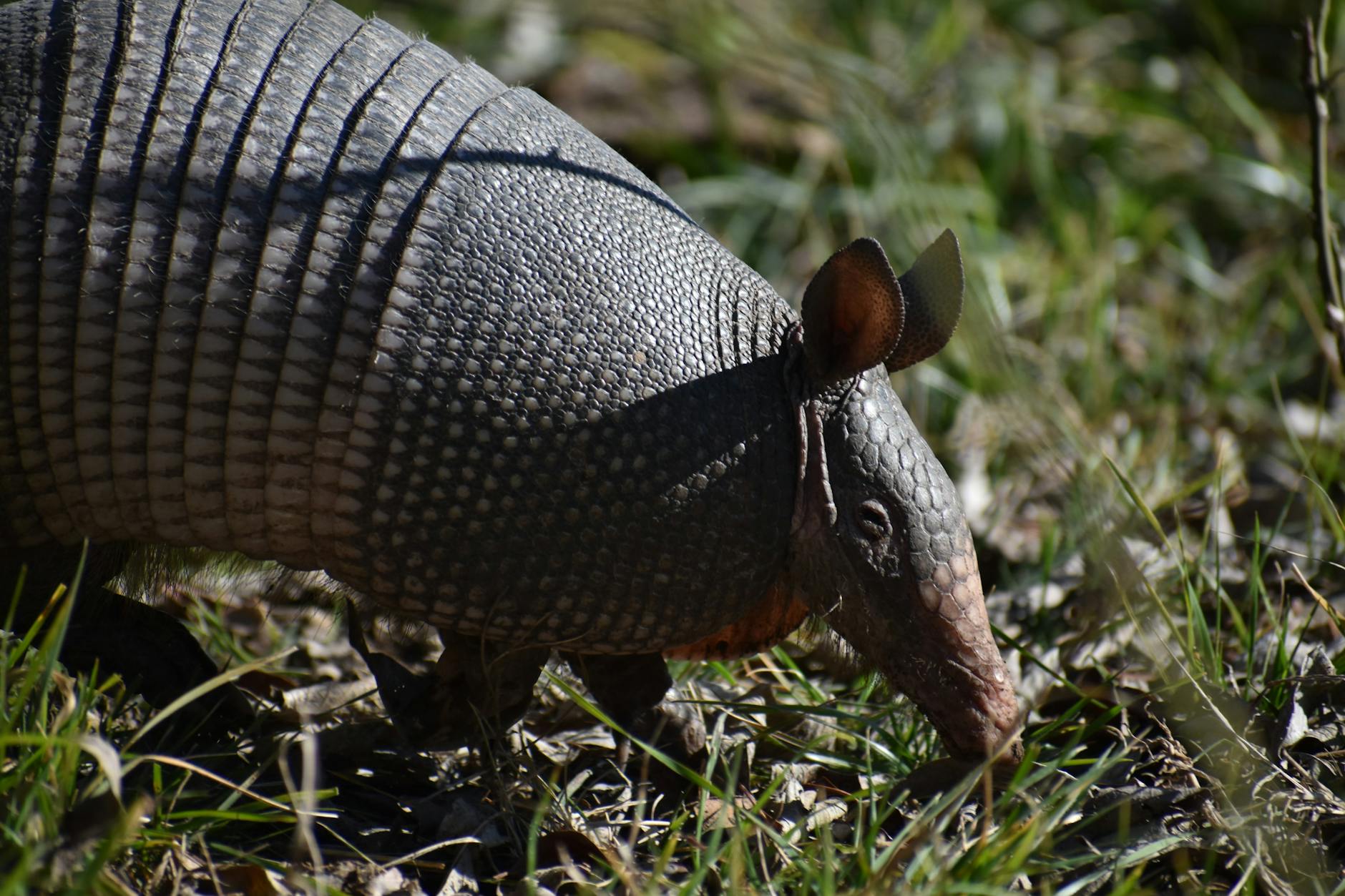
GAINESVILLE, Fla. — In an open-air barn at the edge of the University of Florida, veterinarian Juan Campos Krauer examines a dead armadillo’s footpads and ears for signs of infection.
Its claws are curled tight and covered in blood. Campos Krauer thinks it was struck in the head while crossing a nearby road.
He then runs a scalpel down its underside. He removes all the important organs: heart, liver, kidneys. Once the specimens are bottled up, they’re destined for an ultra-cold freezer in his lab at the college.
Campos Krauer plans to test the armadillo for leprosy, an ancient illness also known as Hansen’s disease that can lead to nerve damage and disfigurement in humans. He and other scientists are trying to solve a medical mystery: why Central Florida has become a hot spot for the age-old bacteria that cause it.
Leprosy remains rare in the United States. But Florida, which often reports the most cases of any state, has seen an uptick in patients. The epicenter is east of Orlando. Brevard County reported a staggering 13% of the nation’s 159 leprosy cases in 2020, according to a Tampa Bay Times analysis of state and federal data.
Many questions about the phenomenon remain unanswered. But leprosy experts believe armadillos play a role in spreading the illness to people. To better understand who’s at risk and to prevent infections, about 10 scientists teamed up last year to investigate. The group includes researchers from the University of Florida, Colorado State University, and Emory University in Atlanta.
“How this transmission is happening, we really don’t know,” said Ramanuj Lahiri, chief of the laboratory research branch for the National Hansen’s Disease Program, which studies the bacteria involved and cares for leprosy patients across the country.
Sign up for the Daily Dose Newsletter and get every morning’s best science news from around the web delivered straight to your inbox? It’s easy like Sunday morning.
‘Nothing Was Adding Up’
Leprosy is believed to be the oldest human infection in history. It probably has been sickening people for at least 100,000 years. The disease is highly stigmatized — in the Bible, it was described as a punishment for sin. In more modern times, patients were isolated in “colonies” around the world, including in Hawaii and Louisiana.
In mild cases, the slow-growing bacteria cause a few lesions. If left untreated, they can paralyze the hands and feet.
But it’s actually difficult to fall ill with leprosy, as the infection isn’t very contagious. Antibiotics can cure the ailment in a year or two. They’re available for free through the federal government and the World Health Organization, which launched a campaign in the 1990s to eliminate leprosy as a public health problem.
In 2000, reported U.S. cases dropped to their lowest point in decades with 77 infections. But they later increased, averaging about 180 per year from 2011 to 2020, according to data from the National Hansen’s Disease Program.
During that time, a curious trend emerged in Florida.
In the first decade of the 21st century, the state logged 67 cases. Miami-Dade County noted 20 infections — the most of any Florida county. The vast majority of its cases were acquired outside the U.S., according to a Times analysis of Florida Department of Health data.
But over the next 10 years, recorded cases in the state more than doubled to 176 as Brevard County took center stage.
The county, whose population is about a fifth the size of Miami-Dade’s, logged 85 infections during that time — by far the most of any county in the state and nearly half of all Florida cases. In the previous decade, Brevard noted just five cases.
Remarkably, at least a quarter of Brevard’s infections were acquired within the state, not while the individuals were abroad. India, Brazil, and Indonesia diagnose more leprosy cases than anywhere, reporting over 135,000 infections combined in 2022 alone. People were getting sick even though they hadn’t traveled to such areas or been in close contact with existing leprosy patients, said Barry Inman, a former epidemiologist at the Brevard health department who investigated the cases and retired in 2021.
“Nothing was adding up,” Inman said.
A few patients recalled touching armadillos, which are known to carry the bacteria. But most didn’t, he said. Many spent a lot of time outdoors, including lawn workers and avid gardeners. The cases were usually mild.
It was difficult to nail down where people got the illness, he added. Because the bacteria grow so slowly, it can take anywhere from nine months to 20 years for symptoms to begin.
Heightened awareness of leprosy could play a role in Brevard’s groundswell of cases.
Doctors must report leprosy to the health department. Yet Inman said many in the county didn’t know that, so he tried to educate them after noticing cases in the late 2000s.
But that’s not the sole factor at play, Inman said.
“I don’t think there’s any doubt in my mind that something new is going on,” he said.
Other parts of Central Florida have also recorded more infections. From 2011 to 2020, Polk County logged 12 cases, tripling its numbers compared with the previous 10 years. Volusia County noted 10 cases. It reported none the prior decade.
Scientists are honing in on armadillos. They suspect the burrowing critters may indirectly cause infections through soil contamination.
Armadillos, which are protected by hard shells, serve as good hosts for the bacteria, which don’t like heat and can thrive in the animals whose body temperatures range from a cool 86-95 degrees.
Colonists probably brought the disease to the New World hundreds of years ago, and somehow armadillos became infected, said Lahiri, the National Hansen’s Disease Program scientist. The nocturnal mammals can develop lesions from the illness just as humans can. More than 1 million armadillos occupy Florida, estimated Campos Krauer, an assistant professor in the University of Florida’s Department of Large Animal Clinical Sciences.
How many carry leprosy is unclear. A study published in 2015 of more than 600 armadillos in Alabama, Florida, Georgia, and Mississippi found that about 16% showed evidence of infection. Public health experts believe leprosy was previously confined to armadillos west of the Mississippi River, then spread east.
Handling the critters is a known hazard. Lab research shows that single-cell amoebas, which live in soil, can also carry the bacteria.
Armadillos love to dig up and eat earthworms, frustrating homeowners whose yards they damage. The animals may shed the bacteria while hunting for food, passing it to amoebas, which could later infect people.
Leprosy experts also wonder if insects help spread the disease. Blood-sucking ticks might be a culprit, lab research shows.
“Some people who are infected have little to no exposure to the armadillo,” said Norman Beatty, an assistant professor of medicine at the University of Florida. “There is likely another source of transmission in the environment.”
Campos Krauer, who’s been searching Gainesville streets for armadillo roadkill, wants to gather infected animals and let them decompose in a fenced-off area, allowing the remains to soak into a tray of soil while flies lay eggs. He hopes to test the dirt and larvae to see if they pick up the bacteria.
Adding to the intrigue is a leprosy strain found only in Florida, according to scientists.
In the 2015 study, researchers discovered that seven armadillos from the Merritt Island National Wildlife Refuge, which is mostly in Brevard but crosses into Volusia, carried a previously unseen version of the pathogen.
Ten patients in the region were stricken with it, too. At the genetic level, the strain is similar to another type found in U.S. armadillos, said Charlotte Avanzi, a Colorado State University researcher who specializes in leprosy.
It’s unknown if the strain causes more severe disease, Lahiri said.
The public should not panic about leprosy, nor should people race to euthanize armadillos, researchers warn.
Scientists estimate that over 95% of the global human population has a natural ability to ward off the disease. They believe months of exposure to respiratory droplets is needed for person-to-person transmission to occur.
But when infections do happen, they can be devastating.
“If we better understand it,” Campos Krauer said, “the better we can learn to live with it and reduce the risk.”
The new research may also provide insight for other Southern states. Armadillos, which don’t hibernate, have been moving north, Campos Krauer said, reaching areas like Indiana and Virginia. They could go farther due to climate change.
People concerned about leprosy can take simple precautions, medical experts say. Those working in dirt should wear gloves and wash their hands afterward. Raising garden beds or surrounding them with a fence may limit the chances of soil contamination. If digging up an armadillo burrow, consider wearing a face mask, Campos Krauer said.
Don’t play with or eat the animals, added John Spencer, a scientist at Colorado State University who studies leprosy transmission in Brazil. They’re legal to hunt year-round in Florida without a license.
Campos Krauer’s team has so far examined 16 dead armadillos found on Gainesville area roads, more than 100 miles from the state’s leprosy epicenter, trying to get a preliminary idea of how many carry the bacteria.
None has tested positive yet.
This article was produced through a partnership between KFF Health News and the Tampa Bay Times. It originally appeared in both publications.
WORDS: Sam Ogozalek, Tampa Bay Times.
IMAGE CREDIT: Chrtlmn
If you enjoy the content we create and would like to support us, please consider becoming a patron on Patreon! By joining our community, you’ll gain access to exclusive perks such as early access to our latest content, behind-the-scenes updates, and the ability to submit questions and suggest topics for us to cover. Your support will enable us to continue creating high-quality content and reach a wider audience.
Join us on Patreon today and let’s work together to create more amazing content! https://www.patreon.com/ScientificInquirer




Leave a Reply