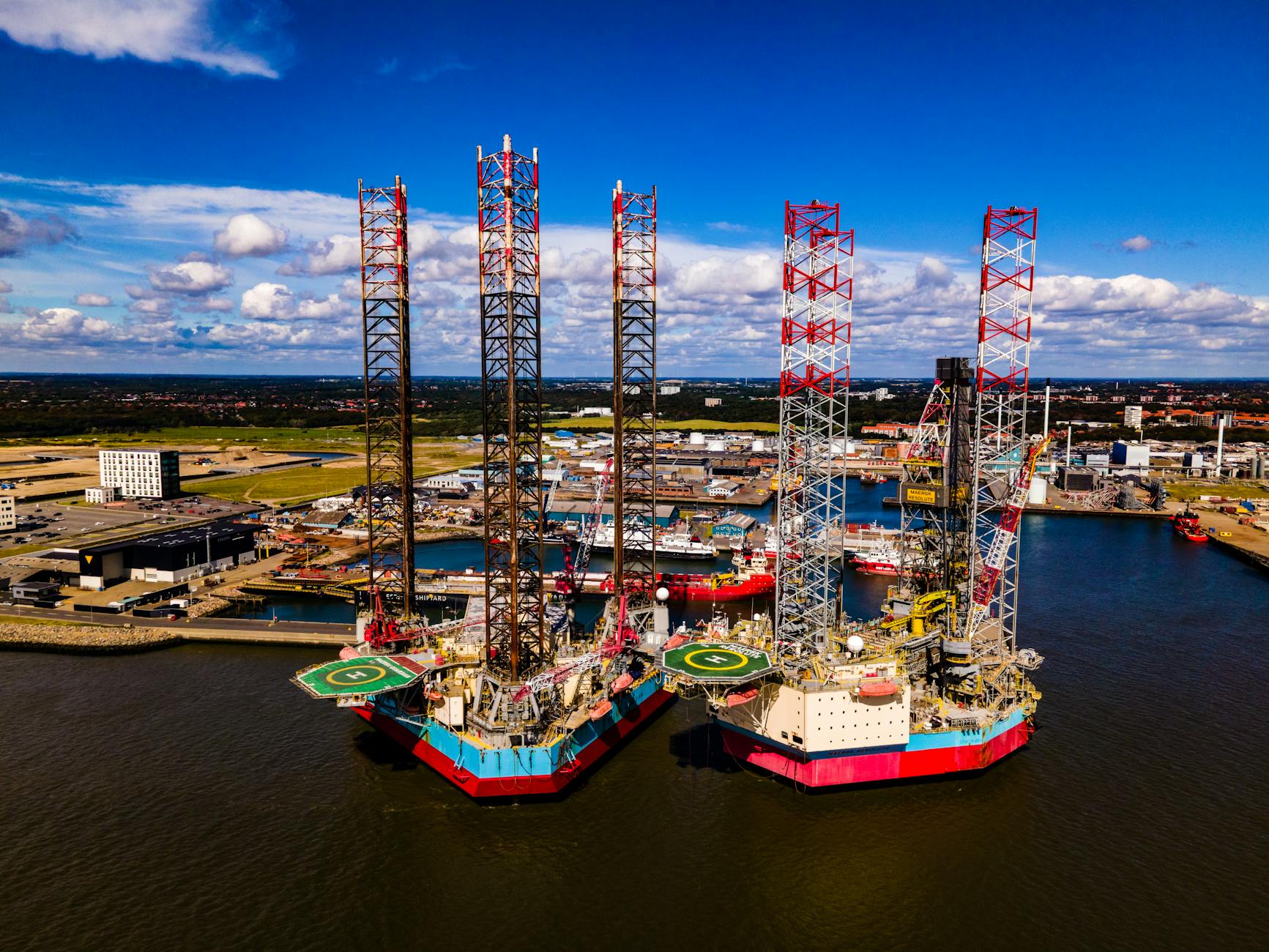
Despite the growing social and political discourse in favor of energy transition and the greening of the industry, big oil companies continue to rely almost exclusively on fossil fuels to perpetuate their function of obtaining and concentrating energy.
A study carried out by the Institute of Environmental Science and Technology of the Universitat Autònoma de Barcelona (ICTA-UAB) shows that, far from choosing new alternative and sustainable energy sources, the companies are relentless in their efforts to expand their extractive operations. To do so, they deploy new technologies and seek politically favorable locations in the world to perpetuate oil and gas extraction.
The research, recently published in the scientific journal Energy Research & Social Science, is based on the analysis of fifty socio-environmental conflicts caused by the extractivist industry around the world documented in ICTA-UAB’s Global Atlas of Environmental Justice (EJAtlas).
The report reveals the significant social and environmental costs of this industrial activity. “The relentless growth of the global economy and the inexorable dissipation of energy drive oil and gas companies to constantly expand their operations in the world’s peripheries to meet the demand of industrial economies,” says Marcel Llavero-Pasquina, ICTA-UAB researcher and first author of the study, who notes that these companies continue to rely on oil and gas because of its high energy density and easy transportation and storage.
The growing need for fossil resource extraction requires the constant expansion of extraction frontiers, and the exploitation of the environment and of local and indigenous communities in unindustrialized areas. This gives rise to numerous conflicts where local organizations fight for the preservation of their lives, livelihoods and culture, while companies defend their profits. “This is evident, for example, in the cases of conflicts generated by the French company TotalEnergies over the extraction of fossil fuels in the Global South, where indigenous peoples fight against these activities that are so harmful to their environment and way of life,” explains Llavero-Pasquina, who points out that oil companies thus become vectors of an oppression that links societies enjoying the benefits of lavish energy with those that suffer the impacts of extraction.

The research was carried out in collaboration with ICTA-UAB researchers Joan Martinez-Alier, Roberto Cantoni and Grettel Navas. According to Llavero-Pasquina, the analysis of these socio-environmental conflicts reveals how Western states and private oil and gas giants mutually benefit from each other. “In the case of TotalEnergies, we see how French diplomatic and military relations pave the way for oil extraction in former French colonies. Arguably, through oil diplomacy, the company extends French post-colonial influence throughout the African continent and beyond,” he says.
The findings make it clear that “governmental environmental regulation alone will not force fossil fuel companies to change their business model, so a deeper political change that challenges the postcolonial and extractive nature of modern Western states is needed to spell the end of the fossil fuel era,” he concludes.
IMAGE CREDIT: (ENTER NAMES)
Sign up for the Daily Dose Newsletter and get the morning’s best science news from around the web delivered straight to your inbox? It’s easy like Sunday morning.




Leave a Reply