A perspective article in Biocontaminant outlines three ways tire wear particles could create hotspots where antibiotic resistance genes persist and move between bacteria, and calls for more direct evidence.
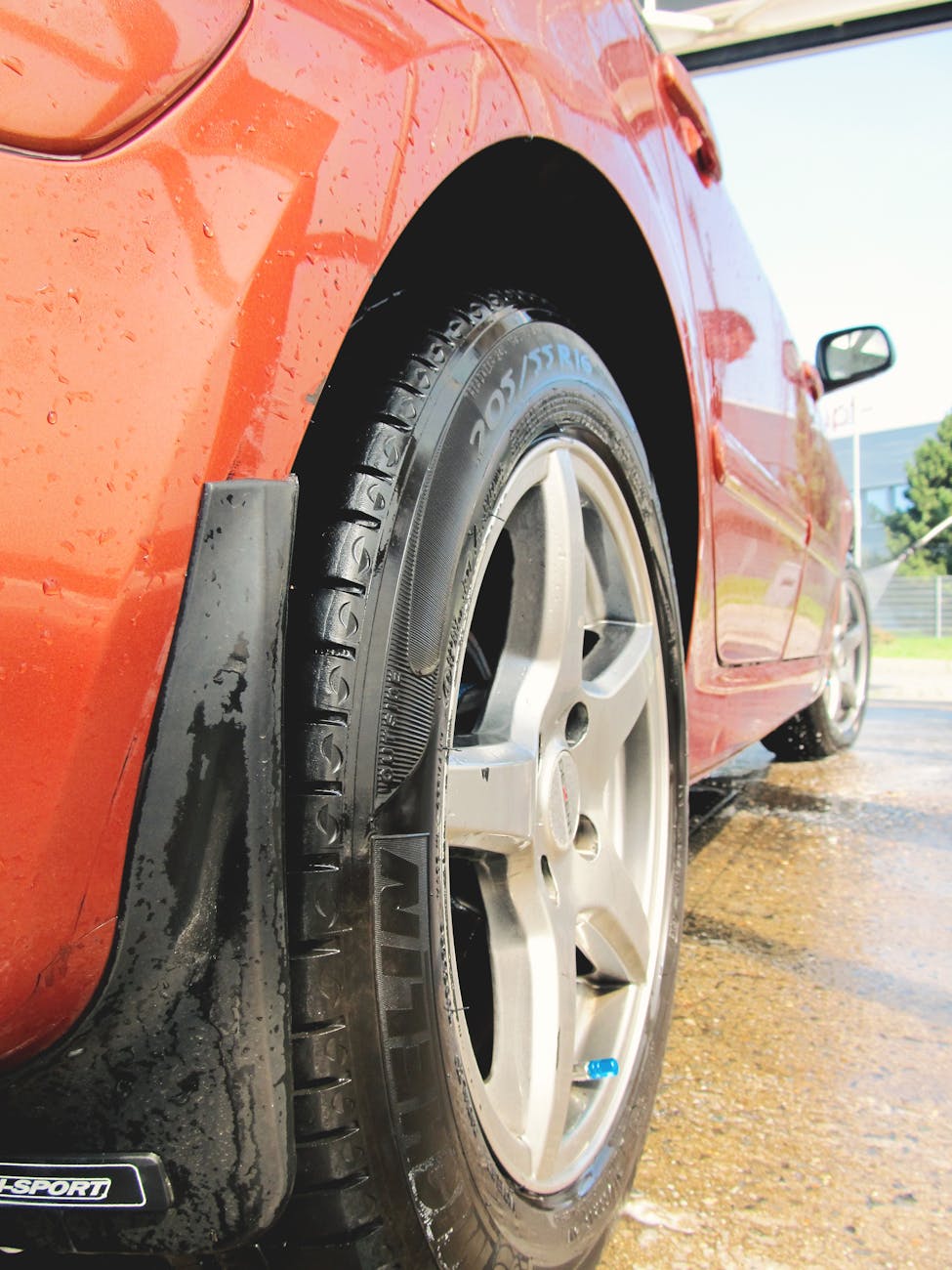
Every time a car brakes, accelerates or turns a corner, its tires shed a little of themselves. Friction against the road grinds off tiny particles of rubber, fillers and chemical additives, and with billions of vehicles on the world’s roads, the total adds up to an enormous and continuous stream of pollution.
One widely cited 2017 estimate put global emissions of tire wear particles at about 6 million tonnes a year. The issue has drawn growing attention from regulators: the European Union’s Euro 7 vehicle emissions standard, adopted in 2024, includes limits on tire abrasion, alongside limits on exhaust and brake emissions.
Those particles end up in the air, in stormwater, in rivers and sediments, and in urban soils. A new perspective article suggests they may also be doing something less obvious: helping antibiotic resistance spread.
Writing in the journal Biocontaminant, a team including corresponding author Yuyi Yang of the Wuhan Institute of Technology argues that tire wear particles could create hotspots where antibiotic resistance genes persist and move between bacteria.
“Tire microplastics should not be viewed simply as passive particles that carry pollutants from one place to another,” Yang said. “Their surfaces, chemical additives, and aging processes may work together to create conditions that favor the persistence and transfer of antibiotic resistance genes.”
A One Health problem
Antimicrobial resistance is one of the most serious threats to global health. A major analysis published in The Lancet in 2022 estimated that bacterial resistance to antibiotics was directly responsible for about 1.27 million deaths worldwide in 2019.
The authors frame the issue as a One Health problem, one that links the health of people, animals and the environment. Resistance genes do not stay in hospitals. They circulate in wastewater, rivers and soils, and bacteria can share them with one another, including across species, through a process called horizontal gene transfer.
Bacteria have several ways of sharing genes. They can pass plasmids directly from cell to cell through a process called conjugation, pick up free DNA from their surroundings through transformation, or receive genes carried by viruses that infect bacteria, a process known as transduction. Conditions that bring bacteria into close, sustained contact, such as dense biofilms, can make the first of these more likely.
Tire particles have already attracted scrutiny for their chemistry. In 2020, researchers traced mass deaths of coho salmon in streams around Seattle to a chemical formed from 6PPD, an antioxidant added to tires, a finding that drew wide attention to what tire wear can release into the environment.
Three possible pathways
The article lays out three ways tire particles might favor the persistence and spread of resistance.
The first involves the particles’ surfaces. Tire particles develop dense microbial biofilms, which the authors call the “tire plastisphere.” Packed together on a surface, bacteria are in close contact, which may make it easier for them to exchange genetic material.
The second involves chemistry. Tire particles release metals, antioxidants and compounds such as benzothiazoles. Chemicals of this kind may select for resistant microbes and help their genes spread, the authors write. Metals in particular are known to co-select for antibiotic resistance, because genes for resisting metals and antibiotics are often carried together.
The third involves aging. As tire particles weather and oxidize, they become more chemically reactive and can generate reactive oxygen species and persistent free radicals. At moderate levels, that stress may increase the permeability of bacterial membranes, promote biofilm formation and encourage gene transfer. But very strong oxidative stress could damage bacteria and their DNA instead, so the effects are likely to depend on conditions.
Thin evidence so far
The authors are candid about the limits of what is known. Their review found only seven studies that directly link tire particles or tire-derived chemicals to resistance genes, resistant bacteria or gene transfer.
That is a small base on which to build conclusions, and much of the article is a call for better research. In particular, the authors propose adapting a toxicity identification evaluation framework, an approach used to pin down which chemicals in a complex mixture are responsible for its effects. Under this approach, researchers would split tire leachates into chemical fractions and test each fraction’s effect on plasmid transfer, the movement of small, mobile rings of DNA that often carry resistance genes between bacteria.
Work of that kind could show which components of tire particles, if any, actually drive the spread of resistance, rather than treating tire dust as a single, uniform pollutant.
Stopping particles at the source
The authors also call for action. They recommend reducing tire particle pollution at its source and intercepting particles before they reach waterways, through measures such as stormwater filtration, roadside capture, green infrastructure and nature-based treatment systems.
They also urge monitoring programs that connect environmental management with public health and antimicrobial resistance control, so that the pathways linking roads, rivers and resistant infections can be tracked together rather than in isolation.
The piece is a perspective rather than a new experimental study, and its arguments are framed as hypotheses to be tested. But it adds to growing concern that tire wear is not just a source of microplastics, but an active ingredient in urban environmental chemistry and microbiology.
Co-authors of the article include Xiong Pan, Yongxiang Yu, Li Lin, Qun Wang and Hans-Peter Grossart.
Notes
- Yang, Y., Pan, X., Yu, Y., Lin, L., Wang, Q., et al. “Tire microplastics amplify the risk of antibiotic resistance genes in the environment.” Biocontaminant 2: e010, 19 May 2026. DOI: 10.48130/biocontam-0026-0007.
- Antimicrobial Resistance Collaborators. “Global burden of bacterial antimicrobial resistance in 2019: a systematic analysis.” The Lancet 399, 629–655 (2022). DOI: 10.1016/S0140-6736(21)02724-0.
- Shenyang Agricultural University Collaborative Journals. “Tire microplastics may accelerate the spread of antibiotic resistance in cities.” EurekAlert!, 28 July 2026. https://www.eurekalert.org/news-releases/1137968.
Photo by JÉSHOOTS on Pexels.com



Leave a Reply