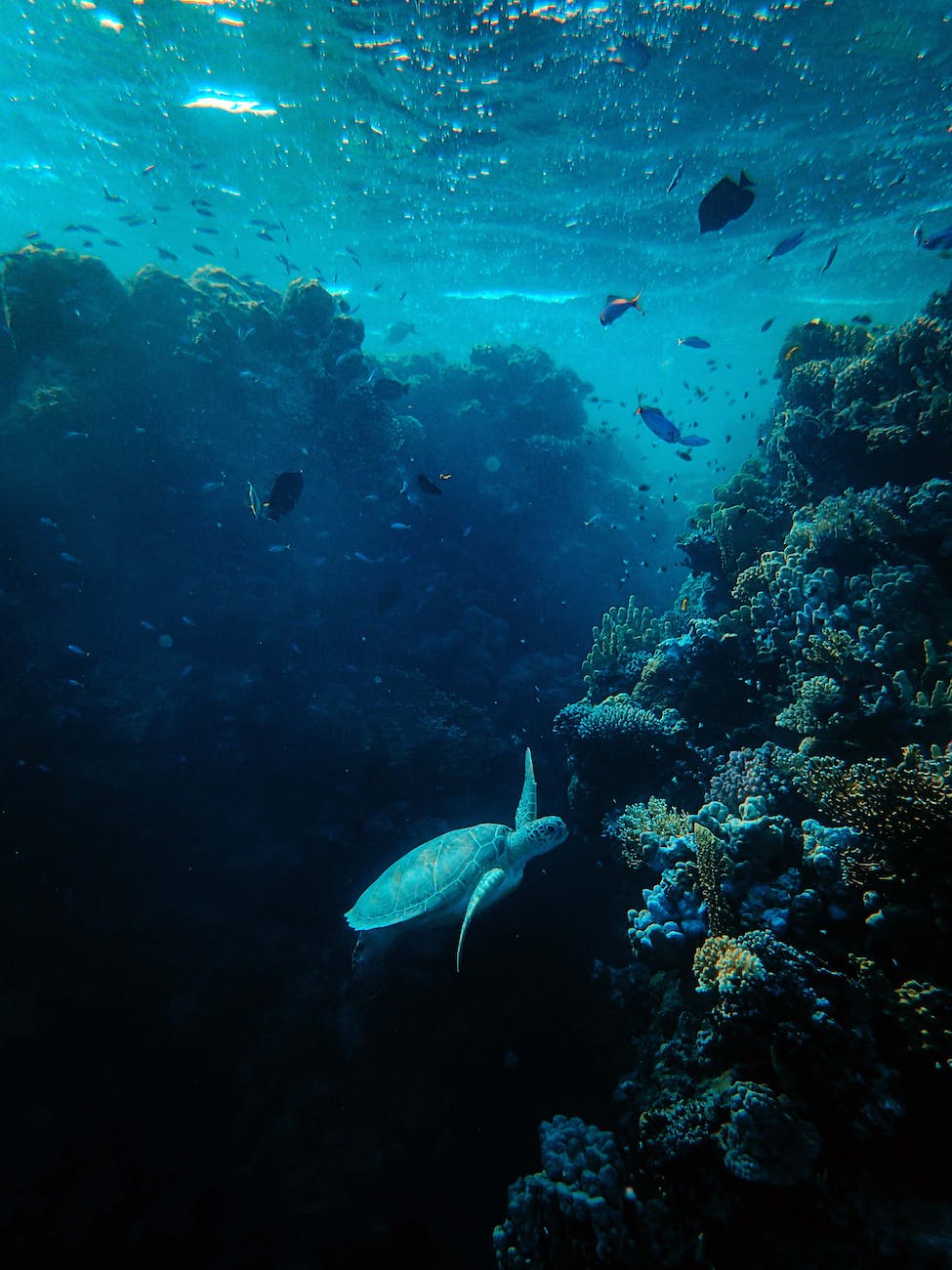
An international team has developed the first comprehensive framework for designing networks of marine protected areas that can help vulnerable species survive as climate change drives habitat loss.
In a paper published Oct. 26 in One Earth, the researchers outlined guidelines for governments to provide long-distance larval drifters, like urchins and lobsters, as well as migratory species, like turtles and sharks, with protected stopovers along coastal corridors. Led by Stanford marine conservation scientist Nur Arafeh-Dalmau, the team included 50 scientists and practitioners from academia, conservation organizations, and management agencies from the U.S., Mexico, and Australia.
The guidelines come at a critical time as nearly every country in the world has committed to protect 30% of land and sea by 2030. Marine protected areas and similar conservation measures on land connect habitats fractured by generations of human development or erratically carved up by wildfires and heat waves.
“Until now, marine protected areas have been designed for biodiversity conservation, but not necessarily for climate resilience,” said Arafeh-Dalmau, a postdoctoral scholar in the Oceans Department at the Stanford Doerr School of Sustainability and an honorary fellow at The University of Queensland. “They suffer from climate impacts but aren’t designed to endure them.”

Putting the framework into practice
The researchers examined decades of satellite imagery to map giant kelp persistence along 1,678 miles (2,700 kilometers) of continuous coastline in the Southern California Bight and quantify how many safe havens they provide for larvae spawned by sea cucumbers, sea urchins, abalone, and California sheephead. They found that under current protection schemes, marine heat waves expected over the next 50 years will splinter the suitable habitat for these larvae. The authors estimate ecological connectivity, a measure of the animals’ ability to move freely from place to place, will fall by about half, while population density could decline by as much as 90%. This would mean smaller gene pools and greater risk of population collapse.
Conventional assessment methods prioritize protection of areas that have the greatest number of kelp species. The new framework, by contrast, identified sites where kelp have the highest chance of survival and are more likely to provide a stable habitat for other marine species to reproduce. They recommended a series of protected areas that link isolated populations like beads of a necklace along the Southern California Bight.
“This stepping stone strategy can be very cost-effective and cheaper for everyone,” said Arafeh-Dalamu, who documented Mexico’s worst marine heat wave from 2014 to 2016. “Maybe you need fewer areas to be protected if you are protecting the important areas.” Plus, he added, the collaboration between countries can strengthen research capacity, and ideally, diplomacy.
“We have the information and tools to design and implement marine conservation in a way that explicitly and proactively accounts for climate change,” said Micheli. “Now is the time to understand where we strategically invest in expanding and strengthening protection so these ecosystems have a future.”
Sign up for the Daily Dose Newsletter and get the morning’s best science news from around the web delivered straight to your inbox? It’s easy like Sunday morning.


Leave a Reply